
A 4G data logger strengthens cold chain monitoring by making real-time temperature and humidity tracking more reliable, more accessible, and more responsive. In industries where immediate proof of product safety is required during storage and transportation, a cellular data logger provides continuous visibility, instant alerts, and accurate time-stamped records without the need for physical access to the device.
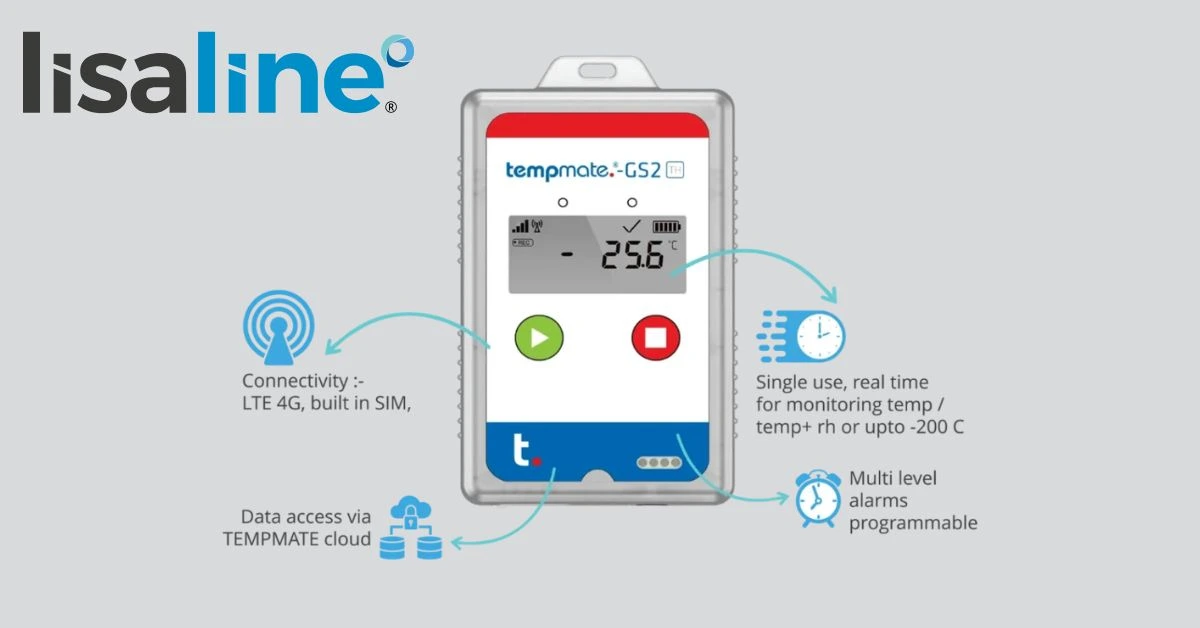
Lisaline Asia supplies the Tempmate GS2 and Tempmate GM2 as its 4G data logger models under the GSM data loggers category. The Tempmate GS2 is a single-use cellular data logger designed for shipment monitoring, while the Tempmate GM2 is a multi-use cellular data logger with rechargeable battery and micro-USB download capability. In this detailed blog we will cover everything you need to know about 4G data logger devices and why Lisaline’s Tempmate GSM data loggers stand out for cold chain facilities.
What is a 4G Data Logger?
A 4G data logger is a compact electronic device that measures temperature and humidity at regular intervals. It transmits the recorded readings in real time to a cloud-based monitoring platform through a 4G LTE cellular network with 2G fallback. The readings are stored both in the device’s internal memory and on the cloud platform, allowing users to access live data and historical records remotely from any internet-connected device.
A cellular data logger is also referred to as a GSM data logger because it uses GSM-based mobile network technology to transmit data. Modern 4G data logger models such as the Tempmate GS2 and Tempmate GM2, supplied by Lisaline Asia, use 4G LTE global connectivity for faster and more reliable real-time data transmission.
Unlike a USB temperature data logger that stores readings in internal memory for later download, a 4G data logger transmits data continuously during the monitoring period. The user does not need to physically collect the device to access readings. Instead, the cellular data logger sends all data to the cloud platform automatically, and the user can view, analyse, and download reports from the platform at any time.
What are the benefits of a 4G data logger in temperature and humidity monitoring?
A 4G data logger offers significant benefits in temperature and humidity monitoring for cold chain logistics because it provides continuous remote visibility and immediate response capability. Here are some of the benefits of a 4G Data Logger with global connectivity in temperature and humidity monitoring:
Real-time remote monitoring
A cellular data logger transmits temperature and humidity readings to a cloud platform at set intervals through the 4G cellular network. Users can view live data from any location using a computer or mobile device, without needing to be physically present near the logger.
Instant breach alerts
When temperature or humidity values exceed the configured alarm limits, the temperature humidity data logger sends immediate alerts via SMS or email. This enables personnel to respond quickly to excursions and take corrective action before product quality is compromised.
No on-site network infrastructure required
A cellular data logger operates through the existing 4G cellular network and does not require the installation of Wi-Fi routers, Bluetooth hubs, or LoRaWAN gateways at monitoring locations. This reduces setup complexity and makes deployment faster.
Wide area coverage
Because a 4G data logger uses globally connected mobile network connectivity, it can transmit data from remote locations, mobile assets such as refrigerated trucks, and geographically distributed cold chain facilities, as long as 4G coverage is available.
Cloud-based data access and reporting
All readings transmitted by the cellular data logger are stored on a cloud platform and can be accessed at any time. Users can download temperature and humidity data in PDF or CSV format for compliance documentation, audit submissions, and quality control records.
Multi-parameter monitoring
A 4G data logger can monitor both temperature,humidity, light, shock, tilt, location, etc., simultaneously. This provides a comprehensive record of environmental conditions during storage and transportation.
Data security and completeness
Readings are stored in the internal memory of the cellular data logger and simultaneously uploaded to the cloud. Even in the event of a temporary network disruption, recorded data is preserved in the device’s memory and uploaded to cloud when connectivity is restored.
Regulatory compliance support
The time-stamped temperature and humidity records provided by a 4G data logger help cold chain facilities comply with regulatory guidelines from bodies such as the WHO and FDA, which require detailed environmental records for the storage and transportation of temperature-sensitive products.
Therefore, a cellular data logger is essential for cold chain operations that require real-time temperature and humidity monitoring, immediate excursion response, and reliable compliance documentation.
What are the features of Tempmate 4G data loggers?
The Tempmate data logger models supplied by Lisaline Asia, the Tempmate GS2 and Tempmate GM2 are designed specifically for cold chain monitoring applications. These cellular data loggers offer a range of features that make them suitable for both shipment and storage monitoring. Here are the features of Tempmate 4G data loggers:
4G cellular connectivity
Both Tempmate 4G data logger models use 4G LTE cellular network connectivity to transmit temperature and humidity readings to a cloud-based monitoring platform in real time. No on-site Wi-Fi router, gateway, or Bluetooth hub is required.
Real-time cloud-based monitoring
The cellular data logger continuously uploads readings to a cloud platform, allowing users to view live temperature and humidity data from any internet-connected computer or mobile device at any time during the monitoring period.
Instant SMS and email alerts
When temperature or humidity values exceed the configured alarm thresholds, the 4G data logger sends immediate alerts via SMS and email to designated contacts, enabling prompt corrective action.
Multi-parameter monitoring
The Tempmate data logger models support monitoring of both temperature and humidity, as well as other parameters like light, shock, tilt, location. This provides a comprehensive environmental record for cold chain applications.
Adjustable logging intervals
Users can configure the recording interval of the 4G data logger to meet the specific requirements of their monitoring application. Shorter intervals provide more detailed records, while longer intervals extend battery life.
PDF and CSV report generation
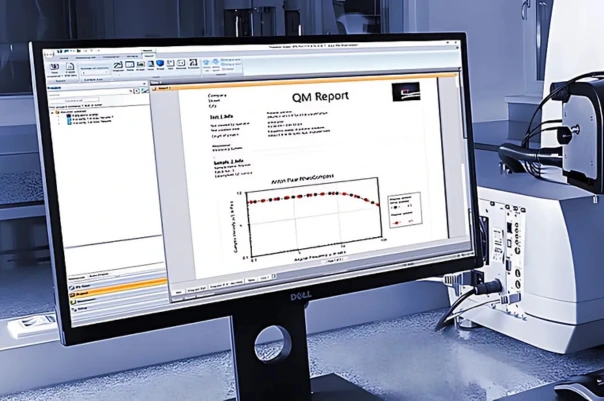
The cellular data logger automatically generates temperature and humidity reports in PDF and CSV formats. These reports can be downloaded from the cloud platform for compliance documentation, audit records, and quality control purposes.
LED status indicators
The Tempmate 4G data logger models use LED indicators to provide on-device visual confirmation of recording status and alarm conditions, allowing personnel to check device status without accessing the cloud platform.
Compact and portable design
Both Tempmate cellular data logger models have a compact, portable form factor that allows them to be placed inside cartons, refrigerated trucks, cold rooms, and shipment containers without occupying significant space.
LCD button display
Tempmate 4G data logger button LCD display provides a clear, on-device screen showing real-time temperature, humidity, and battery status with a simple button press. This feature enables quick local checks without needing app or cloud access, ideal for field verification during transport or storage. It enhances usability by displaying recent data trends and alarms directly on the compact unit.
How is a 4G data logger better than a Bluetooth data logger?
A 4G data logger with global connectivity and a Bluetooth data logger are both used for temperature and humidity monitoring in cold chain applications. However, they differ significantly in terms of monitoring range, real-time capability, and infrastructure requirements. Here is a detailed comparison between a 4G data logger and a Bluetooth data logger:
Monitoring range
A Bluetooth data logger has a limited wireless range, typically between 10 and 30 metres, and requires a Bluetooth hub or mobile device to be within range for data transmission. A cellular data logger transmits data globally through the 4G cellular network, which means it can monitor conditions from any location where mobile network coverage is available, including remote areas and long-distance shipments in transit.
Real-time data access
A Bluetooth data logger transmits data only when the logger is within range of a connected hub or mobile device. Data cannot be accessed remotely without a Bluetooth gateway installed at the monitoring location. A 4G data logger transmits readings to a cloud platform continuously at set intervals, and users can view live data from any internet-connected device at any time.
Instant alerts.
A Bluetooth data logger can only provide alerts when the device is within Bluetooth range of a connected hub or mobile application. A cellular data logger sends SMS and email alerts immediately upon a temperature or humidity breach, regardless of the physical location of the device or the user.
Infrastructure requirements
A Bluetooth data logger requires Bluetooth gateways or hubs to be installed at each monitoring location for remote data access. A 4G data logger requires no on-site infrastructure. It connects directly to the 4G cellular network and transmits data to the cloud without any additional hardware installation.
Suitability for shipment monitoring
A Bluetooth data logger is not suitable for monitoring products in transit because it cannot maintain a Bluetooth connection with a remote hub while the shipment is moving. A cellular data logger is specifically designed for shipment monitoring because it uses the 4G cellular network, which provides continuous coverage throughout the journey.
Cost and scalability
Bluetooth data logger systems may require significant investment in gateway infrastructure for facility-wide deployment. A 4G data logger requires only a SIM card with an active data plan, making it faster to deploy and easier to scale across multiple monitoring locations.
Therefore, a 4G data logger is better suited than a Bluetooth data logger for cold chain applications that require real-time remote monitoring, immediate breach alerts, and monitoring of products in transit over long distances.
How does Tempmate’s 4G data logger models ensure real-time monitoring?
Lisaline Asia supplies the Tempmate 4G data logger models , Tempmate GS2 and the Tempmate GM2 ensure real-time monitoring through a combination of 4G cellular connectivity, cloud-based data transmission, and immediate alert functionality. Here is how Tempmate’s cellular data logger models ensure real-time monitoring:
Continuous data transmission through 4G cellular network
Once the Tempmate 4G data logger is activated and a SIM card with an active data plan is inserted, the device begins measuring temperature and humidity at the configured intervals and transmitting the readings to a cloud-based monitoring platform through the 4G cellular network. This transmission occurs automatically and continuously throughout the monitoring period without any manual intervention.
Cloud platform access from any location
All readings transmitted by the cellular data logger are stored on the cloud platform like tempmate cloud. These can be viewed in real time from any internet-connected computer or mobile device. Users do not need to be physically present at the monitoring location to access current or historical data.
Immediate SMS and email alerts on excursions
When the temperature or humidity recorded by the Tempmate data logger exceeds the configured alarm thresholds, the device triggers an immediate alert via SMS and email to the designated contacts. This ensures that responsible personnel are notified as soon as an excursion occurs so that corrective action can be taken promptly.
Internal memory backup
In addition to transmitting readings to the cloud platform, the Tempmate data logger stores all readings in its internal memory. In the event of a temporary 4G network disruption, the data recorded during the disconnected period is retained in internal memory and uploaded to the cloud platform when network connectivity is restored. This ensures that no readings are lost.
LED indicators for on-device status monitoring
The Tempmate data logger uses LED indicators to display the current recording and alarm status on the device itself. Personnel who are physically near the logger can check at a glance whether the device is recording normally or whether a temperature or humidity breach has occurred.
Downloadable time-stamped reports
The cloud platform associated with the Tempmate cellular data logger maintains a complete time-stamped record of all readings. These records can be downloaded in PDF or CSV format at any time for compliance documentation, audit submissions, and quality control purposes.
Therefore, Tempmate’s 4G data logger models ensure real-time monitoring by combining continuous 4G cellular data transmission, cloud-based live data access, immediate breach alerting, and secure internal memory storage in a single compact device.
How to set up a 4G data logger with cloud-based monitoring?
Setting up a 4G data logger with cloud-based monitoring involves a straightforward process. The Tempmate GS2 and Tempmate GM2 cellular data loggers supplied by Lisaline Asia are designed with ease of setup in mind. Here is how to set up a 4G data logger with cloud-based monitoring:
Insert the SIM card
Insert a SIM card with an active 4G data plan into the designated SIM card slot of the cellular data logger. The SIM card enables the device to connect to the 4G cellular network and transmit readings to the cloud platform.
Insert or charge the battery
For the Tempmate GS2, insert the primary battery cell. For the Tempmate GM2, charge the rechargeable battery using the micro-USB port before deployment.
Configure the logging interval and alarm thresholds
Using the configuration software or the cloud platform, set the recording interval of the 4G data logger according to your monitoring requirements. Also configure the upper and lower alarm thresholds for temperature and humidity so that the device sends alerts when these limits are exceeded.
Register the device on the cloud monitoring platform
Register the cellular data logger on the tempmate cloud platform using the device’s unique identifier. Once registered, the platform will begin receiving and displaying readings from the device.
Verify the connection
Confirm that the 4G data logger is successfully transmitting readings to the tempmate cloud platform by checking that live data is visible on the monitoring dashboard.
Activate the data logger
Start the recording function on the cellular data logger according to the manufacturer’s instructions. The device will begin measuring temperature and humidity at the configured intervals and transmitting the readings to the tempmate cloud platform automatically.
Deploy the data logger
Place the 4G data logger inside the carton, refrigerated truck, cold room, or storage facility where monitoring is required. The device will continue recording and transmitting data throughout the monitoring period without any further manual intervention.
Once the cellular data logger is deployed, all readings are automatically transmitted to the tempmate cloud platform and can be accessed in real time from any internet-connected device. Reports in PDF and CSV format can be downloaded from the platform at any time for compliance and documentation purposes.
What are the types of 4G data logger models provided by Lisaline?
Lisaline Asia supplies two Tempmate 4G data logger models under the GSM data loggers category, the Tempmate GS2 and the Tempmate GM2. Both models use 4G cellular connectivity for real-time monitoring, but they are designed for different cold chain applications. Here is a detailed overview of the types of 4G data logger models provided by Lisaline:
Tempmate GS2 — Single-Use 4G Data Logger
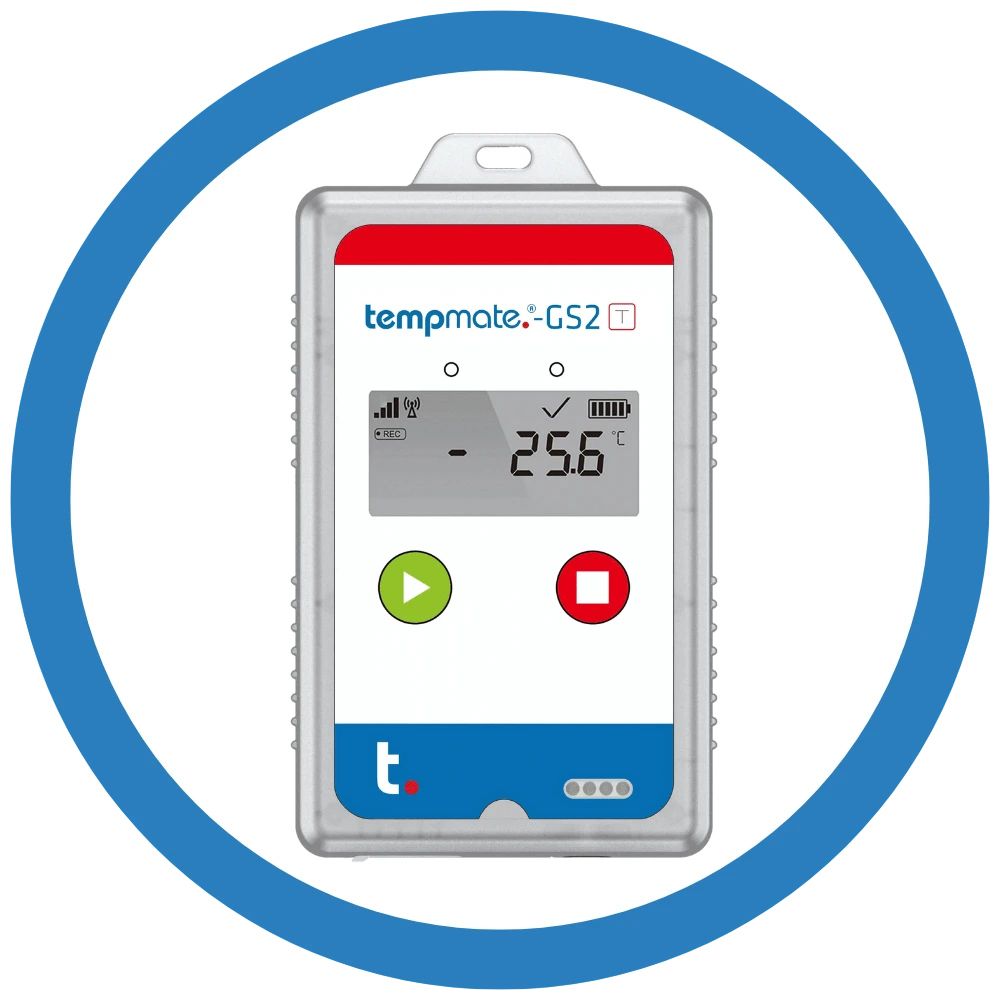
The Tempmate GS2 is a single-use cellular data logger designed for monitoring temperature and humidity conditions during individual shipments. Once the monitoring period for a shipment is complete, the device is not reused. The Tempmate GS2 is suitable for pharmaceutical shipments, vaccine transport, food logistics, and any cold chain application where each shipment requires a dedicated monitoring record. It uses 4G cellular connectivity to transmit real-time readings to a cloud platform and sends immediate alerts when alarm thresholds are exceeded.
Tempmate GM2 — Multi-Use 4G Data Logger
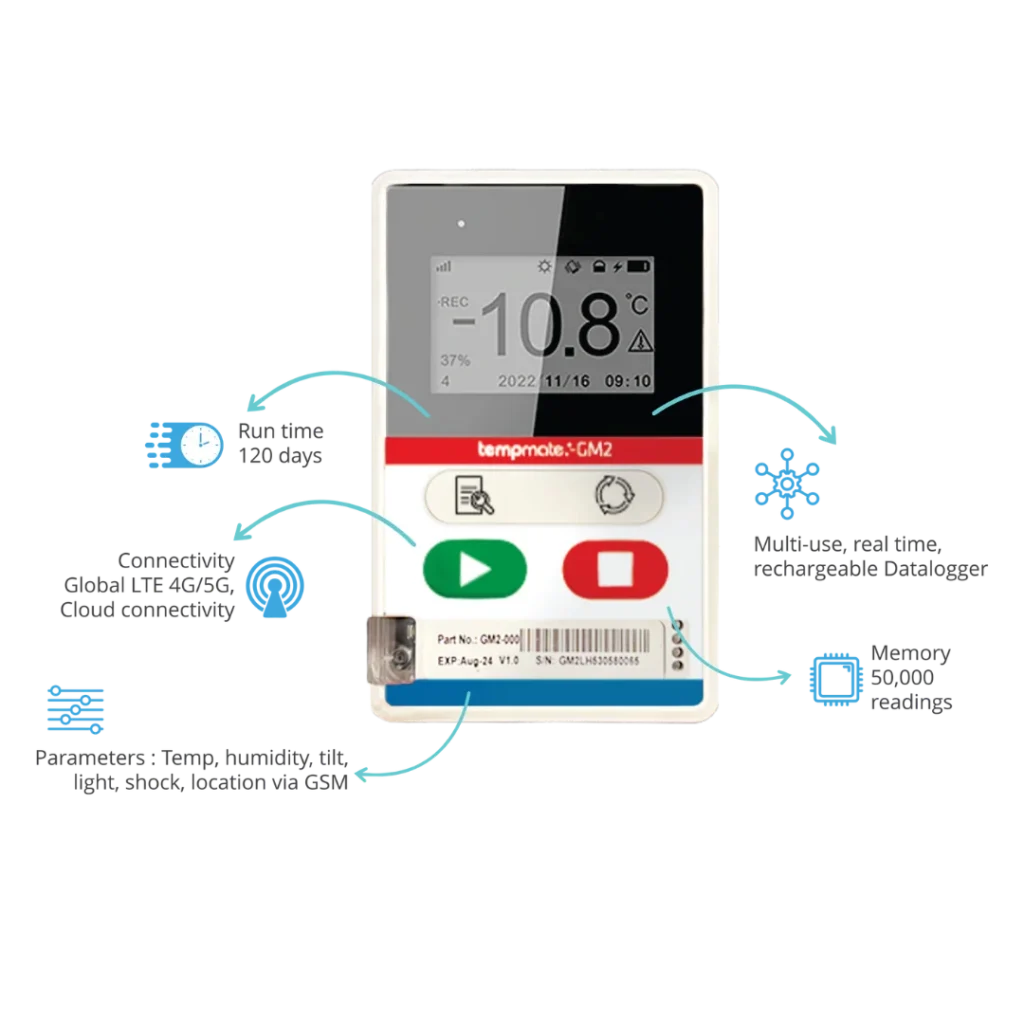
The Tempmate GM2 is a multi-use cellular data logger with a rechargeable battery and a micro-USB port. Because it is designed for repeated use, the Tempmate GM2 is suitable for fixed monitoring applications such as cold rooms, warehouse storage areas, and refrigerated vehicles on regular routes, as well as for recurring shipments. In addition to real-time cloud-based monitoring through 4G cellular connectivity, the Tempmate GM2 can generate PDF and CSV reports directly through the micro-USB port. This provides both remote monitoring capability and local report generation.
Both the Tempmate GS2 and Tempmate GM2 cellular data loggers are available through Lisaline Asia. The choice between the two models depends on whether the application requires single-use shipment monitoring or multi-use deployment for repeated monitoring cycles.
What is the role of a 4G data logger in continuous real-time temperature and humidity monitoring?
A 4G data logger plays an essential role in continuous real-time temperature and humidity monitoring in cold chain logistics because it ensures that environmental conditions are recorded and transmitted without interruption throughout the storage and transportation period. Here are some of the key roles a cellular data logger plays in continuous real-time temperature and humidity monitoring:
- A cellular data logger measures both temperature and humidity at configured intervals and transmits the readings to a cloud-based monitoring platform in real time through the 4G cellular network. This ensures that users have access to live environmental data at all times during the monitoring period.
- A 4G data logger records conditions continuously from the moment it is activated until the monitoring period ends. There are no gaps in the data record, and every reading is time-stamped. This provides a complete and reliable account of the environmental conditions experienced by the product during storage or transportation.
- When temperature or humidity values exceed the configured alarm limits, the cellular data logger sends immediate alerts via SMS and email. This enables personnel to respond promptly to any excursion and take corrective action before product integrity is compromised.
- All readings transmitted by the 4G data logger are stored on the cloud platform, providing a permanent and accessible record of temperature and humidity conditions. These records can be reviewed at any time and exported in PDF or CSV format to support compliance with regulatory guidelines from bodies such as the WHO and FDA.
- Because a cellular data logger stores all readings in its internal memory in addition to transmitting them to the cloud, the data record is protected even in the event of temporary network disruptions. Readings recorded during a connectivity gap are uploaded to the platform when the network connection is restored.
- In cold chain operations involving temperature- and humidity-sensitive products such as pharmaceuticals, vaccines, biological samples, and food products, a 4G data logger provides the level of continuous environmental monitoring required to verify product safety, support regulatory compliance, and reduce the risk of undetected excursions.
Therefore, a 4G data logger is a fundamental component of continuous real-time temperature and humidity monitoring in cold chain logistics. It provides uninterrupted data collection, remote visibility, immediate breach alerting, and complete compliance documentation throughout the monitoring period.
Conclusion — 4G Data Logger in Temperature and Humidity Monitoring
In conclusion, a 4G data logger is a dependable and efficient solution for real-time temperature and humidity monitoring in cold chain logistics. It uses 4G cellular connectivity to transmit readings to a cloud-based platform, enabling remote live data access, immediate breach alerts, and complete time-stamped records without the need for on-site network infrastructure. A cellular data logger is essential for cold chain operations that require continuous monitoring, regulatory compliance documentation, and prompt response to temperature and humidity excursions.
Lisaline Asia supplies two Tempmate 4G data logger models, the Tempmate GS2 for single-use shipment monitoring and the Tempmate GM2 for multi-use deployment, both offering reliable 4G cellular connectivity, real-time cloud monitoring, and compliance-ready reporting for cold chain facilities.
To learn more about the Tempmate GS2 and Tempmate GM2 cellular data loggers or to discuss your cold chain monitoring requirements, contact our team today and visit our website for more details.