
In pharmaceutical and cold chain shipments, you require constant visibility and traceability. IOT GSM data loggers provide you with just that.
With constant visibility into your data through cloud or web based platforms and real time alerts when the conditions exceed the set limits, the IOT GSM data loggers are the future of modern cold chain monitoring.
In this blog we will discuss what IOT GSM data loggers are, their key features and benefits, and why they matter in shipment monitoring. We will look at the GSM data loggers offered by Lisaline Asia, how IOT GSM data loggers work, what to check before choosing one, and how they compare with LoRaWAN, Bluetooth, or Wi-Fi based data loggers. Finally, we will discuss why Lisaline Asia, a leading supplier of cold chain monitoring solutions in India, is the right partner for sourcing IOT GSM data loggers manufactured by Tempmate.
What are IOT GSM Data Loggers?
IOT GSM data loggers are remote temperature monitoring devices that use GSM 4G cellular networks to transmit data. They record temperature and other parameters at set intervals and send the readings to a cloud platform. Since they run on global GSM 4G connectivity, you can view live shipment data from anywhere in the world, no matter where your shipment is.
Unlike LoRaWAN, Wi-Fi, or Bluetooth based data loggers, IOT GSM data loggers are not limited to a fixed transmission range. Their GSM connectivity lets them send readings from anywhere, making them well suited for long haul and cross border shipments.
These data loggers also send real time alerts when conditions exceed your set safety parameters. This early warning gives logistics teams a heads up before a full temperature excursion happens, so they can take action and reduce or prevent product loss in transit.
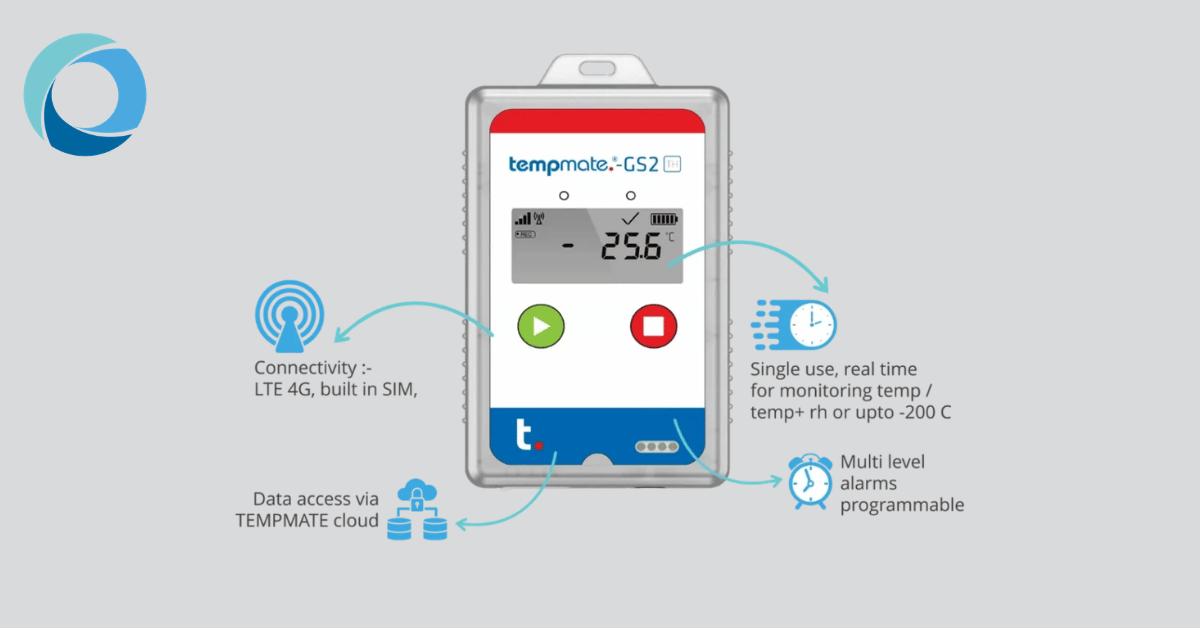
Lisaline Asia supplies IOT GSM data loggers manufactured by Tempmate: the Tempmate GS2 and Tempmate GM2. Tempmate GS2 is a single use IOT GSM data logger, while Tempmate GM2 is reusable. Both integrate with the Tempmate cloud platform for real time alerts and automatically generate audit ready PDF/CSV reports after every shipment.
What are the features of IOT GSM Data Loggers?
IOT GSM Data Loggers have several features that make them standout for shipment monitoring. These features include:
GSM 4G Connectivity with 2G Fallback
IOT GSM data loggers connect to GSM 4G mobile networks for data transmission. When 4G signal is weak or unavailable, they automatically fall back to 2G, so data transmission never stops.
This gives you true global connectivity. Mobile networks reach almost every part of the world, including remote areas, so you can track your shipment’s environmental conditions from anywhere. This gives you a complete, uninterrupted picture of your shipment’s conditions from dispatch to delivery.
LCD Display
IOT GSM data loggers like Tempmate GS2 and Tempmate GM2 come with an LCD display showing the current status of the shipment. This means logistics teams do not need to check the cloud platform for a quick status check, the display gives an instant, at a glance view of shipment conditions.
The LCD display shows current temperature, max and min temperature, battery level, network signal strength, recording status, and alarm status. With this data available offline, teams can quickly tell whether the product is safe or has been affected by a temperature excursion, without waiting on cloud access or network availability.
USB Interface
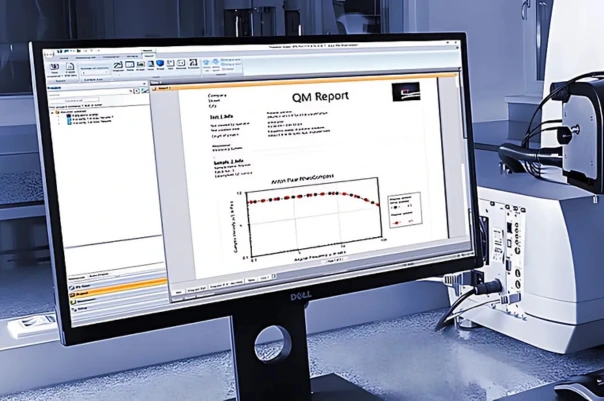
Both Tempmate GS2 and Tempmate GM2 IOT GSM data loggers have a built in USB interface. Once the shipment is complete, you simply plug the data logger into a laptop or computer to access all recorded readings and download compliance ready PDF/CSV reports.
This is especially useful when you need to view the recorded data without an internet connection. The USB plug and play design is not limited to post shipment use either, you can also generate a temporary report mid shipment without stopping the data logger from recording.
Cloud Integration
Both Tempmate GS2 and Tempmate GM2 IOT GSM data loggers integrate with the Tempmate cloud platform. With 4G GSM connectivity, they transmit data to the cloud from anywhere in the world, and since these data loggers run on mobile networks which are present almost everywhere on shipment routes, this transmission range has no real limit.
From the Tempmate cloud platform, you can access live readings and receive automatic real time alerts the moment conditions exceed safety limits, even for a short time. Post shipment, you can also download audit ready PDF and CSV reports directly from the platform.
On Device Alarms
The Tempmate GS2 and Tempmate GM2 IOT GSM data loggers provide device alarms through built in LED indicators. The LED instantly signals an alarm without you needing to check the screen or the cloud platform, making it easy for logistics teams to spot a problem at a glance.
Why do IOT GSM Data Loggers matter in shipment monitoring?
Export shipments of pharmaceuticals, vaccines, and other critical products cannot afford gaps in monitoring. A single undetected temperature excursion can compromise an entire consignment. IoT GSM data loggers solve this by providing uninterrupted, real-time monitoring from dispatch to delivery, regardless of where in the world your shipment is. Here is why they matter.
1. No Range Limits on Data Transmission
The Bluetooth, Wi-Fi, and LoRaWAN data loggers stop transmitting the moment a shipment moves out of their network range. IoT GSM data loggers have no such restriction. They use 4G mobile networks which are available across most international shipment routes by air, sea, and road. Your shipment data keeps transmitting continuously without any dependency on fixed infrastructure.
2. Continuous Real-Time Monitoring Throughout Transit
The IoT GSM data loggers transmit readings to the Tempmate cloud platform at regular intervals throughout the entire journey. You can view live shipment conditions at any point during transit. There are no blind spots between dispatch and delivery, which is exactly what export shipments of critical products require.
3. Instant Alerts Anywhere in the World
If temperature, humidity, shock, or any other monitored parameter crosses the pre-set safety limits, the cloud platform sends an instant alarm to all registered users. It does not matter whether you are in the same city or a different country. You receive the alert immediately and can instruct your logistics team on the ground to take corrective action before the excursion causes irreversible damage.
4. Seamless Fallback to 2G in Low Network Areas
When 4G signal is weak or unavailable, IoT GSM data loggers automatically switch to 2G connectivity. Monitoring does not pause or stop during this transition. The data logger continues transmitting in low network conditions, ensuring real-time visibility is maintained even through remote transit routes or areas with limited 4G coverage.
5. Local Recording When Network Is Unavailable
If mobile network is completely unavailable for a period, the IoT GSM data logger does not stop working. It continues recording all readings locally in its internal memory. The moment network connectivity returns, all stored data is automatically transmitted to the cloud platform. No readings are lost and the complete data record remains intact for compliance and analysis.
If mobile network is completely unavailable for a period, the IoT GSM data logger does not stop working. It continues recording all readings locally in its internal memory. The moment network connectivity returns, all stored data is automatically transmitted to the cloud platform. No readings are lost and the complete data record remains intact for compliance and analysis.
6. On-Demand Data Access Without Internet
During periods of no network, teams travelling with the shipment can still access the data. By plugging the data logger into any laptop or computer via the built-in USB interface, they can view live readings or download a temporary report instantly. No internet connection or additional software is required. This plug-and-play access ensures teams on the ground are never without information when they need it most.
7. Full Chain of Custody Documentation
Every reading recorded by an IoT GSM data logger is time-stamped and stored on the Tempmate cloud platform. Once the shipment is complete, a full compliance-ready PDF or CSV report covering the entire journey is available for download. This provides an unbroken chain of custody record that meets regulatory requirements for pharmaceutical and cold chain exports.
8. Suitable for Long-Duration Export Shipments
Export shipments often take days or weeks to reach their destination. IoT GSM data loggers are built for this. The Tempmate GS2 supports up to 120 days of continuous monitoring on a single charge. The Tempmate GM2 has a rechargeable battery that allows monitoring to be extended beyond 120 days. Both models are designed to last the full duration of even the longest international shipment without interruption.
What are the types of IOT GSM Data Loggers?
Lisaline Asia is the authorised supplier of Tempmate’s GS2 and GM2 IOT GSM Data Loggers. These are single use and multi use respectively. Offering cloud integration with the tempmate cloud platform, these Tempmate data logger models feature an LCD display, built in USB interface and provide continuous real time monitoring with 4G GSM connectivity with 2G fallback to track your shipment anywhere in the world.
Tempmate GS2
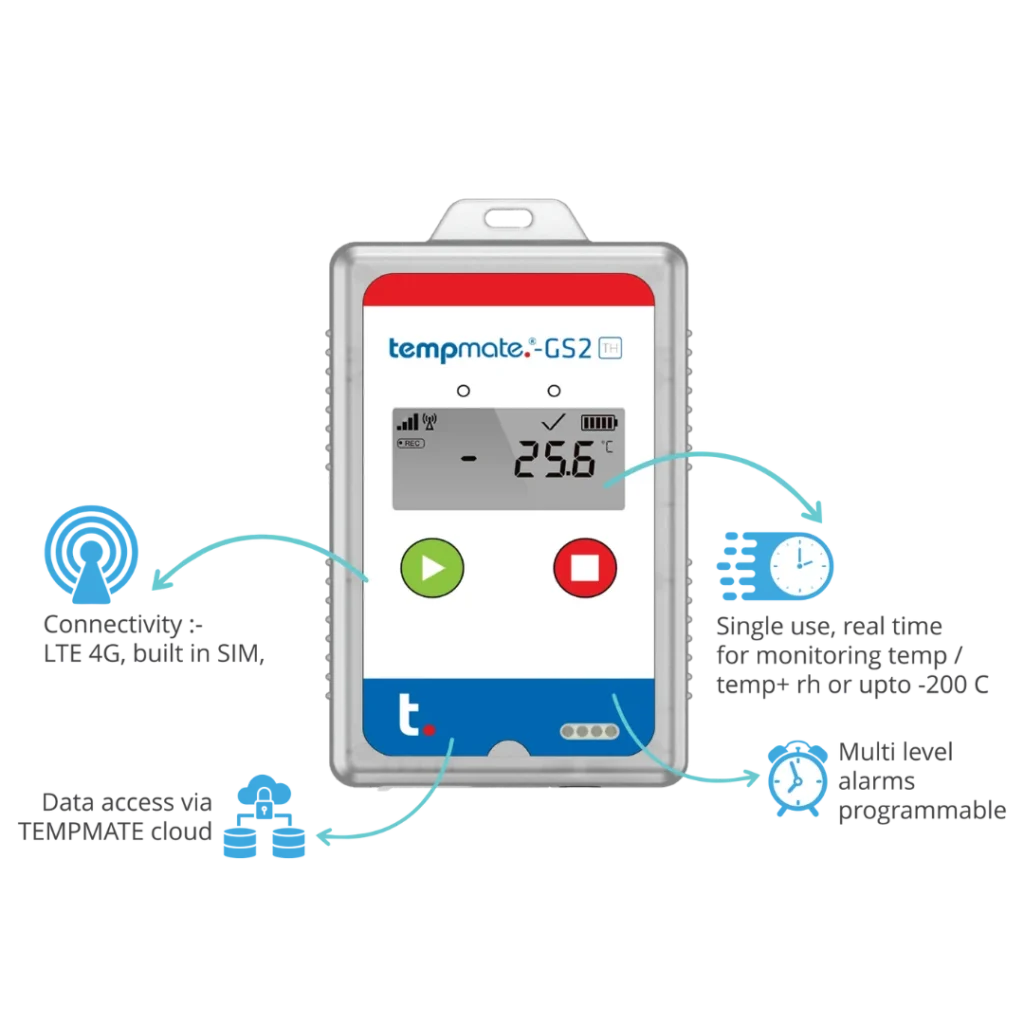
These are single use IOT GSM data loggers. With an LCD display and LED indicators for on device alarms, the data logger provides the current status of your shipments at a glance. With a built in USB interface featuring a plug and play design you can view the shipment data without an internet connection and automatically generate compliance ready PDF/CSV reports. Here are the features the Tempmate GS2
- Internal Memory- Can store up to 32000 readings in its on board memory
- Battery- Lasts up to 120 days under standard working conditions
- Monitors temperature, humidity, shock, light, tilt and location.
- Single use data logger with a non rechargeable, non user replaceable battery which makes it suitable for one way shipments.
Tempmate GM2
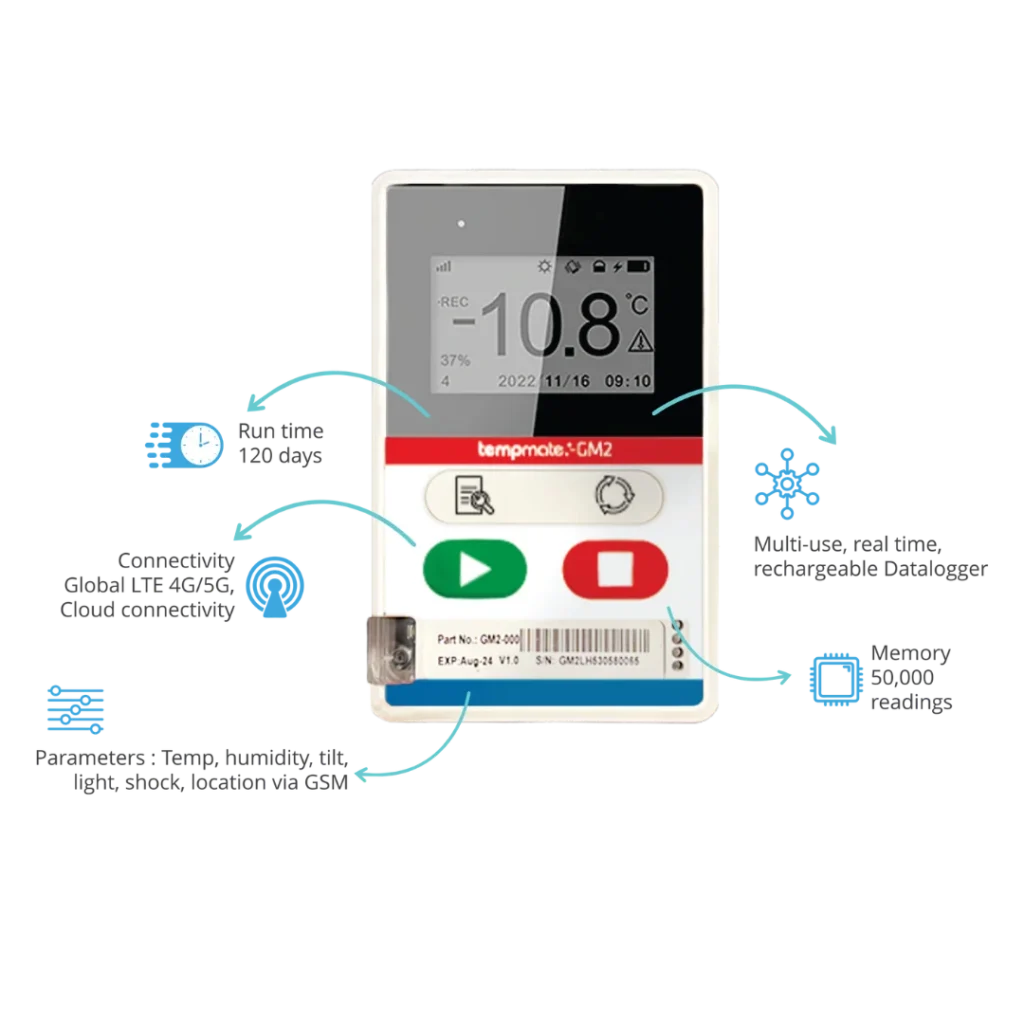
These are multi-use IOT GSM data loggers. With an LCD display and LED indicators for on-device alarms, the data logger provides the current status of your shipments at a glance. It features a built-in USB interface featuring a plug and play design where you can view the shipment data offline and automatically generate compliance ready PDF/CSV reports. Here are the features of Tempmate GM2:
- Internal memory- Can store up to 50,000 readings in its on board memory.
- Battery is rechargeable not user replaceable and works 120 days at one charge.
- Monitors temperature, humidity, shock, tilt and location.
- Multi-use data logger with a rechargeable, non user replaceable battery which makes it suitable for multi-shipment use.
How do IOT GSM Data Loggers work?
Simple One-Button Start
IoT GSM data loggers are built for ease of use. Press the power button once and the device starts recording immediately. No software, no laptop, no configuration needed at the time of dispatch. This makes them ideal for busy logistics teams who need to start a shipment fast.
Multi-Parameter Sensing
Once started, the IoT GSM data logger begins capturing multiple environmental parameters simultaneously. It records temperature, humidity, light exposure, shock, tilt, and GPS location data. All readings are time-stamped and stored internally in the device memory as the shipment moves.
Real-Time Data Transmission via 4G GSM
The data logger uses 4G GSM connectivity with a 2G fallback to send recorded readings to the Tempmate cloud platform at regular preset intervals. This means you get live visibility of your shipment conditions from anywhere in the world. As long as GSM network coverage is available, monitoring is continuous and uninterrupted.
Cloud-Based Live Monitoring Dashboard
All incoming data is displayed live on the Tempmate cloud platform. Authorised users can log in from any device and track their shipment in real time. You can view current readings, historical trends, and alarm events from a single dashboard without needing any specialised software.
Automatic Alarm Alerts for Excursions
If any recorded parameter crosses the pre-set safe limits, the cloud platform triggers an instant alarm. Alert notifications are sent to all registered users regardless of where they are in the world. This ensures that temperature excursions, shock events, or other deviations are flagged immediately so corrective action can be taken without delay.
Extended Continuous Monitoring
IoT GSM data loggers are designed for long shipments. The Tempmate GS2 supports continuous monitoring for up to 120 days on a single battery charge, making it suitable for one-way disposable use. The Tempmate GM2 features a rechargeable battery, allowing monitoring to be extended beyond 120 days for longer or recurring shipments.
Simple One-Button Stop
Stopping the IoT GSM data logger is as straightforward as starting it. Hold the power button for a minimum of 5 to 10 seconds and the device stops recording. This prevents accidental shutoffs and ensures the data logger keeps running through the entire duration of the shipment.
Compliance-Ready Reports via Cloud
Once the shipment is complete, you can access the full data record on the Tempmate cloud platform. Reports can be downloaded as PDF or CSV files directly from the platform. These reports are formatted to meet compliance requirements and are ready for submission to regulatory or quality teams without any additional processing.
Offline Report Download via USB
For situations where internet access is not available, the IoT GSM data logger has a built-in USB interface. Plug the device directly into any computer and the reports can be downloaded in a plug-and-play operation. No internet connection or additional software installation is required to access the data offline.
What to look out for before choosing IOT GSM Data Loggers?
Not every IoT GSM data logger is built the same way. Choosing the wrong one for your shipment type can mean gaps in monitoring, missing compliance data, or a device that runs out of battery before your shipment reaches its destination. Here is what to evaluate before making a decision.
1. Network Connectivity — 4G with 2G Fallback
The first thing to check is what mobile network generations the data logger supports. A logger that only operates on 4G will stop transmitting in areas where 4G coverage is weak or absent. Always choose an IoT GSM data logger that supports 4G with an automatic 2G fallback. This ensures continuous data transmission across all shipment routes including remote or low-coverage areas.
2. Parameters Monitored
Different shipments need different monitoring. Check whether the data logger records only temperature or also monitors humidity, light exposure, shock, tilt, and GPS location. For pharmaceutical and vaccine shipments, multi-parameter monitoring gives you a complete picture of conditions throughout transit. A logger that only records temperature may leave critical excursion events undocumented.
3. Battery Life and Shipment Duration
Match the battery life of the data logger to the length of your shipment. A device that runs out of power midway through a 60-day sea freight journey leaves you with an incomplete record. Check the rated battery life under real operating conditions, not just laboratory figures. Also consider whether the device is single-use disposable or rechargeable, depending on whether you need it for one-way or recurring shipments.
4. Local Data Storage During Network Outages
Mobile network coverage is not guaranteed on every leg of a shipment route. Check whether the IoT GSM data logger continues recording data locally when network is unavailable and automatically syncs to the cloud when connectivity returns. A device that stops recording during network outages will produce gaps in your compliance report that cannot be recovered.
5. Offline Data Access via USB
There will be situations where your ground team needs to access shipment data without an internet connection. Check whether the data logger has a built-in USB interface that allows plug-and-play report download without stopping the logger and without requiring additional software. This is a critical feature for teams managing shipments through remote locations or customs holding areas.
6. Cloud Platform and Alert Configuration
The data logger is only as useful as the cloud platform it connects to. Evaluate whether the platform allows you to set custom alarm thresholds for each parameter, configure who receives alerts, and view live readings from any device. Check that alarm notifications are sent instantly to registered users when excursions occur, not just logged for review after delivery.
7. Compliance Report Format
For pharmaceutical exports, your data logger must produce reports that satisfy regulatory requirements. Check that the cloud platform generates downloadable PDF and CSV reports that are time-stamped, tamper-evident, and formatted to meet standards such as GDP, CDSCO, or 21 CFR Part 11 depending on your target market. Also verify that the data logger itself is validated against EN12830, the European standard for temperature recording instruments used in the transport and storage of temperature-sensitive goods. A data logger that cannot produce compliance-ready documentation or meet instrument-level standards creates audit risk regardless of how well it monitored the shipment.
8. Certifications and Regulatory Approvals
Before purchasing, verify that the IoT GSM data logger carries the relevant certifications for your shipment routes and product categories. Look for CE marking and EN12830 compliance for European markets, and FCC certification for shipments to or through the United States. RoHS compliance confirms the device meets international restrictions on hazardous substances. For pharmaceutical use, ISO 13485 certification of the manufacturer is an additional mark of quality assurance. Always confirm that the certifications held by the device match the regulatory requirements of the countries you are shipping to.
9. Build Quality and Environmental Rating
Your data logger will travel through airports, warehouses, loading docks, and temperature-controlled vehicles. Check the IP rating of the device to ensure it can withstand dust and moisture exposure during handling. A ruggedised build with a high IP rating reduces the risk of device failure mid-shipment due to physical or environmental stress. Both Tempmate IOT GSM data loggers have waterproof IP65 protection.
10. Single-Use vs Rechargeable — Choosing the Right Model
Finally, decide whether you need a single-use disposable logger or a rechargeable multi-use device. For one-way export shipments where the logger does not return, a single-use model keeps costs lower and eliminates the logistics of device recovery. For recurring shipments or routes where the device is returned and reused, a rechargeable model with extended battery life delivers better long-term value.
For export and foreign shipment monitoring, the Tempmate GS2 and Tempmate GM2 IoT GSM data loggers meet all of the above criteria. The GS2 is a single-use disposable logger with up to 120 days of battery life, ideal for one-way pharmaceutical and cold chain shipments. The GM2 is a rechargeable multi-use logger suited for recurring shipments where the device is recovered and reused. Both operate on 4G GSM with 2G fallback, record multiple parameters, store data locally during network outages, support USB plug-and-play offline access, and generate compliance-ready reports through the Tempmate cloud platform. They are built for exactly the kind of continuous, uninterrupted global monitoring that export shipments demand.
How do IOT GSM Data Loggers compare to LoRaWAN, Bluetooth or Wi-fi based data loggers?
Not all data loggers work the same way. The connectivity technology inside a data logger decides where it can monitor, how far its data travels, and whether it is suitable for shipment monitoring or fixed storage use. Here is how IoT GSM data loggers compare against the three other common connectivity types.
4G GSM – Tempmate GS2 and GM2
IoT GSM data loggers work wherever mobile networks are available, which covers most of the world. They provide continuous live visibility of your shipment from anywhere, with no external gateway required thanks to a built-in SIM. Readings are continuously synced to the Tempmate cloud platform throughout transit. They record multiple parameters including temperature, humidity, light, shock, tilt, and GPS location. A built-in USB interface also allows offline downloading of compliance-ready time-stamped reports without stopping the logger. For foreign shipment monitoring, IoT GSM data loggers are the clear choice.
Bluetooth data loggers
Bluetooth data loggers can only provide live visibility when the paired device or gateway is within Bluetooth range of approximately 50 metres. Once the shipment moves beyond that range, live monitoring stops. The paired device acts as a gateway, so no separate external gateway is required. However, some manufacturers provide optional gateways such as the Dicksonbridge or the Zebra ZS200 Bridge to extend usability. Readings cannot be continuously synced to the cloud platform unless a device or gateway remains within Bluetooth range. These loggers measure parameters like temperature, humidity, and light depending on the model. There is no USB interface for offline report downloading. Bluetooth data loggers are better suited for short-range or warehouse-level monitoring than for international shipments.
LoRaWAN data loggers
LoRaWAN data loggers are limited to a gateway range of approximately 15 kilometres line of sight. A LoRaWAN gateway must be installed on-site or nearby to enable cloud connectivity at all. Readings are only synced to the cloud platform when the data logger is within range of that gateway. These devices monitor parameters such as temperature, differential pressure, CO2, light, and dry contact depending on the model. There is no built-in USB interface for offline report downloading. LoRaWAN data loggers are not suitable for shipment monitoring and are designed specifically for fixed storage environments such as warehouses, cold rooms, or facilities where a permanent gateway infrastructure is in place.
Wi-Fi data loggers
Wi-Fi data loggers are restricted to a range of approximately 50 metres line of sight and require an active Wi-Fi router to be present on-site. Data is only synced to the cloud when the logger is connected to a Wi-Fi network. These devices monitor temperature and relative humidity depending on the model and have no USB interface for offline report downloading. Like LoRaWAN loggers, Wi-Fi data loggers are suitable for fixed storage monitoring only and are not appropriate for shipment monitoring across locations or borders.
With global connectivity dependent only on mobile networks available in most countries, IoT GSM data loggers offer a complete picture of multiple environmental conditions throughout your cold chain shipment. Continuous real-time monitoring from dispatch to delivery makes them the right tool for pharmaceutical and cold chain shipments across countries. Bluetooth, LoRaWAN, and Wi-Fi based loggers are better suited for fixed storage and short-term local monitoring where infrastructure is already in place.
Why should you choose Lisaline Asia for IOT GSM Data Loggers for shipment monitoring?
Since 1998, Lisaline Asia has been leading cold chain monitoring innovation in India. We made a landmark achievement of introducing the world’s first miniaturised Vaccine Vial Monitor (VVM) technology to monitor temperature exposure of vials for the Polio Eradication program in India. Over 25 years later, we continue to lead with trusted cold chain monitoring solutions for the pharmaceutical, logistics, food, and life sciences sectors .
Lisaline Asia is the authorised supplier of IOT GSM data loggers like Tempmate GS2 and Tempmate GM2. These are single use and multi use shipment data loggers with 4G global connectivity with 2G fallback.
Lisaline Asia is the official supplier of some of the leading international brands in cold chain monitoring equipment like Zebra, Dickson, Tempmate, etc. This makes Lisaline a reliable partner in providing cold chain monitoring solutions tailored to your needs. Choose Lisaline Asia for the following reasons:
Authorised Supplier
Since Lisaline Asia is the authorised supplier of Tempmate data logger models in India, you are receiving genuine products. There are many suppliers in the market who offer similar varieties which are fake and may be defective. Sourcing your cold chain monitoring data loggers from an authorised supplier like Lisaline ensures you get authentic products with proper labelling, direct manufacturer support, warranty, proper packaging and documentation, etc. You also get access to several other services which a local supplier does not provide you with.
Wide range of services
Lisaline Asia provides you with a wide range of services for compliance in your pharmaceutical and cold chain monitoring needs. You get comprehensive after sales support, 24/7 online support, including validation, calibration and thermal mapping. All of this is backed by an ISO 17025 certified in-house calibration laboratory and a WHO PQS-certified product validation and testing laboratory.
Meets Compliance Standards and Specifications
Both the IOT GSM data loggers supplied by Lisaline Asia Tempmate GS2 and Tempmate GM2 have strong regulatory compliance and reliability. They hold certifications including EN 12830, FCC, CE, and RoHS, along with RTC DO-160 compliance for air transport, ensuring it meets international standards for cold chain and pharmaceutical logistics.
Conclusion
IoT GSM data loggers are no longer just an option for pharmaceutical and cold chain shipment monitoring. They are the standard that export shipments demand. With 4G GSM connectivity and 2G fallback, continuous real-time cloud monitoring, instant alerts, local data storage during network outages, and compliance-ready reporting, they give you complete visibility of your shipment from dispatch to delivery without gaps.
Unlike Bluetooth, Wi-Fi, or LoRaWAN based data loggers that are limited by range and fixed infrastructure, IoT GSM data loggers work wherever mobile networks exist. That covers almost every shipment route in the world. Whether your consignment travels by air, sea, or road across borders, you have live visibility and instant alerts throughout.
The Tempmate GS2 and Tempmate GM2 are built specifically for this. The GS2 handles one-way disposable shipments with up to 120 days of battery life. The GM2 handles recurring shipments with a rechargeable battery that extends monitoring beyond 120 days. Both are multi-parameter loggers with LCD displays, built-in USB interfaces, and full integration with the Tempmate cloud platform. They meet international compliance standards including EN12830, FCC, CE, and RoHS, making them suitable for pharmaceutical exports across regulated markets.
If you are monitoring critical shipments and cannot afford excursions, gaps in data, or compliance failures, the choice is clear.
Get in touch with Lisaline Asia today to source genuine Tempmate GS2 and GM2 IoT GSM data loggers for your shipment monitoring needs. Contact us or visit our website to know more.