
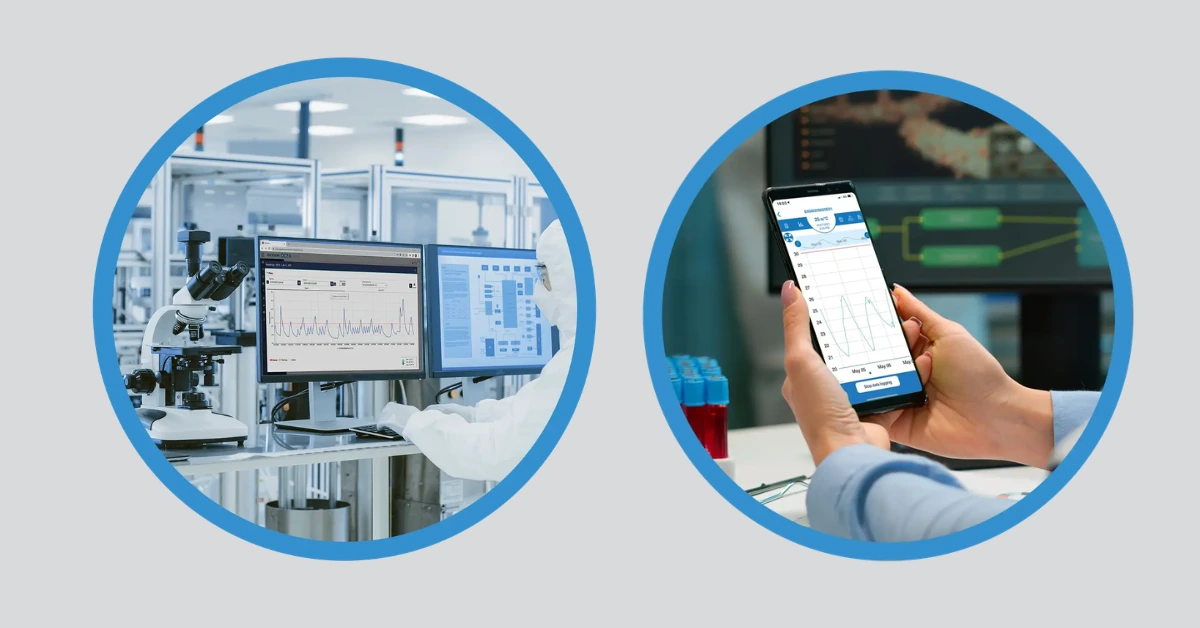
Traditional dataloggers store data locally. But how would you know the crime had taken place at the time that it was taking place? Only in retrospect – someone actually goes to the device to get the data. By which time, of course, the damage is done. Real time datalogger systems change this entirely. They log them, feeding data to the cloud. That gives teams real-time visibility, proactive alerting and the time to intervene before a stray can do irreparable damage.
Lisaline Asia supplies real time datalogger devices from trusted international manufacturers including Dickson and Zebra Technologies. These include the Cobalt X, Cobalt Xs, Emerald, Atlas, and ZS300, each designed for different monitoring environments and cold chain applications. In this blog, we cover everything you need to know, what a real time datalogger is, how it works, its key features and benefits, how it prevents temperature excursions, connectivity options, the devices we supply, and how to choose the right one for your needs.
What is a Real Time Datalogger?
A real time datalogger is an electronic device that features real time monitoring of environmental conditions. Like any other data logger, a real time datalogger has sensors that measure the environmental conditions at regular intervals. In any normal datalogger, the readings are stored in the datalogger’s internal memory. However, in a real time datalogger the readings are not only stored in the internal memory but also sent to a cloud platform. Here the data can be remotely viewed live as it is transmitted. Therefore, it is called real time monitoring where the excursions can be identified as they happen to prevent further damage.
Lisaline Asia supplies real time datalogger models like the Cobalt X and Xs series, Emerald, Atlas, Zs300, Tempmate GS2 and GM2. These are integrated with respective cloud platforms. The OCEAView cloud platform is integrated with Dickson data loggers, tempmate cloud with Tempmate models and Zebra Savannah with ZS300.
These devices with proper installation, commissioning, validation, calibration, configuration of cloud platform by Lisaline Asia, offer live data viewing, instant alerts on mobile or laptop.
What are the features of a real time datalogger?
A real time datalogger has several features. Depending on the model chosen, the technical specifications differ. However, the general features remain the same which are:
Network Connectivity
Every real time datalogger requires some type of network connectivity in order to transmit the data in real time. This may be through LoRaWAN for long range data transmission, Bluetooth Low Energy (BLE) for short range data transmission, GSM 4G cellular networks for global connectivity and Wi-fi. The data transmission range and how far the datalogger will allow real time monitoring depends on the network connectivity.
Cloud Integration
Real time datalogger systems feature cloud integration. The cloud platform is needed to store the data in real time. Here, the stakeholders can view the data in real time, access graphs, trends, and clearly pin point where the excursion happened if it did with the help of time stamped data.
The cloud platform also provides real time alerts. When the readings are sent to the cloud platform, it compares the readings with the safety ranges set during setup. If the readings are found to be outside these safety ranges, then the cloud platform triggers an alarm through the pre-selected channel whether SMS, email, app based or phone call alerts. The alarms can be viewed on a web based platform that is a laptop or through a mobile app.
Real time Alerts
The primary function of a real time datalogger is to provide real time instant alarms and alert the teams. When the products are found to be outside the safety ranges, the cloud based platform triggers these alarms in real time. This sends an alarm through SMS, email, phone call or app-based notifications whichever is selected. These alerts continue till they are acknowledged on any device. The limits when alarms would be triggered are already set. Usually there are 3 high and low alarm limits. These real time alerts instantly alert the teams who can take corrective actions and prevent the excursions from spreading further causing shipment failure or product damage.
Live data access
The main purpose of a real time datalogger is to allow live data access. Therefore, the real time datalogger systems allow you to access the live data as the readings are transmitted. You can view these time stamped readings. The readings can be viewed from anywhere- desktop browser, mobile phone, tablet, anywhere with internet access. You can view live data like current parameter readings, sensor status, live charts and graphs, alarm status, battery/ signal levels, time stamp of last reading.
Downloading of PDF and CSV reports
A real time datalogger also allows downloading of time stamped reports of all the readings recorded during a particular period. These reports are audit ready, adhering to various international standards like the FDA, WHO and GDP guidelines. Research which standards your real time datalogger model is compliant with before buying. You can contact our team for the same. These reports can be presented during inspections and audits for smooth and faster workflows.
What are the benefits of a real time datalogger?
A real time datalogger has several benefits. Real time monitoring has truly transformed cold chain operations and here are the advantages:
Faster data transmission
Modern networks like LoRaWAN, GSM 4G networks, Bluetooth Low Energy enable faster data transmission of readings and they appear on the cloud platform as they are recorded without any delay. This helps in instant monitoring, identifications of excursions and proactive cold chain management. These use less battery consumption without affecting monitoring performance.
Data backup option
The real time datalogger is not completely dependent on network connectivity. Even if the network connectivity is affected during shipments due to power cuts, or shipments in remote areas, the datalogger already provides backup by storing the data in internal memory. So even if the network connectivity goes, the data is not lost. It is sent to the cloud platform when the network connectivity returns.
Warnings about Excursions as and before they happen
The real time datalogger provides instant alerts whenever the readings go slightly out of the set limits. These alerts notify teams about the excursion which can warn them beforehand. They can take quick corrective action and ensure the excursions are minimised reducing product damage and preventing shipment failure. The alerts are sent on mobile and laptop devices through several channels like SMS, email, phone call and app based alerts. They can be viewed easily.
Live status of monitoring
The real time datalogger allows live data viewing. The teams can view critical information along with real time time stamped readings. This includes current parameter readings, sensor status whether the sensor is offline or online, real time trends whether the temperature is rising or going down, any active alarms at the moment, battery and signal levels showing if the device battery is running out needs to be replaced and how long before the last reading was taken.
These numbers are of critical value, giving us instantaneous visibility, rapid detection of issues, remote oversight, support for our operational decision making and assurance that all systems are functioning as they should. Having teams in front of a dashboard, visualize their data, means we can shift from simply reacting to proactively responding. Seeing the trends, they can reroute the shipments to avoid passing through remote no-network zones, increasing or decreasing the temperature depending on the trends. The operations teams can see equipment performance live, schedule maintenance before breakdown, monitor multiple sites simultaneously from one screen and spot patterns across sites that aren’t visible in raw numbers.
How does a real time datalogger work?
A real time datalogger has a simple working. Anyone without technical skills or IT knowledge can operate and understand the data from a real time datalogger. Therefore, companies are switching from normal dataloggers to real time data logger systems for faster and accurate workflow.
A real time datalogger monitors environmental conditions like temperature, humidity, CO2, light, shock, tilt, location (depending on the models and sensors the model is compatible with). The readings are stored in the logger’s internal memory and sent through networks to a cloud platform. For Dickson data loggers like Cobalt X,Cobalt Xs, Emerald, Atlas, it is OCEAView while for Tempmate models it is tempmate cloud and for ZS300, the Zebra Savannah is connected.
As soon as the readings are transmitted, they are compared with the alarm high/low limits set. If the conditions go outside these limits, then the cloud based platform triggers an alert. The alarm is sent through set channels like SMS, email, phone calls and app notifications. The alerts are sent till they are acknowledged either through the device or through the channel they are sent.
The real time datalogger can continue recording the environmental conditions till you want depending on its battery. In the monitoring period, if the network connectivity goes off, the datalogger doesnt lose your data; it continues monitoring and storing the readings in the internal memory. When network connectivity comes back the readings are automatically transmitted to the cloud platform.
This summarises the working of the real time datalogger. Now we will understand the part of the cloud based platform in this entire real time monitoring system.
Real Time Datalogger- Cloud Integration and Real Time Alerts
The cloud based platform is one of the major components of a real time datalogger system. The cloud platform displays live data, status of data logger device, battery and network range, etc. It shows time stamped readings. In addition to live data access, the cloud platform also provides real time alerts.
The cloud platform compares the readings with the high and low alarm limits provided during setup. If the readings are beyond these limits then the system triggers an alarm. The alarms are sent through SMS, email, mobile app, phone calls, etc. This allows the teams to act upon these alerts.
How real time datalogger systems prevent temperature excursions?
Real-time dataloggers keep an eye on temperature without stopping, and as soon as the readings go past the set alarm limits they fire alerts right away, instantly, no delay. Those alerts get sent at the same time via several routes— SMS, email, phone calls and app notifications, so basically everyone who matters, from the field teams to management, gets the message immediately. With this multi-channel setup, it’s hard for any alert to slip through, and crews can correct things fast, before a temperature excursion starts doing real harm or ends in a total shipment failure.
And it’s not only about reacting. Having live data on hand lets teams see temperature trends, plus graphs as they’re happening, moment by moment. Instead of waiting for an alarm to kick in, they can watch a slow temperature climb or a steady drop on a live display, and then anticipate a likely excursion before it actually arrives. That kind of sight changes the whole job from “reactive monitoring” into a more proactive approach.
Once teams have that, they can step in early, reroute shipments to nearer or better-equipped facilities, tweak the temperature controls on freezing containers, or send someone out in the field to check what’s going on. Being able to intervene before a threshold is crossed is why real-time datalogger systems aren’t just for watching, they’re a key line of defence for keeping temperature-sensitive shipments intact and in good quality.
What are some of the real time datalogger devices supplied by Lisaline Asia?
Lisaline Asia provides a range of real time datalogger devices- for instant alerts and real time monitoring. They provide reputed devices from international brands like Dickson, TempTime, Zebra. Here are the real time datalogger models supplied by Lisaline Asia:
1. Cobalt X
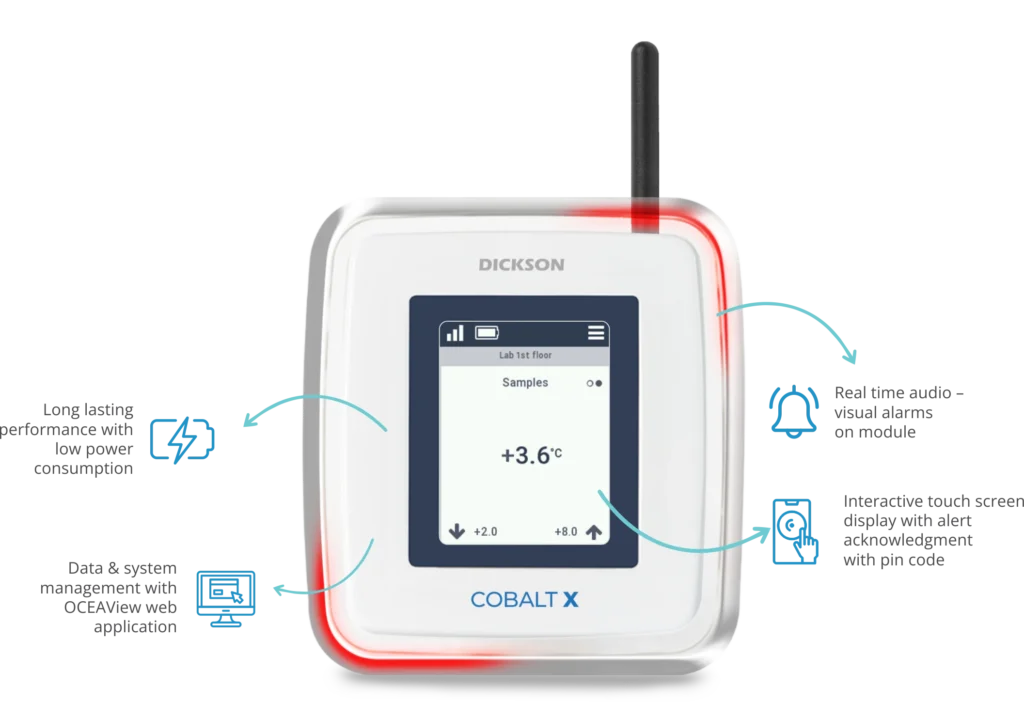
The Cobalt X is a fixed storage multi-use wireless data logger, made by Dickson and supplied in India by Lisaline Asia. It’s a next generation LoRaWAN-enabled monitoring system that sort of goes beyond just temperature and humidity so it can also watch CO2, differential pressure , current, dry contact, and light. You can connect up to 4 external sensors at the same time, which fits wired Smart-Sensors as well as wireless Bluetooth-enabled sensors like the Emerald and Atlas. That gives teams a kind of unmatched flexibility, in how they place monitoring points and where they deploy them from.
The real time datalogger device has a glove compatible color touchscreen which shows real-time readings, alarm status, and lets you do secure PIN-based alarm acknowledgment directly on-site, too. Then, if a threshold gets crossed, it immediately triggers on-device flashing lights and a buzzer, so the alert is visual and audible right away, no waiting around.
For power, the Cobalt X can run on battery, with battery life up to 2 years depending on usage. Or you can keep it running continuously on AC power. This makes it practical for both easy access and hard-to-reach monitoring locations. It also stores 4,000 readings per measurement point in internal memory, so even during temporary connectivity gaps, data isn’t lost.
The Cobalt X integrates natively with Dickson’s official OCEAView platform. Teams can look at live data, follow real-time trends, and receive alerts through SMS, email , phone calls, and app notifications. They can also download compliance and audit-ready reports in PDF and CSV formats.. As a result, the overall system aligns with FDA 21 CFR Part 11, GxP, GMP, GDP, and WHO data integrity guidelines, for pharmaceutical , healthcare, and life sciences operations.
For the certifications side, Dickson has ISO 9001 and ISO 14001 in place, and the Cobalt X does its bit with FCC Part 15 rules as well as CE marking for the European scene. In the meantime, as a LoRaWAN enabled wireless data logger, it sends sensor info over long distances, in kilometres, to the OCEAView platform through a LoRaWAN gateway, and there are also options to get connected via Wi-Fi, Ethernet , or cellular data. So overall it fits nicely in huge facilities, warehouses, chilled cold rooms , and those distributed monitoring setups where the wired stuff just can’t reach, not even if you try.
2. Cobalt Xs
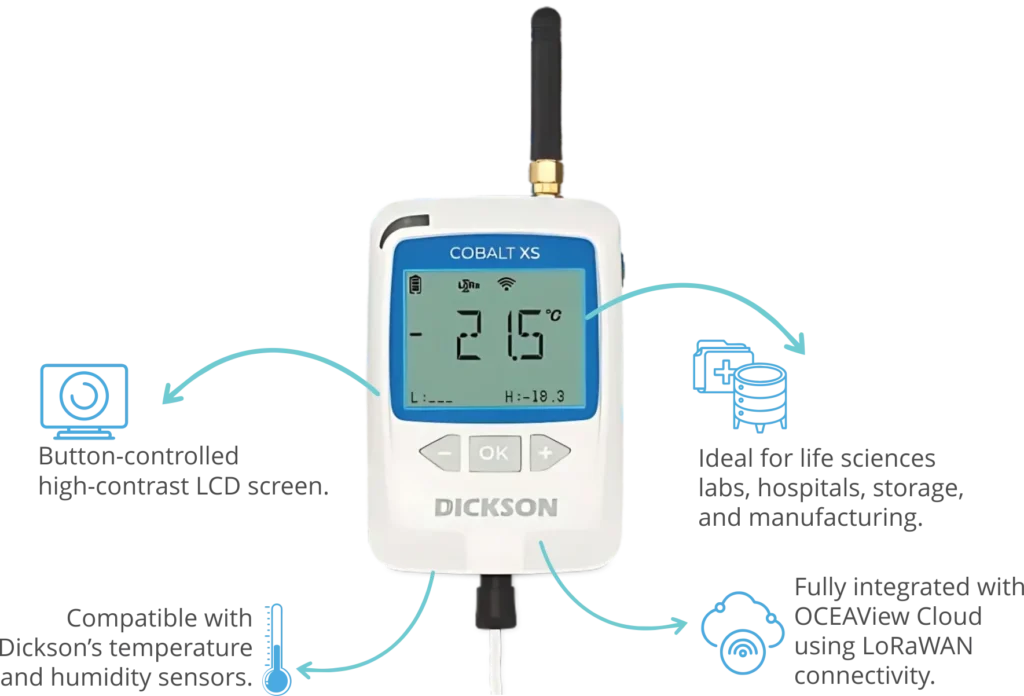
The Cobalt Xs is a compact, multi-use wireless datalogger manufactured by Dickson and supplied in India by Lisaline Asia. It is designed as a small and more portable part to the Cobalt X. It offers a small footprint and LoRaWAN wireless connectivity. The Cobalt Xs supports a variety of external sensors including digital temperature sensors, Smart-Sensor Pt100 probes for high-accuracy temperature monitoring, and dual temperature and humidity sensors. It is capable of monitoring temperature, humidity, and by extension parameters like differential pressure and CO2 depending on the connected probe configuration.
Due to its compact and durable build, it is suitable for labs, cold rooms and transportation units. The Cobalt Xs truly stands out for its ability to be placed directly alongside shipments during transit, ensuring continuous uninterrupted monitoring of environmental conditions throughout the entire shipment journey.
Dickson’s Smart-Sensor technology makes maintenance easier by storing all calibration information directly in the sensor, enabling sensor swapping for recalibration without disrupting the monitoring process.
The real time datalogger device has a LCD display with a button controlled interface. That shows current readings and alerts at a glance. The screen also supports 3 high and 3 low alarm limits indicated with a flashing alarm light on the device the moment a threshold is breached.
It has a user replaceable lithium battery with at least one year of battery life under standard usage conditions. It is ideal for long distance shipments, and remote deployments where power access is not available.
The Cobalt Xs provides local memory for 4,000 readings per sensor-about four weeks of data recorded every 10 minutes so nothing is missed during transport disconnects. It supports wireless communication over LoRaWAN with a range of up to 15 kilometers in line-of-sight, along with Bluetooth Low Energy support for the OCEAView mobile app, allowing teams to wirelessly transfer data beyond Wi-Fi or cellular service areas. It’s compatible with the Dickson OCEAView platform where users can visualize data and trends in real-time, set up alert notifications via text, phone, email, and app pop-ups, and download compliance and audit ready reports in PDF and CSV.
The Cobalt Xs is also FDA 21 CFR Part 11-ready when used with Dickson’s OCEAView monitoring platform, and the system is fully aligned with GxP, GMP, and WHO GDP guidelines, making it a trusted and regulation-compliant choice for pharmaceutical cold chain, life sciences, and logistics applications.
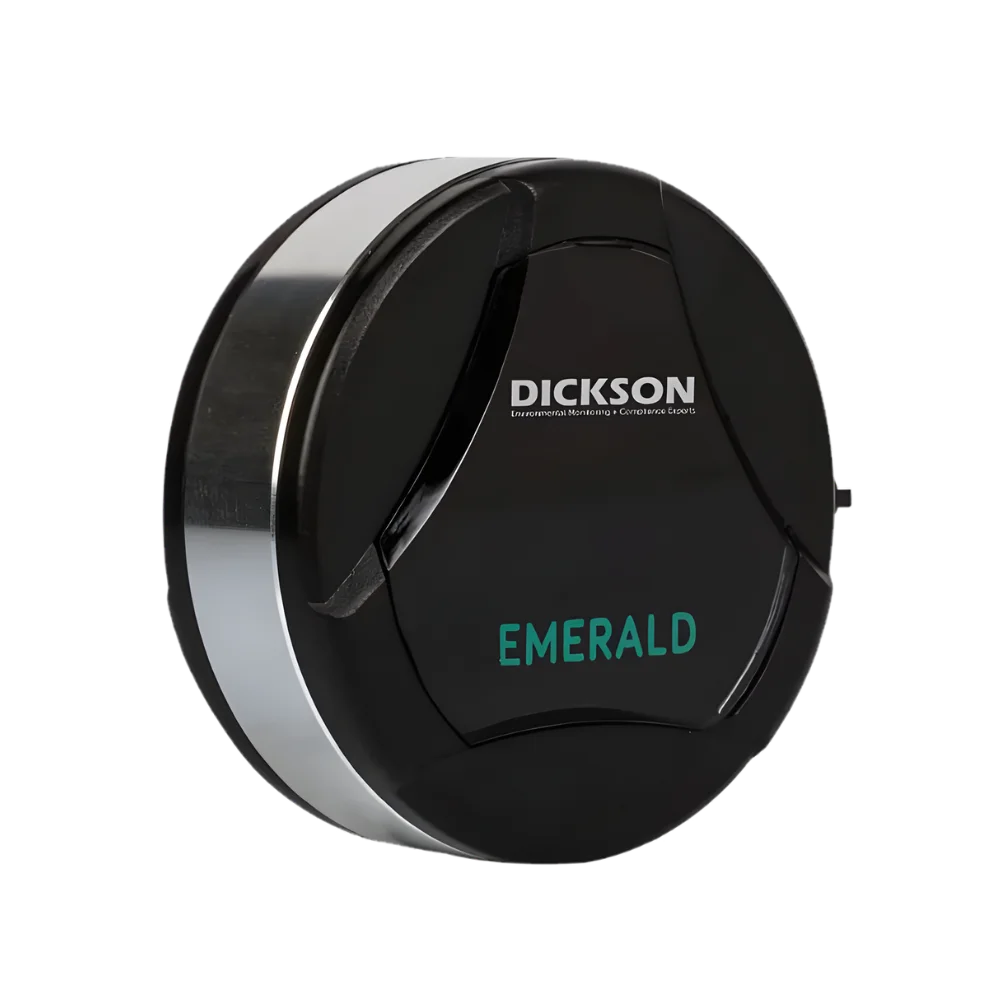
3. Emerald
The Emerald is a Bluetooth-enabled wireless temperature sensor and compact mobile data logger manufactured by Dickson and supplied in India by Lisaline Asia. Its small footprint allows it to fit neatly inside nearly any type of container, compartment, or enclosure, making it ideal for placement directly under or within the packaging of temperature-sensitive items such as pharmaceuticals, vaccines, biologics, and other cold chain products.
What sets the Emerald apart is its dual-purpose versatility, it can work as a standalone mobile data logger or as a wireless temperature sensor paired with the Cobalt X data logger. This gives teams the flexibility to deploy it in whatever configuration best suits their monitoring needs.
Data is recorded in the module’s internal memory, which stores up to 16,000 readings, and is then transmitted to the OCEAView cloud platform via the OCEAView Mobile app or through the DICKSONBridge gateway at any point along the logistics chain. There is no need to unpack items or physically retrieve the logger to access data. Readings can be collected at any time via Bluetooth wireless technology, even through packaging, meaning temperature records are always accessible without disturbing the shipment.
Programming is fast and easy using the free OCEAView mobile application for iOS and Android, and the logger supports immediate, delayed, or programmed data logging start to suit different deployment scenarios. When integrated with the OCEAView platform, teams gain access to live data viewing, real-time trend graphs, and instant excursion alerts delivered via email and app notifications, with the added ability to download compliance and audit-ready reports in PDF, Excel, and CSV formats. Mobile use – GeoTag The OCEAView platform can also leverage geo-tagging from the mobile phone’s GPS, with the display of each event marked as an icon on the map with colours indicating mission status – another powerful function when a fleet manages consignments at different places.
Calibration services consist of a 17025/IEC17025-accredited calibration via Dickson’s laboratory, assuring accuracy of data to the highest level, with fully auditable data to meet pharmaceutical, medical, clinical and food logistics standards.
4. Atlas
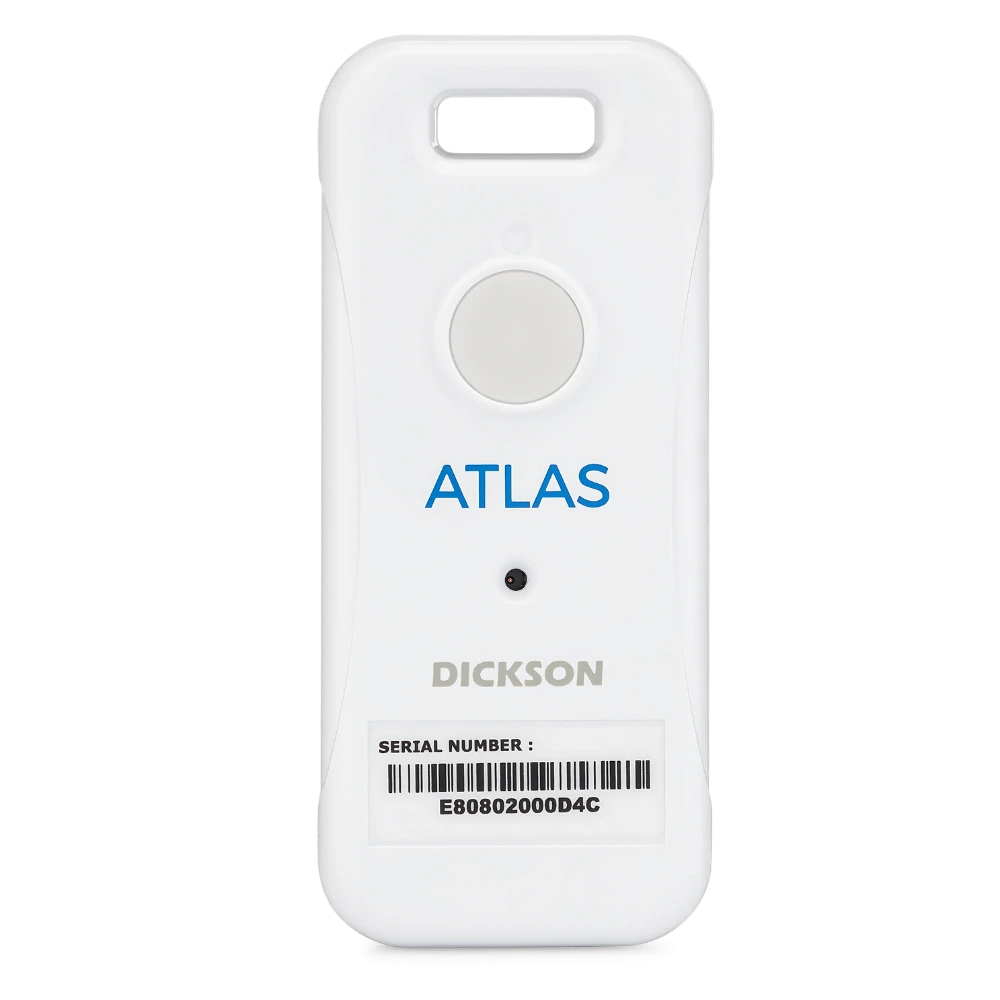
The Atlas is a compact Bluetooth-enabled wireless data logger manufactured by Dickson and supplied in India by Lisaline Asia, designed to deliver continuous, close-proximity monitoring of temperature-sensitive products from their point of origin to their final destination.
The Atlas multi-parameter cold chain data logger captures and stores readings from three key environmental parameters – temperature, relative humidity and light – at a defined interval in its own memory, for a complete 3 parameter cold chain monitoring device. Mobile and diminutive in size, it is simply placed inside your packaging with products, there is no wiring or connection to any outside source required. Utilising Bluetooth wireless technology, recorded data from each logger can be transmitted remotely, even without removing it from packaging, so teams throughout the logistics chain can easily acquire a complete record by simply bringing a smartphone close to the goods.
You can log a lot of data with your Atlas-up to 16,000 readings-to provide a thorough, ongoing log of conditions for the duration of your shipment. It supports immediate, delayed, or programmed data logging start, giving teams flexibility in how and when monitoring begins.
Like the Emerald, the Atlas offers dual-mode versatility — it can function as a standalone mobile data logger or be integrated as a compatible wireless temperature sensor with Cobalt X modules, extending its data reach through LoRaWAN connectivity when paired with the Cobalt X system. It also features NFC (Near Field Communication) for fast wireless programming via DICKSONBench, which is particularly useful in high-volume deployment scenarios where configuring multiple devices quickly is essential. The Atlas supports up to 3 high and 3 low alarm limits with programmable delay and on-board alarm management, along with a visual alarm and status indicator on the device itself, so any breach is flagged immediately even without a connected phone.
The Atlas integrates with Dickson’s DICKSONView platform — a web application that centralises data from Bluetooth data loggers, offering a live view of modules being monitored, detailed data reports, and geotagging using the mobile device’s GPS, representing each event with a colour-coded indicator on a map to show mission status. Reports can be generated in PDF, Excel, and CSV formats for compliance and audit purposes, and excursion alarm notifications are sent immediately by email when detected by the DICKSONView cloud platform, ensuring the right people are alerted without delay.
Reusable for at least one year, the Atlas is a cost-effective solution for pharmaceutical, food, logistics, and life science teams that need reliable, non-invasive, multi-parameter monitoring throughout their cold chain operations.
5. ZS300
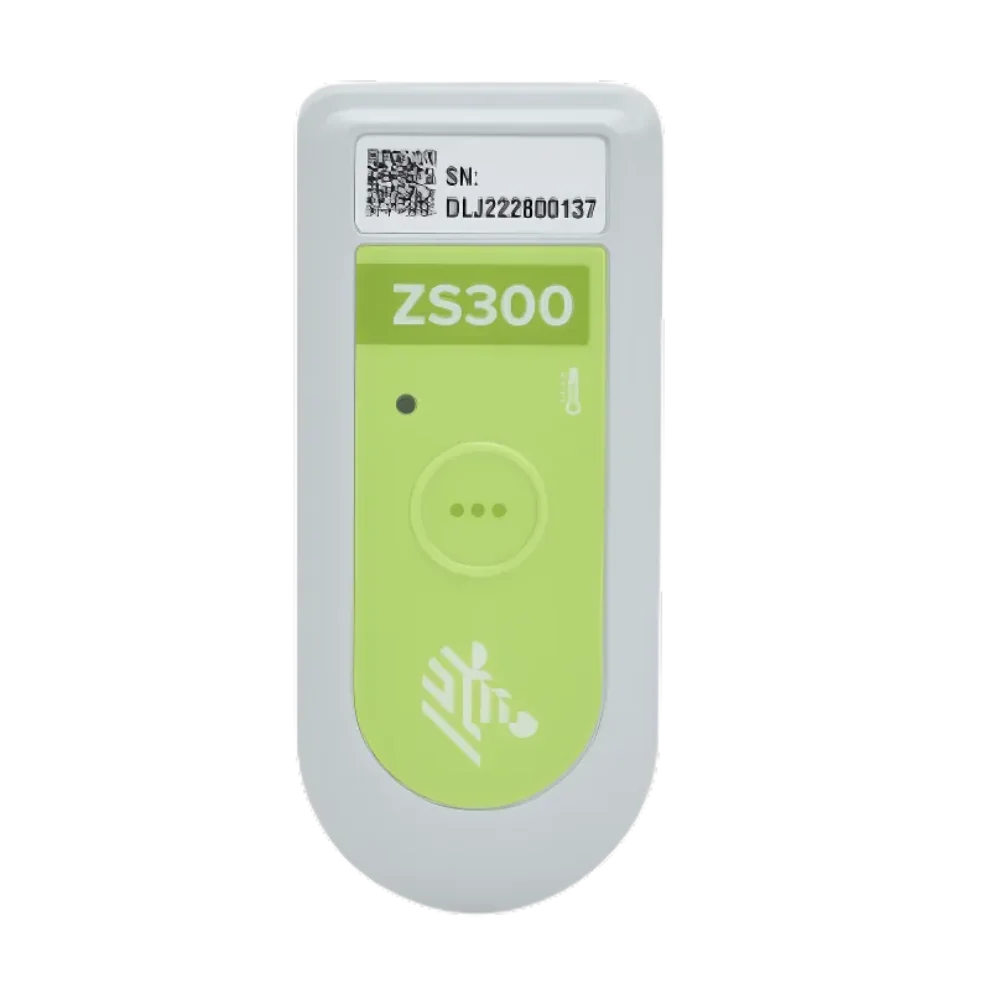
Zebra ZS300 – Bluetooth Electronic Sensor and Compact Temperature Data Logger Zebra Technologies zebra – Lisaline Asia, one of India’s leading providers of integrated RFID & Automatic Identification technology, Zebra ZS300 is designed to continuously monitor temperature in extreme cold chain environments. With an IP67 rating to ensure successful deployment in freezers, cold rooms and refrigerator shipments and monitoring a large span of temperatures, from ultra-cold pharmaceuticals to ambient transport. The small mobile unit can be fitted into just about any container or box, inside the freezer or adjacent to product during shipping for complete, product-level temperature logging with no access or handling necessary to acquire the data.
The ZS300 uses Bluetooth Low Energy v5.2 for wireless data transmission and enables high-speed transfer of logged temperature data. It significantly reduces the time needed to collect crucial environmental condition records which gives operations teams faster access to supply chain intelligence at every checkpoint. It can be configured for different temperature profiles including start time, reading intervals, and alarm thresholds, offering the flexibility needed to monitor products with varying cold chain requirements under the same device.
The ZS300 operates as part of Zebra’s ecosystem by working alongside the ZB200 Bridge. The ZB200 Bridge automatically collects data from nearby ZS300 sensors and forwards it to the cloud via Wi-Fi or Ethernet, and the Android Sensor Discovery App for cloud-connected visibility. This bridge-based architecture eliminates the need for manual data retrieval, allowing readings recorded throughout storage and transit to be uploaded automatically for near real-time review, reporting, and excursion response. Together with Zebra’s Savannah Cloud Platform, APIs, and developer tools, the system enables near real-time identification and analysis of temperature excursions so teams can act quickly and maintain product quality across even the most complex multi-leg shipment routes.
Additionally, Zebra’s no-cost sensor recycling programme makes embracing environmental responsibility simple, adding a sustainability dimension that is increasingly important for regulated industries. The ZS300 is a reliable and intelligent choice for pharmaceutical, vaccine, food, and logistics operations that require dependable, continuous, and compliance-ready temperature monitoring throughout the cold chain.
6. Tempmate GS2 and GM2
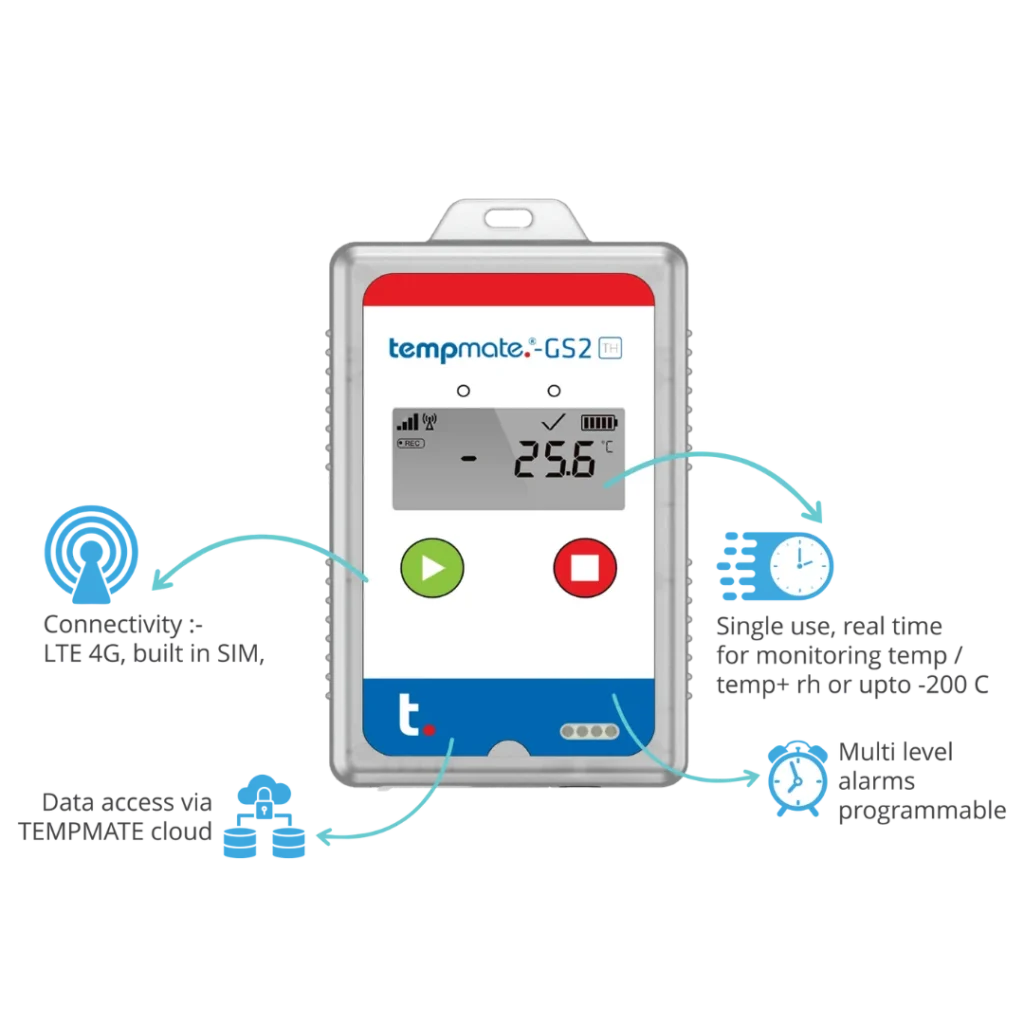
Tempmate GS2 single use data loggers provide automated, secure monitoring of environmental conditions while shipping and in storage. Single use and cloud-enabled, Tempmate GS2 logs temperature, humidity, light, shock, tilt, and position for automatic and immediate transfer to the tempmate Cloud where all environmental information can be analyzed, reviewed, stored, and shared through an internet-enabled user interface. The Tempmate GS2 offers a total recording and running time of up to 120 days after first activation via GSM connectivity. If the cellular network is unavailable, measurements are stored in the device’s internal memory and automatically transferred once the connection is restored.
The Tempmate GM2 is built for those who need a fully reusable, long-term monitoring solution. The GM2 is a small, versatile logger for real time recording with GSM locating and LTE 4G connection. It logs: Temperature, Humidity, Light, Shock and location with a rechargeable lithium ion battery and 50,000 data points storage capacity. This Tempmate GM2 can perform a standard 120 days operation under normal usage. Its built-in SIM card provides worldwide GSM connectivity while its USB interface allows for fast data download and automatic PDF report generation.
What are the different network connectivity options available for real time datalogger devices?
There are quite a lot of ways to handle network connectivity for real time datalogger units, and it mostly depends on how far the data needs to travel. So, a quick run-through of the four most common ways connectivity can be done (in real-time datalogger systems), and what I feel each one does well.
LoRaWAN (Long Range Wide Area Network)
LoRaWAN was really designed for low power, long distance wireless communication, capable of sending measurements several kilometres, in some areas up to 15 km, under a clear line of sight and good placement, with a fraction of the battery life as other wireless protocols. So, dataloggers using this technology can continue working for several years between battery changes. And one LoRaWAN gateway can cover an entire warehouse, cold storage location, or a pretty big campus area, so the install can be less infrastructure heavy. It’s especially common for fixed dataloggers in pharmaceutical storage, large cold rooms, and industrial sites where Wi-Fi coverage is limited or just not stable.
BLE (Bluetooth Low Energy)
Bluetooth Low Energy is designed for close, wireless and short range transmission, typically around 50m. This means compact mobile sensors can send temperature or humidity readings to a nearby smartphone, tablet , or gateway. The user is not required to physically connect to the device or open anything. That’s why BLE works well for shipment monitoring, since the logger rides inside its packaging and the data gets pulled at important moments along the supply chain. Simply bring a BLE-compatible device close enough. BLE also acts like a middle link between wireless sensors such as Emerald and Atlas, and LoRaWAN-enabled dataloggers like the Cobalt X. The monitoring coverage can be extended without adding new wiring.
GSM / 4G (Cellular Network)
GSM and 4G connectivity let dataloggers send data straight through cellular networks, so honestly it’s often the strongest route for monitoring while something is moving around, especially when there’s no fixed Wi‑Fi or LoRaWAN setup available.It leverages much of the same infrastructure of most cell phones, meaning it can deliver data and even alert drivers remotely regardless of location as long as there is a cellular signal to rely upon – whether on the road, between city streets, or even more remotely located areas.
Wi-Fi
Wi-Fi connections are ideal where a robust wireless network is already installed, in locations like hospital laboratories, pharmaceutical factories, research facilities or a warehouse that has a working IT system. These Wi-Fi dataloggers directly integrate with the existing LAN, sending real-time readings to the cloud without the need for any intermediate gateways. Wi-Fi gives good data transfer rates and makes installation straightforward where there is already existing Wi-Fi infrastructure available, but it may not be appropriate for mobile or remotely located monitoring where network availability cannot be ensured, and typically consumes higher amounts of power than BLE and LoRaWAN solutions.
How to choose the right real time datalogger model?
When selecting your data logger, consider your environment where monitoring will be take place, what you wish to measure, the most convenient form for you to access the data and what regulations you have been required to adhere to. When considering what kind of logger is required, it’s important to first think about:
Define your Monitoring Environment
Before choosing a real time datalogger, you should really think about where it is going to be used. Like, a big pharmaceutical cold room, a freezer compartment, a transport vehicle, a cleanroom, and even a shipment box, they all ask for different capabilities. Fixed situations such as warehouses, research labs, and cold storage rooms usually do well with wall mounted or otherwise stationary dataloggers, often with LoRaWAN or Wi-Fi connectivity so the readings can stream in near continuously to one central platform.
On the other hand, if it’s a mobile or transit setup where the logger has to ride along with the batch , you typically want compact, battery-powered mobile dataloggers. These record locally, then they can upload at checkpoints, or they push data through cellular connectivity when available.
2. Identify the parameters you need to monitor
Not every data logger watches the exact same parameters. If you’re only doing temperature surveillance, then a single-parameter device is enough. But if your process expects simultaneous temperature and humidity capture, like in a cleanroom , stability chamber, or cold room, then you’re going to need a multi-parameter logger. Some locations go further, CO2 monitoring for incubators , differential pressure for cleanrooms, or light tracking for stability investigations. When you pick a logger that covers all the relevant measurements for your specific use case, you avoid juggling multiple devices and your monitoring setup tends to feel a lot simpler.
Choose the Right Connectivity
Connectivity dictates how and when the data actually reaches you, and it has to match your deployment environment for real. LoRaWAN typically makes the most sense for large facilities, big warehouses, and even campuses where you need long range, low power transmission, but you don’t want to put too much extra gear into the mix. BLE tends to fit better with smaller mobile loggers that basically ride along in shipments, or for very close-quarters monitoring, where the readings are collected at set intervals across the logistics route .
GSM and 4G are usually the better choice when the logger must send data while it’s moving between sites, and there just isn’t a stable local network you can rely on. Wi‑Fi works best indoors where there’s already a dependable wireless setup, and where you want almost continuous uplink to a cloud platform, without having to add gateway hardware.
Consider Battery Life and Power Options
For stationary setups, an AC-powered data logger is often the easy choice, because it just keeps going, without you thinking about battery limits all day. But for mobile deployments, or remote spots, battery life becomes the main theme. So if you’re using a logger for a long shipment, or something like a remote cold room, it needs to keep capturing measurements reliably through the entire mission, not only for some time then quietly stopping. Also verify whether the battery can be swapped by the user, how long it lasts at the exact logging cadence you require, and if there is a low-battery warning before power is totally gone.
Assess internal memory and data storage
In those moments when connectivity is intermittent , like while you’re in transit , or in places with poor signal, the data logger really should be able to store the readings locally in its internal memory until they’re uploaded later. Check that the logger’s memory capacity is enough to cover the full duration of your monitoring mission. If you’re thinking about long term fixed monitoring, then cloud based platforms with effectively unlimited storage help make sure no data is gone, even if the logger is running for quite a long time.
Match the device to your compliance needs
In regulated arenas such as pharmaceuticals, healthcare, and food, there are specific compliance requirements that both the data logger, and the monitoring platform must satisfy. If your activities fall under FDA 21 CFR Part 11, GMP, GDP, WHO guidance, GxP, or HACCP rules, you should select a data logger that integrates with a platform able to produce tamper proof audit trails , time stamped entries, and compliance ready PDF plus CSV reporting. Before you settle on anything , confirm that the device and the related software are validated and recognised within the relevant regulatory frameworks.
Evaluate the Alarm and Alert Capabilities
A data logger is only as useful as how fast it can tell you something is wrong, like. When you’re comparing models, find ones that let you set several alarm limits per sensor, ideally high-high, high, low, and low-low, plus adjustable delay settings so you dont get spammy or false alarms. But also check the delivery side because “how” those alarms reach you matters just as much, a lot more than people think. A solution that sends simultaneous alerts by sms email telephone calls and by app notification is superior. It allows you to send important alerts to key contacts even when they are away out of hours at a meeting not at their desk and can then repeat messages until they have been officially confirmed as seen.
Consider Scalability and Sensor Flexibility
Your monitoring needs now might not match what you need later, a year from now for example. That’s why it pays to choose a data logger that supports multiple external sensors, Bluetooth wireless sensors, and smart-sensor tech, so you can swap components without rebuilding everything. With that kind of adaptability you can grow monitoring points, or tweak parameters, without replacing the whole system. Also look for scalable platforms like OCEAView, which can handle multiple devices and multiple sites from one central dashboard. This makes expansion feel less chaotic, because you don’t necessarily add the same level of operational load every time you scale up.
Why Choose the Real Time Datalogger models from Lisaline Asia?
Lisaline Asia is the official supplier of real time datalogger devices from leading international brands like Dickson, Zebra, Tempmate, etc. Choosing from an official authorised supplier guarantees you product authenticity, proper labelling and direct manufacturer support.
Since 1998, Lisaline Asia has been revolutionising cold chain monitoring in India. With the introduction of the world’s first miniaturized technology (VVM) to monitor temperature exposure of vials for the Polio Eradication program in India, Lisaline Asia made its name in the cold chain monitoring devices market.
Since then the data loggers supplied by Lisaline Asia are gaining popularity even for their advanced real time monitoring technology. We ensure the cold chain integrity of your temperature sensitive products like vaccines, pharmaceuticals and blood samples is protected and if it is breached it doesn’t go unnoticed. Our cold chain monitoring solutions like these real time dataloggers help in ensuring quality compliance and safe deliveries of cold chain shipments.
Lisaline Asia provides end-to-end support for every real time datalogger device they supply, ensuring your monitoring system is set up correctly and running from day one. Their expert technicians handle complete on-site installation and commissioning of Cobalt X, Cobalt Xs, Emerald, Atlas, and ZS300 dataloggers, including IQ/OQ validation support, full integration with cloud platforms like OCEAView, DICKSONView, and Zebra Savannah , alarm configuration, and threshold setup. Team members will also be instructed in how to operate the equipment, acknowledge alarms and access data, so everyone responsible knows how it’s supposed to work from day one.
We support all the devices that we offer to ensure accuracy and compliance with calibration from our NABL-accredited ISO / IEC 17025 facility both on site as well as in lab for temperature, humidity & CO2 sensors. NIST-traceable and certified non-accredited calibration options are available, along with sensor recalibration and exchange services to keep your monitoring system performing at the highest level of precision throughout its operational life. Post-installation, Annual Maintenance Contracts cover preventive maintenance, repairs, battery replacements, and on-site troubleshooting for hardware, connectivity, and calibration issues — all backed by manufacturer warranty support.
What really makes Lisaline Asia stand out is their dedication to keep everything rolling so you dont get any interruption . Their 24×7 online support team is on call all night and all day, to help with alarms , connectivity hiccups, cloud platform questions, and live, real time troubleshooting, even when it is outside typical office hours. On the compliance side , Lisaline also provides full audit ready documentation, including ISO/IEC 17025 calibration certificates and traceable records, designed to meet FDA 21 CFR Part 11 , GMP, GDP, WHO and GxP requirements. Plus, they add report generation support in PDF, CSV and Excel formats, so your site stays inspection-ready whenever it matters.
Conclusion
Real time datalogger devices are now a necessity in cold chain monitoring operations. They give cold chain teams the visibility, speed, and confidence to manage temperature-sensitive products proactively. They help catch excursions as they happen, preventing them from damaging more products and causing shipment or storage failure. Alerts reach the right people, through the right channels immediately, no delays. Every reading is logged, time stamped and stored, ready so audits inspections, and compliance reviews can happen at any time.
Lisaline Asia supplies a complete range of real time datalogger devices suited to every cold chain environment. From large pharmaceutical warehouses to compact shipment monitoring, from fixed LoRaWAN-enabled installations to compact Bluetooth sensors placed inside packaging there is a solution for every requirement. All devices come with end to end support, like installation calibration validation, AMC and 24×7 online assistance. So even the small things are covered.
If you are trying to set up or upgrade your real time monitoring setup, our team is here to help. Just fill the contact form on our website, and we will get back to you to understand your requirements ,and suggest the right solution. Visit our website for the complete range of real time datalogger devices and cold chain monitoring solutions supplied by Lisaline Asia.