
Identifying temperature excursions is essential during shipment and storage. If the temperature breaches go unnoticed, you risk supplying those affected products to hospitals, pharmacies, or even patients, leading to serious consequences.
Thermal indicators are an innovation in cold chain monitoring. These labels clearly indicate whether a product has been exposed to heat or temperatures beyond a safe threshold for a specific period.
In this blog, you will learn what thermal indicators are, how they work and help in identifying temperature excursions, the features, benefits, and applications of thermal indicators like LIMITmarker, and how to choose the right thermal indicators for your cold chain monitoring. Lastly, we explore why Lisaline Asia is a reliable partner for Zebra temperature indicators in India.
What are thermal indicators?
Thermal indicators, as the name suggests, are threshold heat indicators. These are self-adhesive labels applied to medicine bottles or other temperature-sensitive products. These monitor the product’s temperature throughout its shelf life. If there is a sudden spike in temperature or the product is exposed to heat beyond its safe temperature range, then thermal indicators provide a clear, irreversible visual signal. They change colour and provide clear proof that the product has been affected and is no longer fit for use.
Lisaline Asia supplies thermal indicators called LIMITmarker. These are single-use heat indicators that provide an irreversible signal with a clear visual indication of temperature spikes or heat exposure.
How do thermal indicators work?
Thermal indicators like LIMITmarker work on the principle of an irreversible chemical reaction. Each indicator contains a heat-sensitive material that is engineered to respond at a specific temperature threshold. When the product it is applied to is exposed to temperatures beyond this threshold, the chemical undergoes a permanent colour change. This colour change cannot be reversed. Even if the product returns to a safe temperature after the excursion, the indicator will continue to show that a breach occurred. This makes thermal indicators a reliable and tamper-evident record of temperature exposure.
The indicator is pre-activated at the point of manufacture and begins monitoring the moment it is applied to the product surface or packaging. No batteries, no digital software, and no external power source are required. The chemistry inside the label does all the work continuously and silently throughout the product’s shelf life.
Different thermal indicators are calibrated to respond at different temperature thresholds depending on the product’s safe storage range. For example, LIMITmarker is designed to signal heat exposure beyond a specified upper temperature limit, making it ideal for products that must be kept refrigerated.
What are the characteristics of thermal indicators by Zebra Technologies?
LIMITmarker labels are single-use threshold thermal indicators manufactured by Zebra Technologies, distributed in India by Lisaline Asia. These self-adhesive labels provide a clear visual signal by changing the colour of the label when the product is exposed to a sudden temperature spike or exposure to heat beyond the safe temperature range. The features of LIMITmarker thermal indicators are as follows:
Self-Adhesive Labels
LIMITmarker are self adhesive heat indicator labels. These do not need any separate adhesive and can be easily applied as stickers on medicine bottles and other temperature-sensitive products.
Clear Visual Signal
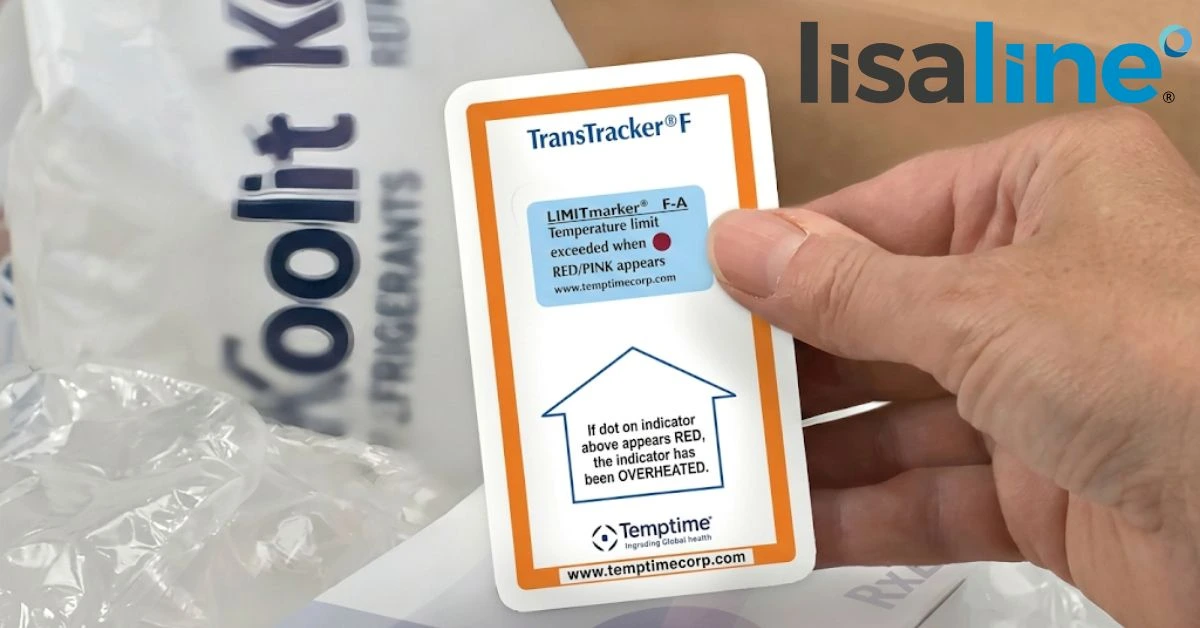
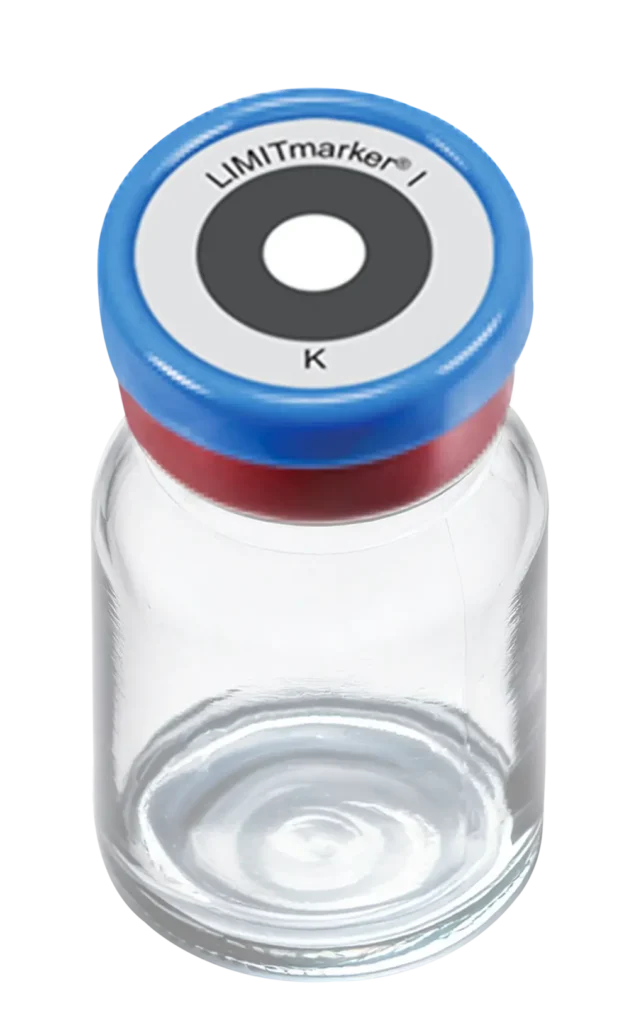
LIMITmarker labels provide a clear visual signal of temperature increase or heat exposure. The label changes colour to pink or red (LIMITmarker F), and the inner circle matches the colour or turns darker than the outer circle (LIMIT marker I).
Single-Use
Since they provide an irreversible signal of temperature spikes or heat exposure, these thermal indicators are single-use, disposable labels. They cannot be used multiple times.
Continuous Temperature Monitoring
LIMITmarker thermal indicators are active and functional throughout the product’s shelf life. They provide continuous temperature monitoring through shipping and storage from the moment it is applied until the product is used or discarded.
What are the benefits of thermal indicators like LIMITmarker?
Among thermal indicators, LIMITmarker labels stand out with several benefits. These include:
- Provides clear visual proof of heat exposure: The colour change makes temperature spikes easy to spot, so excursions do not go unnoticed.
- Easy to apply directly on products or packaging: LIMITmarker thermal indicators can be placed on product surfaces or packaging for quick use and direct monitoring.
- Supports compliance and product segregation: The labels clearly show which products have been affected, helping teams separate compromised items and maintain quality control.
- Irreversible colour change for reliable indication: Once exposed to heat or a temperature spike, the label changes colour permanently, even if the product later returns to a normal temperature.
- Reduces the risk of accidental use: A clear colour change helps prevent compromised products from being used or shipped.
- Improves handling decisions: Staff can quickly identify affected items and take action without needing specialised equipment.
- Saves time during inspection: Visual indicators make screening faster compared with reading logs or checking devices.
- Helps protect brand reputation: By catching excursions early, businesses can avoid supplying unsafe or ineffective products to customers.
- Useful across the supply chain: They can be applied during storage, transport, and final distribution for continuous oversight.
- Low-maintenance monitoring: As self-adhesive, single-use labels, they do not require batteries, calibration, or heavy setup.
What are the types of LIMITmarker thermal indicators?
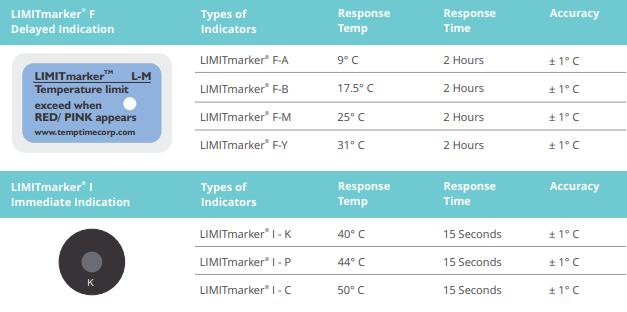
Based on their response time and heat threshold temperature, LIMITmarker thermal indicators are classified into two main types:
LIMITmarker F
LIMITmarker F labels are thermal indicators with delayed indication. When these thermal indicators are exposed to temperatures at or above the safe temperature range, then the window changes colour to pink or red. These have a specified response time of 2 hours. The appearance of any pink or red in the window means that the indicator has reached the endpoint. This means that the product has been affected and is not fit for use.
LIMITmarker I
LIMITmarker I are threshold thermal indicators with immediate indication. It continuously monitors temperature and immediately indicates when the heat exposure is at or above the safe range. If the colour of the center circle matches or is darker than the outer circle, then the endpoint has been reached. This means that the product has been affected and is not fit for use.
What are the applications of thermal indicators in the cold chain?
Thermal indicators like LIMITmarker are used across a wide range of cold chain monitoring applications. From large-scale cold storage facilities to the final point of patient administration, these self-adhesive labels provide a simple, reliable, and battery-free layer of temperature protection wherever it is needed most. Here are the key applications of thermal indicators in pharmaceuticals.
Cold Storage Rooms and Warehouses
Pharmaceutical cold storage rooms and warehouses store large quantities of temperature sensitive medicines, vaccines and biologics. While data loggers monitor the ambient temperature of the entire facility, they do not guarantee that every individual product unit within the room has remained within its safe temperature range. Temperature stratification is common inside cold rooms. Products stored near doors, vents, or the upper shelves can experience temperature conditions that differ significantly from what the facility sensor records. Thermal indicators applied to individual product units give warehouse staff a clear, unit-level picture of which products are safe and which have been compromised.
Pharmaceutical Manufacturing Facilities
In pharmaceutical manufacturing facilities, finished products are staged and held in temperature-controlled environments before being dispatched. During this holding period, products may move between different zones of the facility, from production areas to quality control labs to dispatch storage. Each of these transitions carries a risk of brief temperature exposure. Thermal indicators applied at the manufacturing stage continuously record any heat exposure throughout the product’s shelf life. This gives manufacturers clear, documented, and unit-level evidence that the product was maintained within safe conditions from the point of production. This helps in compliance and gives peace of mind to the manufacturer.
Hospitals and Clinics
Hospitals receive large volumes of temperature-sensitive pharmaceutical products, including vaccines, insulin, biologics, and surgical medicines. These products are stored in hospital pharmacies and clinical refrigerators before being administered to patients. In busy hospital environments, refrigerator doors are frequently opened and closed. Power fluctuations are also not uncommon, and products may be temporarily removed from storage during ward rounds or emergency situations. Thermal indicators on individual product units give nursing staff, pharmacists, and clinicians an immediate visual check of whether a product is safe to administer. There is no need to review data logs or consult monitoring systems.
Retail Pharmacies
Retail pharmacies stock a range of temperature-sensitive medicines, including vaccines, hormonal treatments, and biologics, that require strict refrigeration. Unlike hospital or pharmaceutical warehouse environments, retail pharmacies often do not have sophisticated cold chain monitoring infrastructure in place. Thermal indicators applied to each product unit provide a simple and cost-effective way for pharmacists to verify the temperature integrity of their stock. If a product has been exposed to unsafe temperatures during delivery or storage, the indicator will show this clearly. This allows the pharmacist to take the product off the shelf before it reaches a patient.
Biological Laboratories
Biological laboratories handle highly sensitive materials, including blood samples, diagnostic reagents, culture media, enzymes, and research biologics. Many of these materials have narrow temperature ranges within which they remain viable. A brief temperature excursion can render a sample unusable or, in the case of diagnostic reagents, produce inaccurate test results. Thermal indicators applied to sample containers, reagent kits, or storage boxes give laboratory staff an immediate visual confirmation of whether the material has remained within its specified temperature range. This is especially important when samples are received from external sources or transported between laboratory facilities.
Vaccine Programmes
Vaccines are among the most temperature-sensitive pharmaceutical products. A vaccine that has been exposed to temperatures outside its safe range may appear physically intact but offer no protection to the patient. This is a critical patient safety risk. Thermal indicators are widely used in vaccine distribution programs. They are applied to individual vials or multi-dose packaging to give healthcare workers at every level of the distribution chain a clear visual check of vaccine integrity. This is particularly important in last-mile delivery to remote clinics and health centers, where refrigerated transport may not be consistently available and electronic monitoring infrastructure may be limited.
Shipping and Transit of Temperature-Sensitive Items
Pharmaceutical products are exposed to a range of risks during shipping and transit. Refrigerated vehicles may experience equipment failure. Products may be left on loading docks in ambient heat during transfer. Delays at customs checkpoints, transhipment hubs, or intermediate warehouses can expose products to unsafe temperatures for extended periods. Battery drain or power outages can create gaps in data logger coverage. In all these situations, thermal indicators like LIMITmarker continue to monitor the product regardless of what is happening with the electronic monitoring equipment. At the point of receipt, the receiving team can instantly verify the temperature status of each product unit simply by inspecting the indicator label before accepting the consignment.
Why choose Lisaline Asia as your supplier for thermal indicators in India?
Lisaline Asia has been a trusted name in cold chain monitoring in India since 1998. We are the official supplier of Zebra temperature indicators in India. Choosing an authorised supplier ensures access to genuine products, manufacturer-backed support, validation, and reliable after-sales service.
We supply LIMITmarker thermal indicators, which stand out for their cost-effectiveness, ease of use, and clear visual indication of heat exposure or temperature spikes beyond the safe range. These single-use labels help staff quickly identify whether a product is safe for use simply by looking at it.
Lisaline Asia guarantees the quality of the products we supply. LIMITmarker labels are self-adhesive, require no batteries or software, and can be applied directly to product surfaces or packaging. Therefore, these thermal indicators offer a simple and practical solution for product-level temperature monitoring throughout the shelf life of the product.
Conclusion
Thermal indicators like LIMITmarker, supplied by Lisaline Asia, are a powerful addition to any cold chain monitoring setup. These can be used everywhere from cold storage rooms and manufacturing facilities to hospitals, retail pharmacies, biological laboratories, and last-mile deliveries. These self-adhesive labels provide continuous battery-free unit-level temperature monitoring throughout a product’s shelf life. Their irreversible colour change gives a visual signal and an immediate and clear indication whether the product is safe or has been compromised.
Lisaline Asia is the authorised supplier of LIMITmarker thermal indicators from Zebra Technologies in India. With over two decades of expertise in cold chain monitoring, we help pharmaceutical manufacturers, distributors, hospitals, and pharmacies choose and implement the right temperature monitoring solutions for their specific needs. To learn more about LIMITmarker, visit our website, or get in touch with our team today to discuss cold chain monitoring requirements.
FAQS
1. Which are the best thermal indicators for cold chain monitoring in India?
Zebra’s LIMITmarker thermal indicators supplied by Lisaline Asia are one of the best thermal indicators for cold chain monitoring in India. They are self-adhesive, and offer continuous temperature monitoring throughout storage and shipment. These indicators change colour from white to red/pink when the product is exposed to a sudden spike in temperature for set period giving immediate clear visual proof of heat exposure. These thermal indicators are compliant with international standards, making them a reliable choice for pharmaceutical, medical, and cold chain applications where temperature integrity is critical.
2. How do thermal indicators work for pharmaceuticals?
Lisaline Asia supplies thermal indicators like LIMITmarker are applied directly to the packaging, vials or boxes of pharmaceuticals. Made with heat fusible materials that melt and trigger an irreversible colour change (white to red/pink) when the pharmaceuticals exceed their safe thresholds. This provides a clear visual signal of heat exposure signalling the potency of pharmaceuticals has been affected.
3. Are thermal indicators single use disposable labels?
Yes. LIMITmarker thermal indicators supplied by Lisaline are single‑use, disposable labels. They are self‑adhesive, miniaturised thermal indicators that provide an irreversible visual signal of sudden spike in temperature and are not designed to be reused.
4. Which are the top companies providing thermal indicators in India?
Lisaline Asia is one of the leading providers of thermal indicators in India. They are the official licensed supplier of Zebra’s LIMITmarker thermal indicators in India. LIMITmarker displays a clear visual signal when the label irreversibly changes colour from white to red/pink upon exposure to a sudden spike or increase in temperature for a set time. This makes them ideal for monitoring heat-sensitive products in pharmaceutical, medical, and cold chain applications.
5. What are thermal indicators used for?
Thermal Indicators like LIMITmarker are used for monitoring sudden spikes in temperature for a certain period of time during shipment or storage. They are used to monitor whether the product has been exposed to sudden heat due to which its potency may have been damaged. They are used for temperature monitoring of cold chain products like pharmaceuticals, medicines.
6. How long do thermal indicators remain active on a product?
Thermal indicators stay active and functional for the product’s entire shelf life, providing continuous temperature monitoring throughout shipping and storage from the moment they are applied until the product is used or discarded.
7. What is the difference between time temperature indicators and thermal indicators?
Time temperature indicators, such as HEATmarker, monitor cumulative heat exposure over time by gradually and irreversibly changing color as thermal stress accumulates. The label progressively darkens with increased heat exposure, providing a visual record of total temperature abuse throughout storage and transit. Thermal indicators, like LIMITmarker, detect sudden temperature spikes or threshold breaches. These indicators trigger an immediate, irreversible color change from white to red/pink when temperature exceeds a preset limit for a specific duration, enabling rapid identification of critical temperature excursions. Both solutions are supplied by Lisaline Asia, the official supplier of Zebra’s temperature indicators in India.
8. Does improper storage affect the performance of thermal indicators?
Yes, improper storage can compromise the accuracy and reliability of LIMITmarker heat indicators. Storing them in high-temperature environments, direct sunlight, or humid conditions before use may trigger a premature reaction, rendering the indicator invalid. To ensure optimal performance, LIMITmarker heat indicators should be stored in a cool, dry place away from heat sources and moisture until they are ready for application.
9. Are thermal indicators compliant with industrial standards?
Yes. According to Zebra’s official product fact sheet, LIMITmarker’s quality management system is consistent with FDA Quality System Requirement (QSR) 21 CFR 820, which covers Good Manufacturing Practices (GMP) for medical devices, as well as ISO 9001. These standards ensure that LIMITmarker thermal indicators are manufactured and quality-controlled to meet the rigorous requirements of the pharmaceutical and medical device industries.
10. How should thermal indicators be stored before use?
LIMITmarker F should be stored frozen at temperatures below -6°C before use, and has a shelf life of 4 years from the date of manufacturing. Storing the indicators under the recommended conditions is essential to preserving their accuracy and reliability. Thermal Indicators that have been exposed to improper storage conditions such as excessive heat or humidity prior to use may give inaccurate readings and should not be applied to products. Always check the packaging or product fact sheet for model-specific storage requirements before use and contact our team for more details.
11. Can thermal indicators withstand pressure or physical stress?
LIMITmarker thermal indicators are designed as thin, self-adhesive labels intended for direct application onto product surfaces and packaging. While they are built to remain reliably affixed throughout the supply chain journey, including storage, handling, and shipping, they are not specifically rated for extreme physical stress or pressure. Excessive bending, crushing, puncturing, or abrasion may compromise the indicator window and affect the readability of the result.
12. Do thermal indicators expire or degrade over time?
LIMITmarker thermal indicators do not expand, but like all precision-manufactured indicators, they do have a defined useful life. LIMITmarker F has a shelf life of 4 years from the date of manufacturing, after which its accuracy and reliability can no longer be guaranteed. When stored correctly, the indicators remain stable and ready for use within this period. However, if stored improperly, such as in warm or humid environments, the heat-sensitive materials inside may begin to react prematurely, compromising the indicator’s ability to give an accurate reading. It is important to always check the expiry date printed on the packaging before application, and to never use an indicator that has exceeded its shelf life or shows signs of a pre-triggered color change. For specific details contact our team.