
Temperature & Humidity Data Logger For Accurate Environmental Monitoring and Audit Ready Reporting.

Get accurate temperature and humidity data loggers for continuous storage and shipment monitoring. We bring you data logger units from leading brands like Dickson and Tempmate, available in single-use and multi-use models. Many come with real-time insights, cloud integration, on-device displays for current status, and audit-ready time-stamped reports. All units comply with industry regulations and standards.

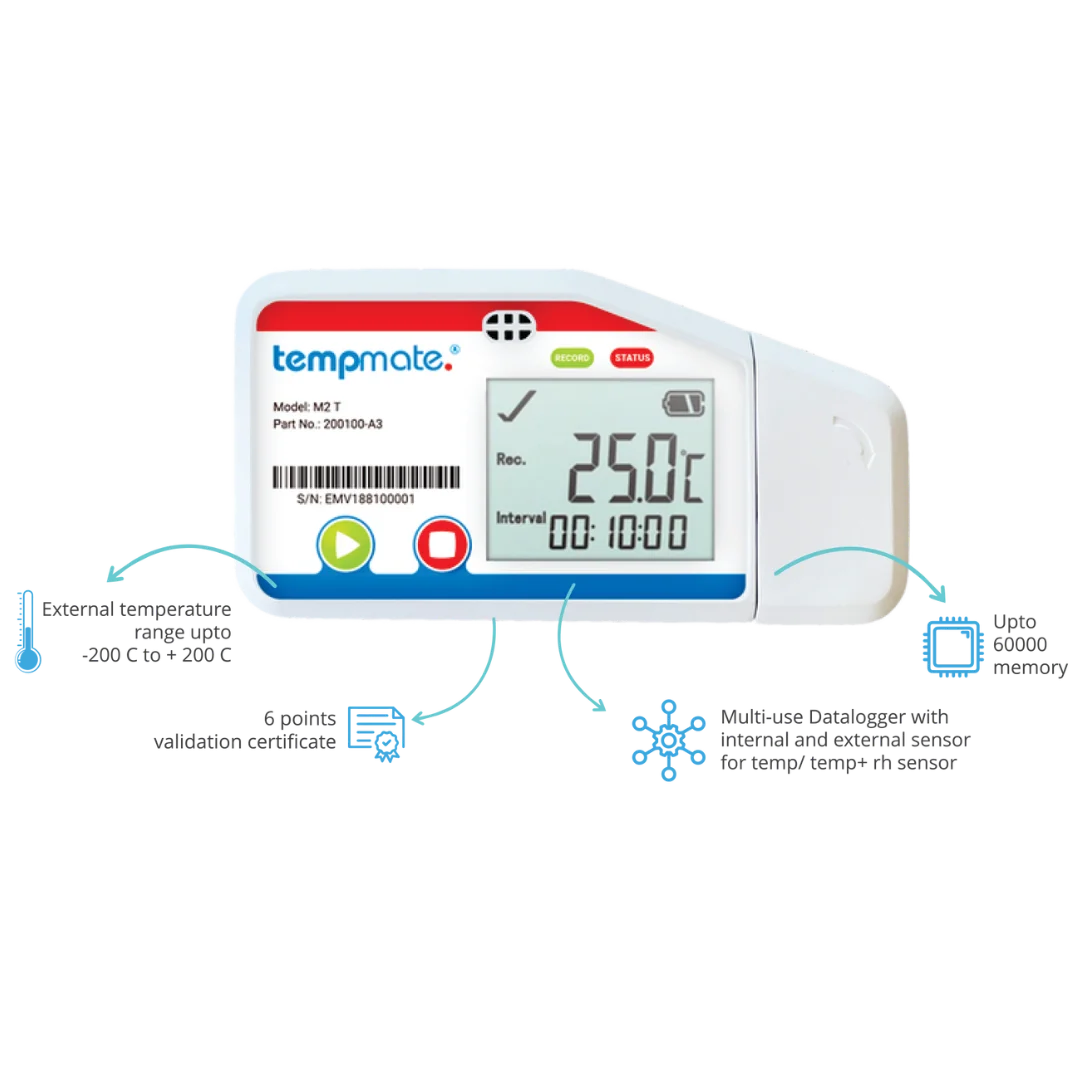
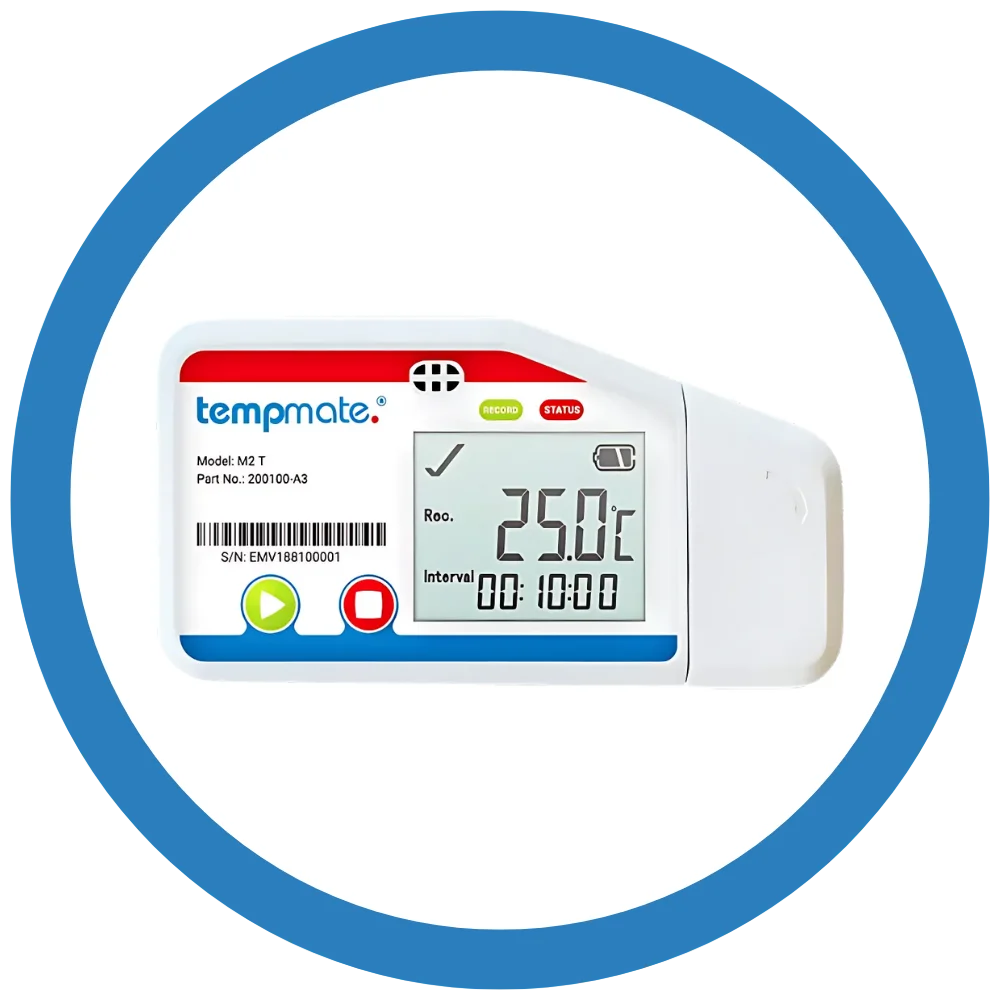
Tempmate M2 Display Data Logger, LCD Data Logger, Digital Data Logger with Display, Multi Use Data Logger, Vaccine Cold Chain Monitoring, temperature and humidity data logger, USB Humidity Data Logger
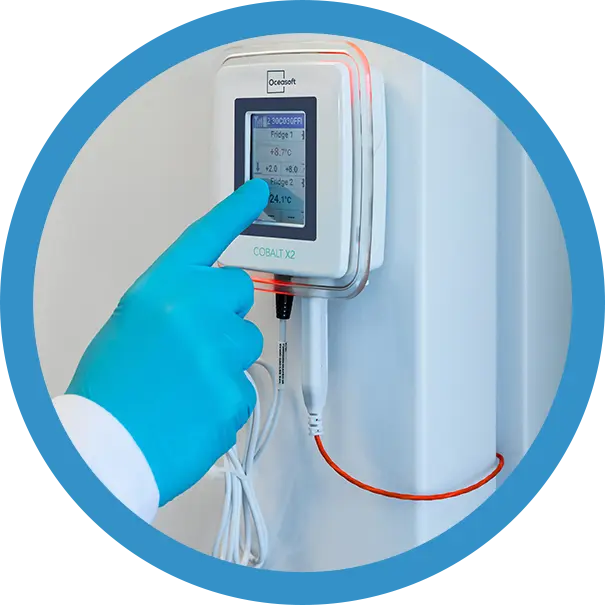
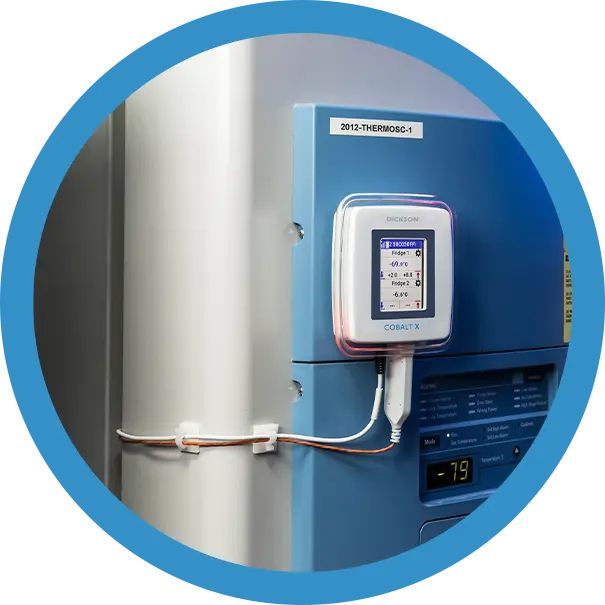
Cobalt X Wireless Temperature and Humidity Data Logger Temperature and Humidity Monitoring System, Differential Pressure Logger, CO2 data logger, temperature and humidity data logger, CO2 data logger

What is a Temperature and Humidity Data Logger?

A temperature and humidity data logger is an advanced electronic device that monitors temperature and relative humidity conditions for temperature sensitive products during storage and transit. These devices automatically record the temperature and relative humidity data at regular intervals  to generate a detailed time stamped record for analysis and reporting later. 

A temperature and humidity data logger ensures that you get to know if your products were in safe conditions during a specific period from storage to transport and final delivery. If their limits exceed, the data logger may give an on device signal. Many modern data loggers with network connectivity also offer cloud integration with live data access, real time alerts through mobile and email and audit ready PDF/CSV reports. 

Lisaline Asia supplies a range of temperature and humidity data logger units from leading brands like Dickson, Tempmate, etc. These data loggers are engineered to provide you with a time stamped proof of temperature and relative humidity data, which helps in audits and compliance as well as ensures safety of the goods being stored and transported.

Temperature and Humidity Data Logger Product Range

Lisaline Asia offers a comprehensive range of Temperature and Humidity Data Loggers for different applications. From real time fixed storage monitoring temperature and humidity data logger units like Cobalt X and XS to real time shipment data loggers like Tempmate GS2 and GM2 we have them all.  For easy shipment monitoring with a simple USB  plug and play for data retrieval and reporting, we also have USB shipment data loggers with offline monitoring. We also offer single use and reusable temperature and humidity data logger models. Contact our team today to know which temperature and humidity data logger works for your cold chain items and application. 

Cobalt X is a temperature and humidity data logger from Dickson supporting LoRaWAN connectivity and integration with the OCEAView platform. Apart from temperature and relative humidity it monitors differential pressure, light and CO2 (with Triple smart sensor). The Cobalt X supports 4 sensors working simultaneously. It has a LCD display showing the current status of your products at a glance. 

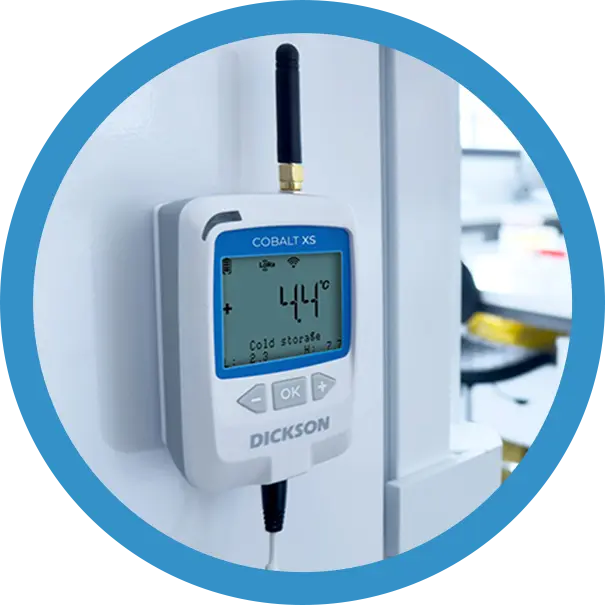
Cobalt XS

Cobalt XS is a temperature and humidity data logger from Dickson supporting LoRaWAN connectivity. It also supports integration with the OCEAView cloud platform. It also comes in a Wifi variant and monitors temperature and relative humidity only. It supports 2 sensors working simultaneously. The Cobalt XS  has an LCD display showing the current status of your products at a glance. 

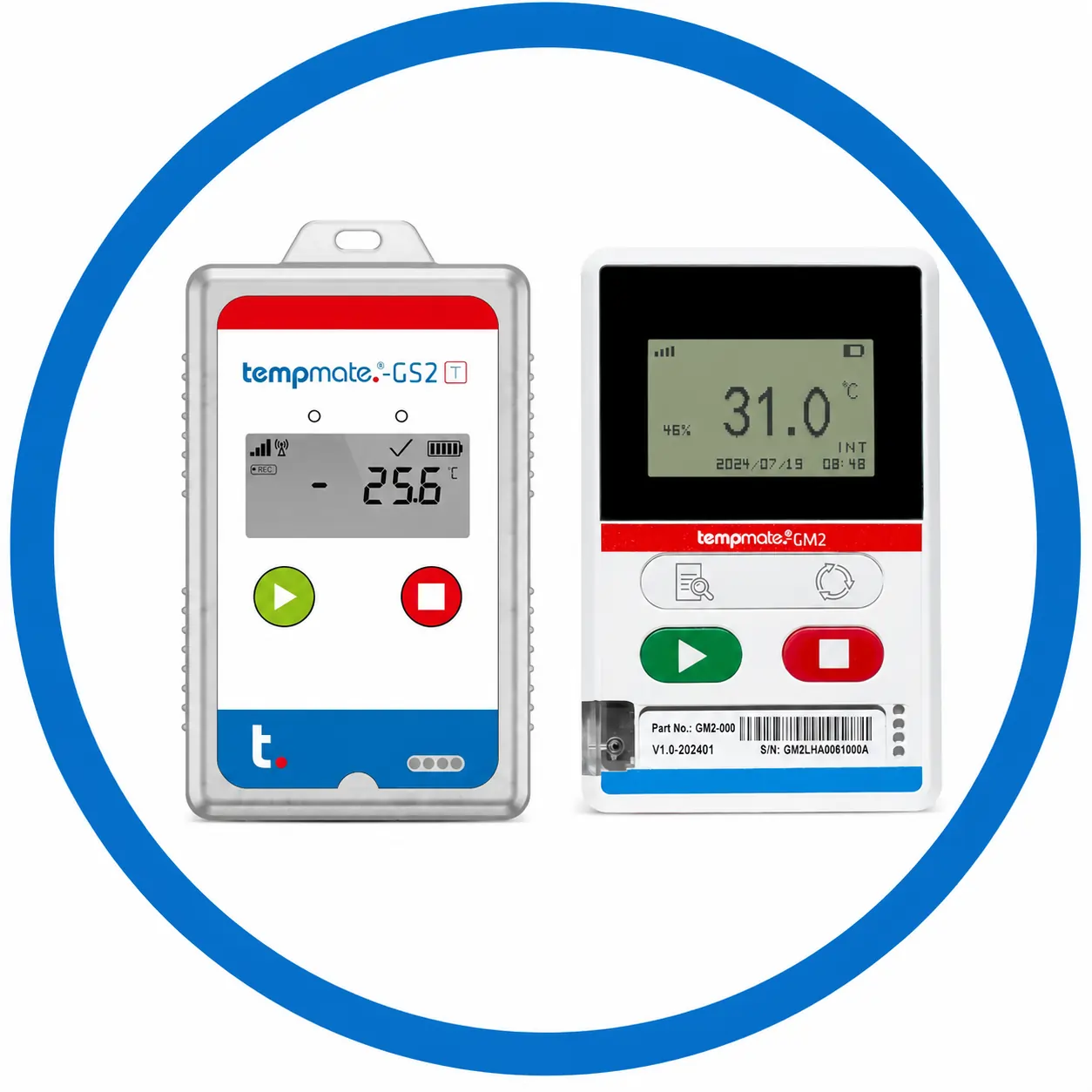
Tempmate GS2 and GM2

The Tempmate GS2 and GM2 are temperature and humidity data logger units from Tempmate that can monitor your shipment from any corner of the world. These support global GSM connectivity and integration with the tempmate cloud platform. Apart from temperature and humidity, these monitor light, shock, tilt. While Tempmate GS2 is single  use, GM2 is reusable. These GSM data loggers have a  built in USB interface and an LCD display for current status of shipments at a glance. 

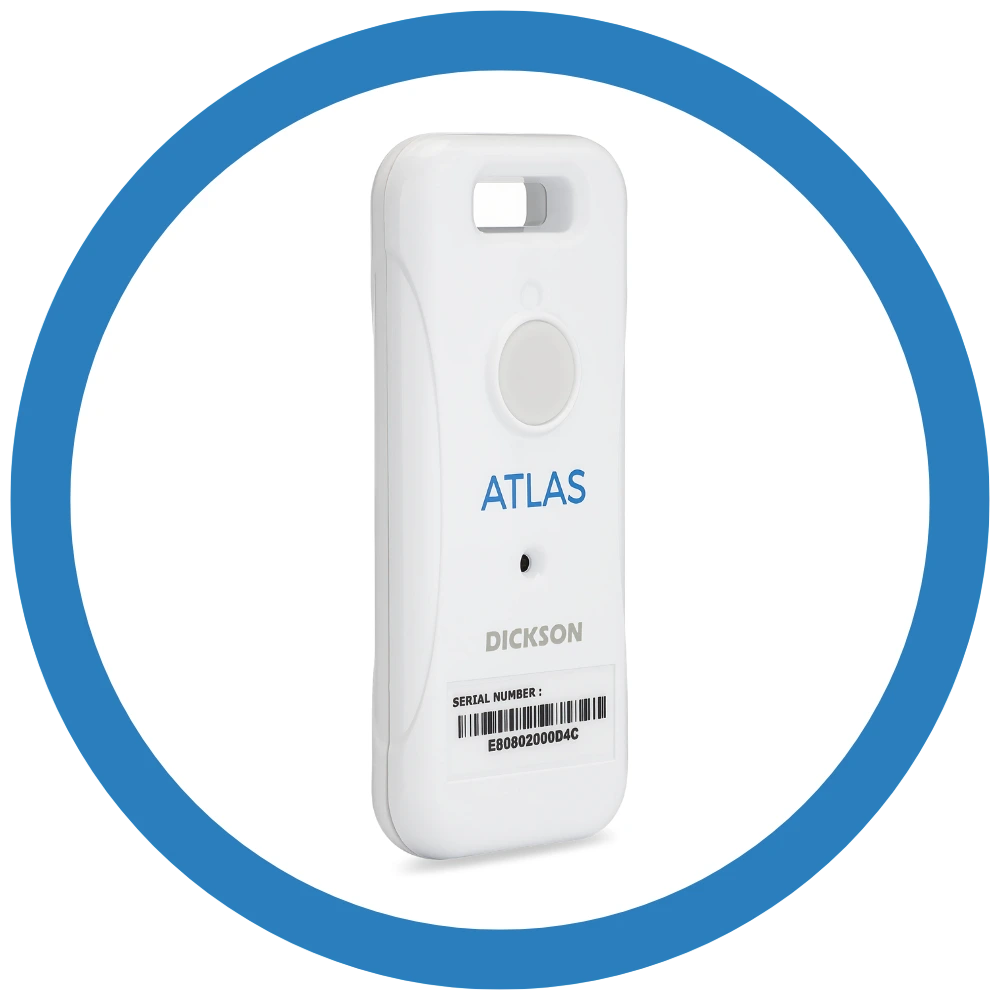
Atlas is a temperature and humidity data logger with Bluetooth Low Energy connectivity and integration with Dickson’s OCEAView platform. It also acts as a wireless sensor with Cobalt X. It is a compact data logger. This makes it an ideal fit for short-range or controlled-environment monitoring.

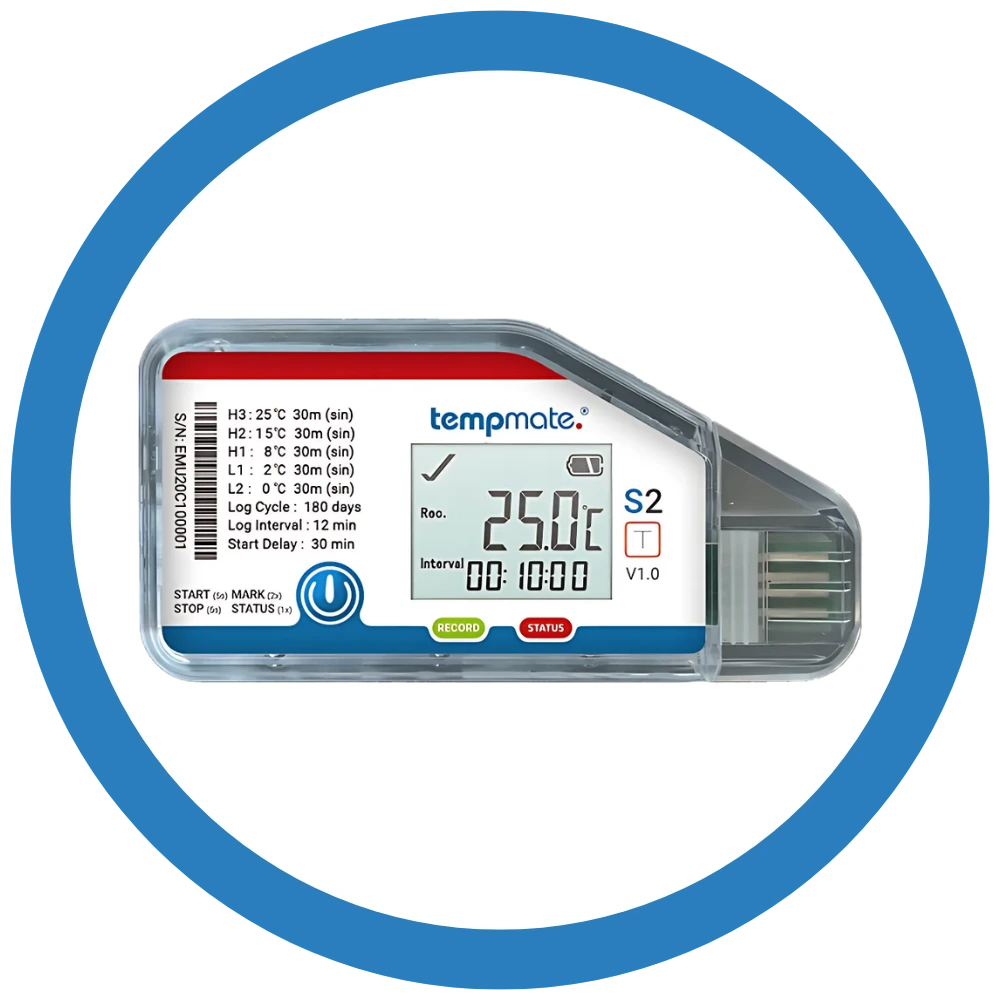
The Tempmate S2 is a temperature and humidity data logger from Tempmate. It offers offline monitoring storing the readings in its internal memory. The data can be easily retrieved due to its easy USB plug and play design. The LCD display provides the current status of your shipment at a glance. 

The Tempmate M2 is a temperature and humidity data logger from Tempmate. It offers offline monitoring storing the readings in its massive internal memory of 60,000 readings. The data can be easily retrieved with plugging in the data logger to a USB port. The LCD display provides the current status of your shipment at a glance. 

Why is a Temperature and Humidity Data Logger Important?

Ensures Patient Safety

A temperature and humidity data logger allows medical teams to identify  if the products have been exposed to temperature and humidity outside the safe limits. This prevents the administration of damaged products for patient use. 


Proactive Actions Reduce Excursions

A temperature and humidity data logger provides instant alerts whether they might be shown through a display or through SMS, email and mobile app(for data loggers supporting real time monitoring). This leads to proactive actions that minimise excursions and protects costly products from being damaged. 

Support Compliance and Audit Documentation

A temperature and humidity data logger records the readings  in a time stamped format which establishes a clear tamper proof audit trail compliant with major standards like FDA, GDP, GxP, WHO, HACCP etc. The PDF and CSV reports further ensure faster and smooth audits. 

What are the Common Humidity Challenges faced by Cold Storage Facilities and how does a Temperature and Humidity Data Logger solve them?

Challenge 01

Frost and Ice Build Up on Cooling Coils

Every time a cold room door opens, warm and moist air enters. This moisture freezes on the evaporator coils and forms frost. Over time, the frost layer blocks airflow, and the cooling unit has to work harder to hold the set temperature. Energy costs go up and the room takes longer to recover after each door opening.

EquipmentEnergy cost
Solution

A temperature and humidity data logger records how humidity rises after door openings and how often it happens during a shift. Your team can use this data to plan loading schedules, add strip curtains or air curtains, and set better defrost cycles. The records also show whether defrost cycles are causing temperature spikes that go beyond your product limits.

Result: Less frost, better airflow and faster recovery after door openings.
Challenge 02

Water Dripping from Ceilings and Panels

In cold rooms and anterooms, moisture can collect on cold ceiling panels, pipes and light fittings. This water then drips onto pallets, cartons and the floor. Wet packaging loses strength, labels get damaged and wet floors become a safety risk for staff.

PackagingStaff safety
Solution

High humidity readings in a specific area show you where moisture is building up before dripping starts. Placing temperature and humidity data loggers near problem spots like anterooms, pipe entry points and ceiling corners helps your maintenance team find insulation gaps or air leaks and fix them early.

Result: Leaks and insulation gaps found before they damage stock.
Challenge 03

Mould and Mildew in Chiller Rooms

Chiller rooms that run at 2°C to 8°C often have high humidity. Combined with poor air circulation, this creates the right conditions for mould and mildew. It can grow on cardboard cartons, wooden pallets, walls and door gaskets. Mould can contaminate products, fail hygiene audits and lead to rejected stock.

Hygiene auditsRejected stock
Solution

A temperature and humidity data logger shows how long humidity stays high, not just the peak value. Long periods of high humidity are a warning sign for mould growth. You can set humidity alarm limits so your team gets alerted when conditions stay high for too long, and act before mould appears.

Result: Early alerts that stop mould before it starts.
Challenge 04

Humidity that is Too Low in Freezers

Humidity problems are not always about too much moisture. Freezer air is very dry. Products stored without proper packaging can lose moisture over time, which leads to freezer burn in food products and weight loss in stored goods. Fresh produce stored in chillers also needs high humidity. If the air is too dry, fruits and vegetables wilt and lose weight, which directly reduces their value.

Product qualityWeight loss
Solution

A temperature and humidity data logger tracks both the upper and lower humidity limits. You can set a safe range for each room based on what is stored in it. If humidity drops too low, your team knows it is time to check packaging, adjust airflow or add humidification.

Result: A safe humidity range set and tracked for every room.
Challenge 05

Monsoon Moisture Entering Through Loading Docks

In India, the monsoon brings very high outdoor humidity for months. Loading docks and dispatch areas are exposed to this humid air every time a truck is loaded or unloaded. The moisture moves into anterooms and cold rooms, and the problems listed above become worse during this season.

Seasonal riskLoading docks
Solution

Comparing temperature and humidity data logger records across seasons shows how much the monsoon affects your facility. You can see which areas are hit hardest and whether your dock seals, shelters and dehumidifiers are keeping up. This helps you plan seasonal changes before the next monsoon arrives.

Result: A facility that is ready before the monsoon hits.
Challenge 06

Power Cuts and Cooling Downtime

Power cuts and generator changeovers are common in many parts of India. When cooling stops, temperature starts rising and humidity changes with it. Even a short outage can push conditions out of range. Without records, it is hard to know how long the outage lasted and whether products were affected.

ExcursionsStock decisions
Solution

Battery powered temperature and humidity data loggers keep recording during power cuts. They store every reading in internal memory, so there are no gaps in your records. After the outage, you can see exactly how temperature and humidity changed and for how long. This helps your quality team decide whether stock needs to be quarantined or can be released.

Temperature and humidity data loggers with real time monitoring also send SMS and email alerts, so your team can respond while the outage is still happening.

Result: Complete records through every outage and faster stock decisions.
Challenge 07

Missed Events with Manual Hygrometer Checks

Many cold storage facilities still read a wall hygrometer twice a day and write the values in a register. This leaves most of the day and night unmonitored. A humidity spike at 2 am after a door is left open or a unit trips will never appear in the register. Manual entries can also have errors or missing days.

Data gapsAudit risk
Solution

A temperature and humidity data logger records at fixed intervals all day and all night, with no manual entry. Every reading is time stamped and stored automatically. Your team gets a complete record with no gaps, and audit ready PDF/CSV reports can be downloaded whenever they are needed.

Result: Round the clock records with zero manual entry.

Facing humidity problems in your cold storage facility? Talk to our team at Lisaline Asia. We'll help you choose the right temperature and humidity data logger and decide where to place it for the best results.

Talk to Our Experts

What are the benefits of monitoring temperature and humidity together?

Temperature and humidity are closely linked. When temperature changes, relative humidity changes with it. A cold room can look stable on a thermometer while moisture quietly builds up on cartons, labels and product surfaces. Monitoring only one of the two gives you half the picture. A temperature and humidity data logger records both side by side on the same timeline, so you see what actually happened to your products and why.

Detects Condensation Risk that Temperature Alone Misses

When cold products move from a cold room to a warm loading dock or truck, moisture from the air can settle on the packaging. This happens when the product surface is colder than the dew point of the surrounding air. Temperature readings alone will not show this risk. With temperature and humidity recorded together, your team can spot these moments and plan acclimatisation or faster handling at transfer points.

Helps Find the Real Cause of an Excursion

A temperature and humidity data logger shows how both readings moved at the same time. This makes root cause analysis much easier. If temperature and humidity rise together, a door may have been left open. If humidity rises while temperature stays stable, the dehumidifier or HVAC system may have a problem. A spike in humidity at regular intervals often points to defrost cycles. Your team fixes the actual cause instead of guessing.

Protects Products that are Damaged by Moisture, Not Just Heat

Some products stay within their temperature limits and still get damaged. Tablets, capsules and powders can absorb moisture and lose stability. Diagnostic kits and reagents can degrade. Corrugated boxes lose strength in high humidity and can collapse when stacked. Labels can peel or smudge, which becomes a problem during inspection. Monitoring humidity alongside temperature protects both the product and its packaging.

Meets Regulations that Ask for Both Readings Side by Side

Several guidelines do not treat temperature and humidity as separate checks. WHO guidance on storage and distribution of pharmaceutical products, EU GDP and the revised Schedule M in India expect storage areas to be monitored and controlled for temperature and humidity where product requirements call for it. Inspectors often ask for both records for the same area and the same period. A temperature and humidity data logger gives you one synchronised record, so both readings match exactly in time and are easy to present during an audit.

Confirms the Storage Conditions on the Product Label

Many product labels say more than just a temperature range. Instructions like “store below 25°C and protect from moisture” or “store in a dry place” need proof for both conditions. Recording temperature and humidity together gives you documented evidence that each label condition was met throughout storage and transit.

Warns You of Equipment Problems Early

Humidity often changes before temperature does. A worn out door seal, a failing dehumidifier or a blocked drain in a cold room usually shows up first as a steady rise in humidity. Catching this early lets your maintenance team act before the problem affects temperature and puts your inventory at risk.

Gives Better Data for Temperature Mapping and Validation

Warehouse mapping and validation studies look at how conditions vary across different spots in a space. Hot spots near doors or ceilings are often also humid spots. Recording both parameters during mapping shows you the full picture of each location. This helps you decide where to store sensitive products and where to place your monitoring devices permanently.

Two Parameters shown in a Single Report

Using separate devices for temperature and humidity means double the setup, double the calibration and two sets of reports to match. A single temperature and humidity data logger records both parameters with the same timestamps and generates one audit ready PDF/CSV report. This saves time for your quality team and reduces the chance of gaps or mismatched records.

How does a temperature and humidity data logger solve a common audit gap?

Many facilities monitor temperature closely but leave humidity to a separate wall hygrometer, or skip it completely. During an audit, this leaves gaps. The two records may not match in time, the hygrometer may not be calibrated, or there may be no humidity alarm at all. A temperature and humidity data logger records both on the same timeline, from one calibrated device, with one audit ready report.

Which Compliance Regulations demand the use of a temperature and humidity data logger for monitoring both parameters together?

Most cold chain regulations treat temperature as a must. Humidity is where many teams get caught out. Several major guidelines ask you to control and record humidity along with temperature, especially when the product label or stability data says the product is sensitive to moisture. Here are the key regulations and what each one expects from your monitoring setup.

Always required Required when the product needs it
USAStorage

US FDA 21 CFR 211.142: Warehousing Procedures

This FDA rule requires written warehousing procedures that cover storage of drug products under appropriate conditions of temperature, humidity and light, so that the identity, strength, quality and purity of the products are not affected. Temperature and humidity are named in the same line. If you supply to the US market or follow US cGMP, your warehouse records need to show both.

What to monitor
Temperature Humidity

Temperature and humidity in every storage area where drug products are held.

EuropeStorage

EU GDP Guidelines 2013/C 343/01

Under section 3.2.1, suitable equipment and procedures should be in place to check the environment where medicinal products are stored, and the environmental factors to consider include temperature, light, humidity and cleanliness of the premises. The guideline also names thermo hygrometers and other temperature and humidity recording devices as key equipment, whose repair, maintenance and calibration records must be kept.

What to monitor
Temperature Humidity

Temperature and humidity in storage areas, with calibration records for the recording devices.

GlobalStorage and Transport

WHO TRS 961 Annex 9: Storage and Transport of Time and Temperature Sensitive Pharmaceutical Products

This WHO guidance goes a step further and separates temperature and humidity records clearly. For products that are adversely affected by high relative humidity, humidity levels should be monitored and recorded in all temperature controlled rooms. It also asks for temperature and humidity alarms to be checked for functionality at least once every six months at the designated set points.

Its technical supplement on fixed storage monitoring sets accuracy levels for both. Temperature sensors should be accurate to ±0.5°C or better, and humidity sensors should be accurate to ±5% RH and placed to monitor worst case humidity levels within the storage area.

What to monitor
Temperature Humidity

Temperature always. Humidity wherever moisture sensitive products are stored. Both with working alarms.

GlobalTransport and Receipt

WHO TRS 1025 Annex 7: Good Storage and Distribution Practices

This guideline says materials and products that need transport and storage under controlled temperature and relative humidity should be handled as a priority, and transport data should be reviewed on receipt to confirm the required conditions were maintained. This makes the handover point important. Your receiving team needs the shipment's temperature and humidity record before the goods move into stock.

What to monitor
Temperature Humidity

Temperature and humidity during transit, with the record checked at receipt.

USALabel Conditions

USP <659>: Packaging and Storage Requirements

This is where temperature and humidity become one measurement. USP defines a "dry place" as a place that does not exceed 40% average relative humidity at 20°C, or the equivalent water vapour pressure at other temperatures. The determination is based on no fewer than 12 equally spaced measurements across a season, a year or the storage period, and individual values can go up to 45% RH as long as the average stays at or below 40%.

Why this matters: You cannot prove a product label says "store in a dry place" without knowing the temperature at which the humidity was measured. A humidity reading on its own does not satisfy this definition.
What to monitor
Temperature Humidity

Humidity and temperature together, recorded at regular intervals over a long period.

"Dry Place" as per USP
≤40% RH
Average relative humidity measured at 20°C
12 readings
Minimum equally spaced measurements to prove it
USATransport

USP <1079>: Good Storage and Shipping Practices

USP <1079> says all equipment used to record, monitor and maintain temperature and humidity conditions should be calibrated regularly against NIST or international standards. For transport qualification, it asks for temperature and humidity monitors to be placed in the product or a representative of it.

What to monitor
Temperature Humidity

Temperature and humidity inside the shipment, not just in the vehicle, using calibrated devices.

IndiaStorage and Transport

CDSCO Good Distribution Practices (India)

India's CDSCO guidelines for pharmaceutical products require that storage conditions comply with the manufacturer's recommendations, and that records be kept of storage conditions that are critical to maintaining product characteristics. The draft guideline also states that where special conditions such as temperature and humidity are required during transportation, the manufacturer should state them on the label and they should be monitored and recorded.

For biological products, CDSCO is more direct. Temperature and humidity data loggers used during transport in vehicles or containers must be maintained and calibrated at regular intervals.

What to monitor
Temperature Humidity

Whatever the manufacturer's label specifies, which often includes both temperature and humidity. For biologicals, calibrated temperature and humidity data loggers in transit.

GlobalStability Data

ICH and WHO Stability Guidelines: Where the Label Conditions Come From

Every storage condition on a pharmaceutical label comes from stability studies. These studies are always run as a pair of temperature and humidity values. ICH Q1A(R2) uses conditions such as long term 25°C/60% RH or 30°C/65% RH, and accelerated 40°C/75% RH. Hot and humid countries like India are tested at the tougher end of this range. If a product was proven stable at a certain temperature and humidity, your storage and transit records should show both too.

What to monitor
Temperature Humidity

Both parameters, so your real storage conditions can be matched against the stability data behind the label.

ICH Q1A(R2) Test Conditions
Long term25°C / 60% RH
Long term30°C / 65% RH
Accelerated40°C / 75% RH

Temperature and Humidity Data Logger Units from
Leading Global Cold Chain Monitoring Brands.

Get reliable temperature and humidity data logger for storage and shipment monitoring from trusted cold chain brands like Dickson and Tempmate. Choose from real-time monitoring with instant alerts, cloud-based integration, USB plug-and-play models with display screens, and both single-use and multi-use data loggers built to keep your cold chain compliant, every step of the way. Not sure which model fits your needs? Talk to our team now.

Which Temperature and Humidity Data Logger Should You Choose?

Cobalt X

Fixed Mounted LoRaWAN Data Logger (Can also operate with BLE sensors)

LoRaWAN connected temperature and humidity data logger that is fixed mounted outside cold room with sensors inside. 

Choose the Cobalt X for fixed storage monitoring in large facilities with a LoRaWAN gateway and you need to monitor multiple parameters like differential pressure, CO2 and light. 

Key Features and Benefits

Cobalt XS

Fixed mounted data logger that supports Wifi and LoRaWAN in separate models

Temperature and Humidity data logger that supports LoRaWAN connectivity and has a separate Wifi variant.

Choose the Cobalt XS when you need temperature and humidity monitoring only. The Wi-Fi variant suits smaller facilities while the LoRaWAN is suitable for larger ones. 

Key Features and Benefits

Atlas

BLE Data Logger and Wireless Sensor with Cobalt X

Reusable temperature and humidity data logger with a BLE connectivity that can also be paired with the Cobalt X. 

Choose Atlas when you want simple, app-based monitoring for a single fridge, cabinet, or small storage unit, without setting up a gateway or network.

Key Features and Benefits

Tempmate GS2 and GM2

GSM Data Logger- Global 4G/2G Connectivity

Single and Reusable temperature and humidity data logger units to  monitor your shipment from any corner of the world. 

Choose the Tempmate GS2 or GM2 for high-value shipments on long-duration air and cargo routes, where real-time in-transit monitoring matters more.

Key Features and Benefits

Tempmate S2

USB Data Logger with Display

Single use temperature and humidity data logger with a USB plug and play design for continous shipment monitoring.

Choose the Tempmate S2 for shorter shipment durations where real-time tracking isn’t necessary and a simple, plug-in report at delivery is enough.

Key Features and Benefits

Tempmate M2

USB Data Logger with Display

Reusable temperature and humidity data logger with a USB plug and play design for continous shipment monitoring.

Choose the Tempmate M2 for longer shipments where real-time tracking isn’t necessary and a plug-in report at delivery is enough.

Features

Why Choose Lisaline Asia as your Temperature and Humidity Data Logger Supplier in India?

Since 1998, Lisaline Asia has been leading the cold chain monitoring innovation in India. We made a landmark achievement of introducing the world’s first miniaturised Vaccine Vial Monitor (VVM) technology to monitor temperature exposure of vials for the Polio Eradication program in India. Over 25 years later, we continue to lead with trusted cold chain monitoring solutions for the pharmaceutical, logistics, food, and life sciences sectors.

As the official supplier of globally recognised brands, including Zebra Technologies, Dickson, Tempmate, Hemokool in India and the manufacturer of our own Made in India product, Degrite S, we bring you the best of both international quality standards and local expertise.

Choosing authorised supplier of temperature and humidity  data logger units guarantees authentic high quality data logger devices with proper labelling, backed by trust and used in major cold chain facilities across the world.  Get official manufacturer support along with calibration certificate and compliance documentation. 

Get ISO 17025 (NABL) accredited calibration both in-lab and on-site, WHO PQS-certified product validation, thermal mapping, installation with IQ/OQ validation, preventive maintenance contracts, and 24/7 online support for your temperature and humidity data logger devices.

We provide extended product support, after sales service, spare parts coordination, technical assistance and customer service across India, South Asia and Middle East.  

Reach out to our team today and discover how Lisaline Asia’s licensed distributor expertise, certified products, and end-to-end after-sales support can safeguard your cold chain and keep you audit-ready at all times.


We're Here to Help

Get In Touch With Us

We're here for you! As a leading data logger supplier in India, we are here to answer your inquiries about our temperature and humidity data logger units and provide you with assistance whenever you need.

Frequently Asked Questions About Temperature and Humidity Data Logger

FAQs- Temperature and Humidity Data Logger Supplier in India

How to choose a reliable temperature and humidity data logger for storage monitoring?