

Single use

Lisaline Asia
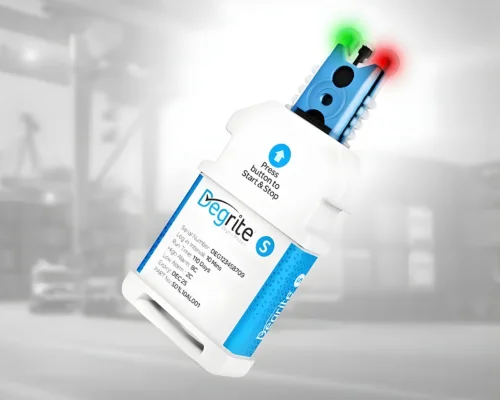
Degrite S
The most cost effective choice for one way shipments where you only need temperature and a report at the end.
- Monitors Temperature
- Range -30°C to +70°C
- Accuracy ±0.5°C
- Runtime Up to 110 days
- Data USB PDF and CSV
From simple offline USB loggers with a display to cloud connected WiFi, LoRaWAN, Bluetooth and 4G GSM models, we have a temperature data logger for every setup. Use them in cold rooms, freezers, labs, warehouses and in transit.
Most models come with a 3 point calibration certificate and ±0.5°C accuracy, in line with WHO guidance for monitoring temperature sensitive products.
With our wireless and 4G models, you can track readings live and get instant alerts when temperatures move outside your safe range. Your team can act early and save stock before an excursion turns into a loss.
Download time stamped reports and keep clean records ready for audits and regulatory inspections.
A temperature data logger is a small recorder that keeps a digital history of how warm or cold your products were. It has three main parts inside: a sensor, a memory chip and a clock. The sensor checks the temperature. The clock notes the exact date and time of each check. The memory holds every reading safely until you need it.
You decide how often it takes a reading. It can be once every minute or once every few hours. After you start it, the logger keeps working on its own. No one needs to watch it. It stays with the product inside a cold room, a freezer, a vaccine carrier or a shipping box.
At the end, you get the complete temperature story of that product. You can see the highest and lowest temperature, when a breach started and how long it lasted. Some loggers give you this data once you connect them to a computer. Others send readings to a phone or a cloud platform during storage or transit.
This record matters because medicines, vaccines, blood and food can lose their quality when temperatures go wrong. Most of the time, you cannot tell just by looking at them. A temperature data logger gives quality teams and auditors proof they can rely on.
Lisaline Asia is the authorised supplier of temperature data logger devices from trusted global brands like Zebra, Dickson and Tempmate. It also makes its own USB temperature data logger, the Degrite S, which is designed in Germany and manufactured in India. These data loggers are trusted by leading cold chain facilities around the world to keep temperature sensitive products safe. In this blog, we will look at each model in detail and help you find the right one for your needs.
Every cold chain needs a different kind of logger. A one way export box, a reusable pharma shipper and a vaccine cold room each have their own needs. Lisaline Asia offers temperature data loggers for all three: single use, multi use, Bluetooth and LoRaWAN. Choose the one that fits your product, your route and your budget.
Manufacturer: Lisaline Asia
Monitors: Temperature
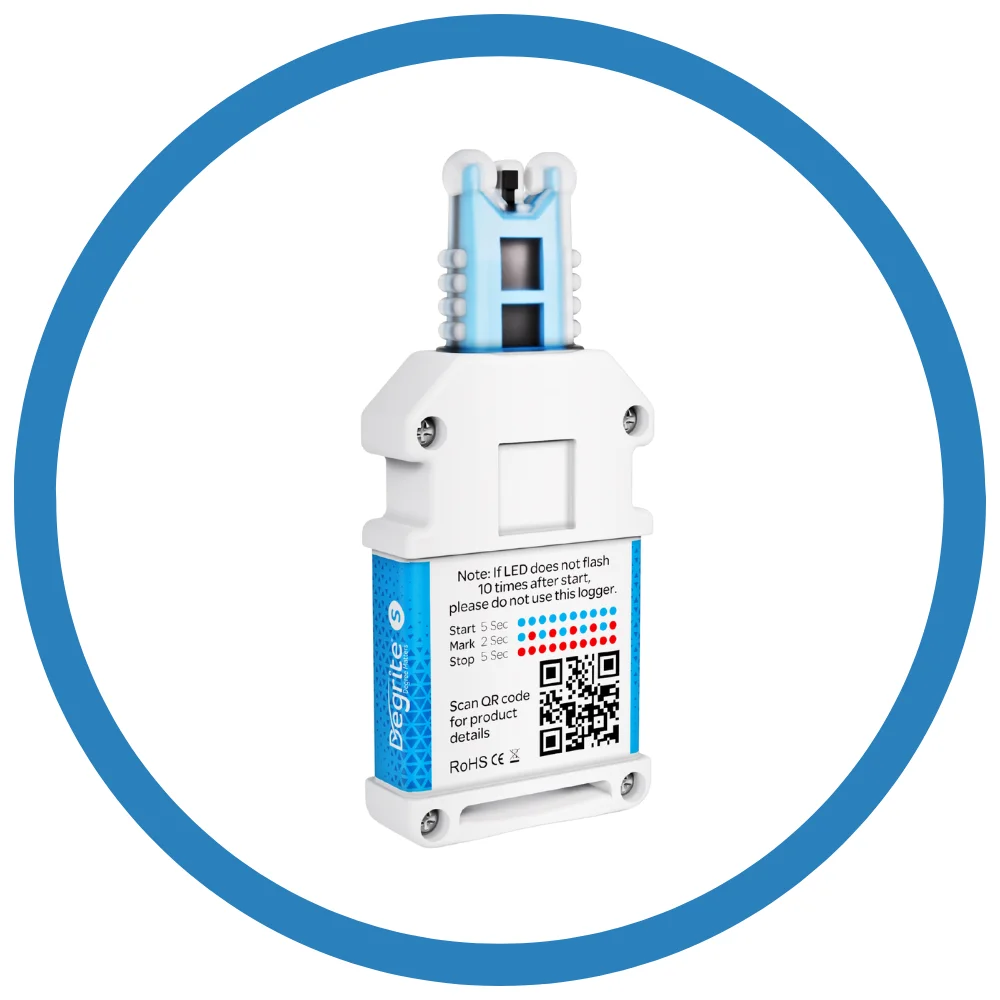
Degrite S is Lisaline Asia’s own temperature data logger. It is designed in Germany and made in India. It is built for shipments where the logger will not come back. Start it, place it in the box and it records for up to 110 days. At the destination, plug it into any computer and a PDF and CSV report is created without any software. Coloured LEDs show whether the temperature stayed in range, went high or went low. Its IP67 body handles moisture and rough handling. The backlog feature helps recover stored readings after a power loss.
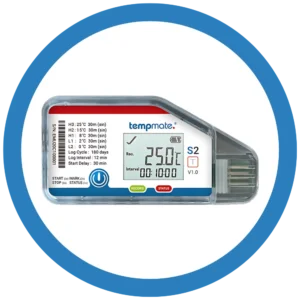
Manufacturer: Lisaline Asia
Monitors: Temperature (S2‑T) or temperature and humidity (S2‑TH), with light detection
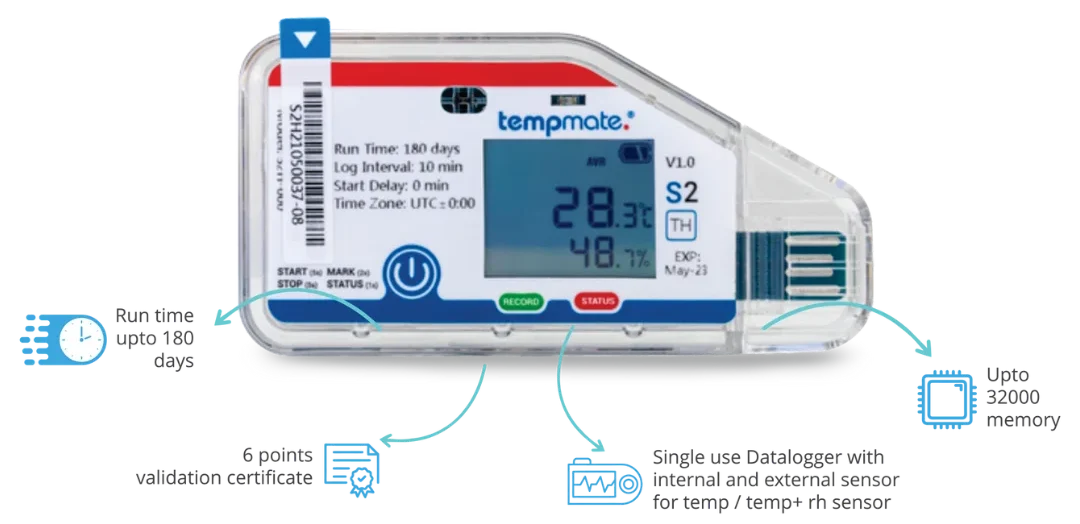
Tempmate S2 does more than a basic one trip logger. Its LCD screen shows shipment status without plugging anything in. A built in light sensor records when a package is opened, which helps you spot tampering. Choose the S2‑T for temperature alone or the S2‑TH to add humidity. It holds up to 32,000 readings. Every unit comes with its own 6 point calibration certificate. Reports are downloaded as PDF and CSV through the built in USB.
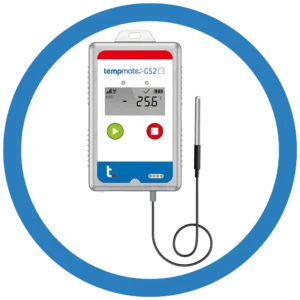
Manufacturer: Tempmate
Monitors: Temperature, humidity (TH model), light, shock, tilt and location
Tempmate GS2 is a single use data logger that reports while the shipment is still moving. It connects over 4G with 2G fallback and sends readings to the tempmate Cloud. If a limit is crossed, your team gets an SMS or email alert and can act before the load is lost. Along with temperature, it tracks light, shock, tilt and cell tower based location. An optional external probe measures down to ‑200°C for deep frozen cargo. A PDF report is also stored on the device as a backup.
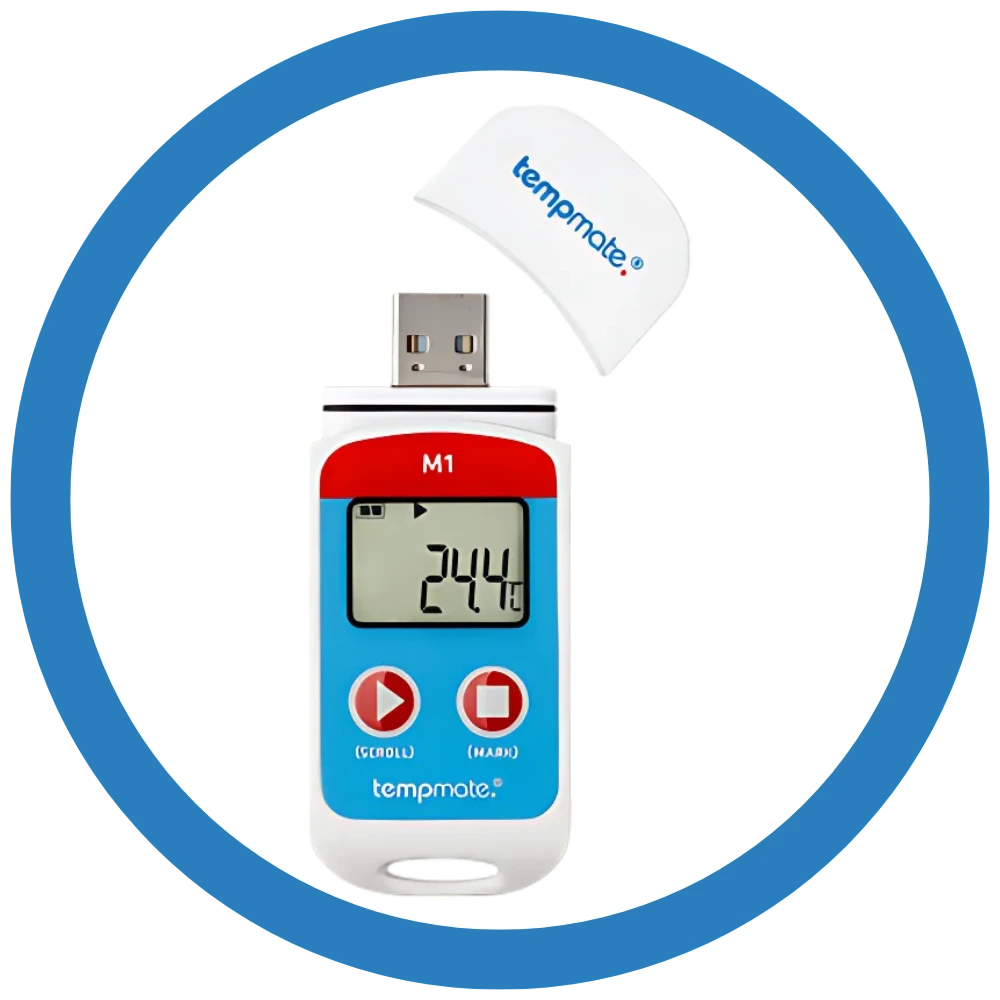
Manufacturer: Tempmate
Monitors: Temperature
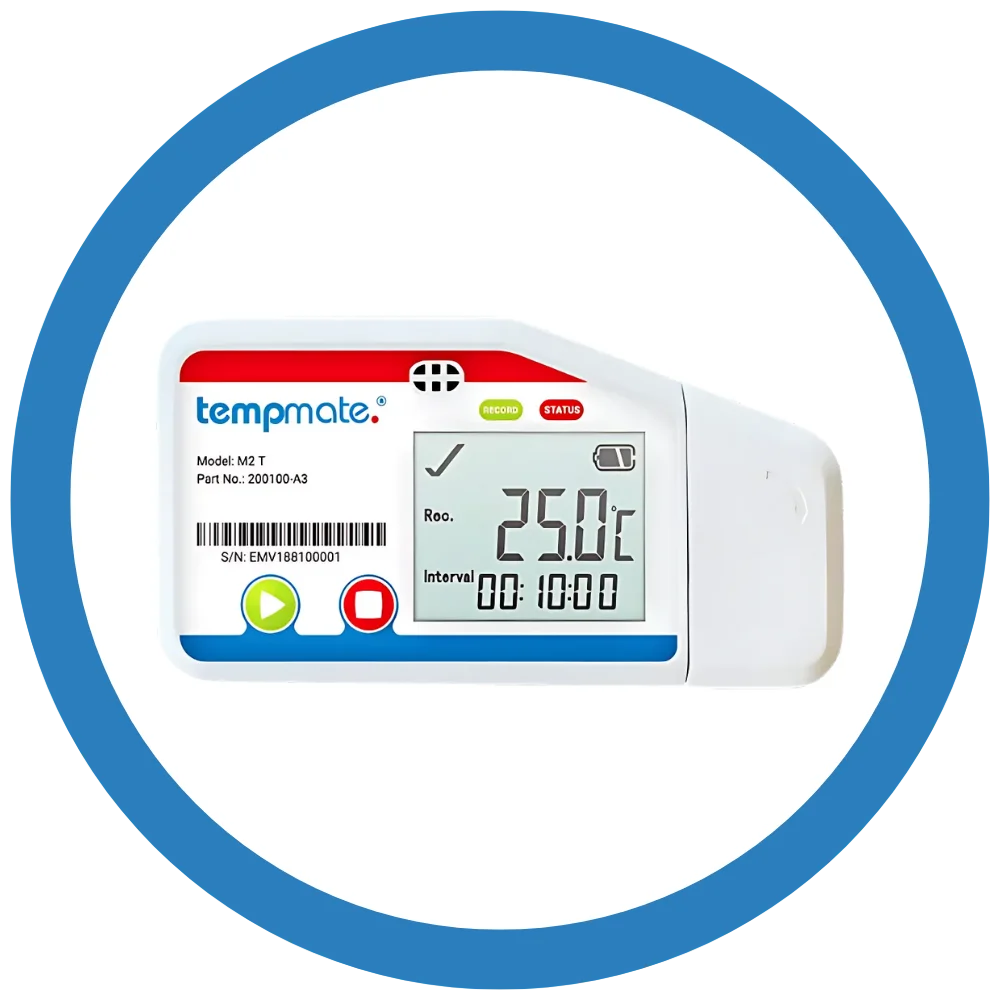
Manufacturer: Tempmate
Monitors: Temperature, or temperature and humidity
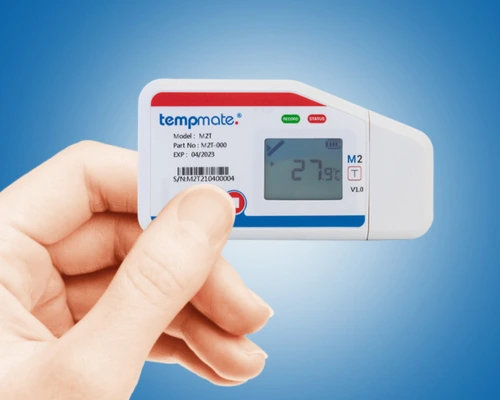
Tempmate M2 is made for long, repeated use. A large LCD and a single button make status checks easy for anyone. Its internal sensor can work with up to 3 external probes, which helps with frozen and very low temperature goods. It stores up to 60,000 readings and supports up to 6 alarm limits. The coin cell battery lasts around 6 months and users can replace it themselves. IP65 protection and EN 12830 compliance make it a dependable choice for pharma shipments.
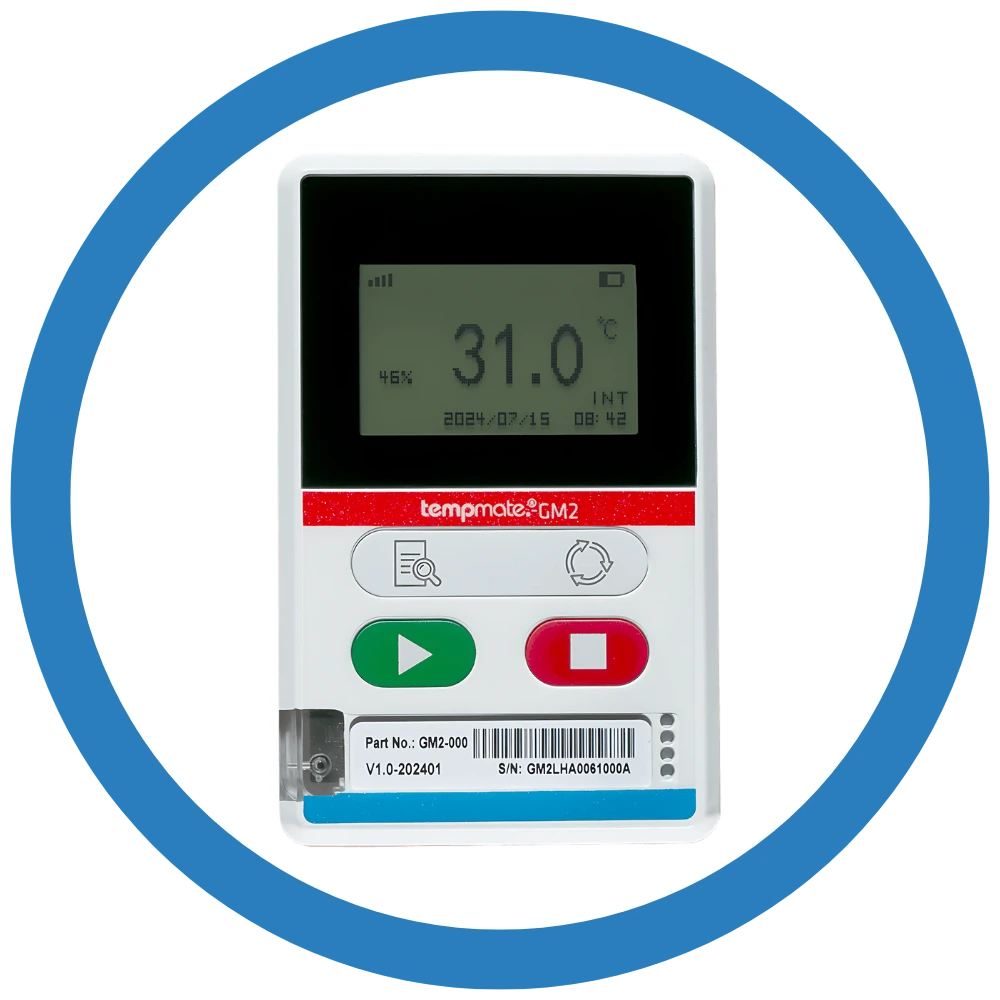
Manufacturer: Tempmate
Monitors: Temperature, humidity, light, shock, tilt and location
Tempmate GM2 brings real time shipment tracking to a reusable device. It runs for up to 120 days on its rechargeable battery, or continuously when connected to power. Readings travel over 4G with 2G fallback to the tempmate Cloud. There you can view live data and receive alerts. If the network drops, it keeps readings in memory and uploads them when the signal returns. Flight mode keeps it recording during air cargo. You can also download a PDF or CSV report by USB at any time.
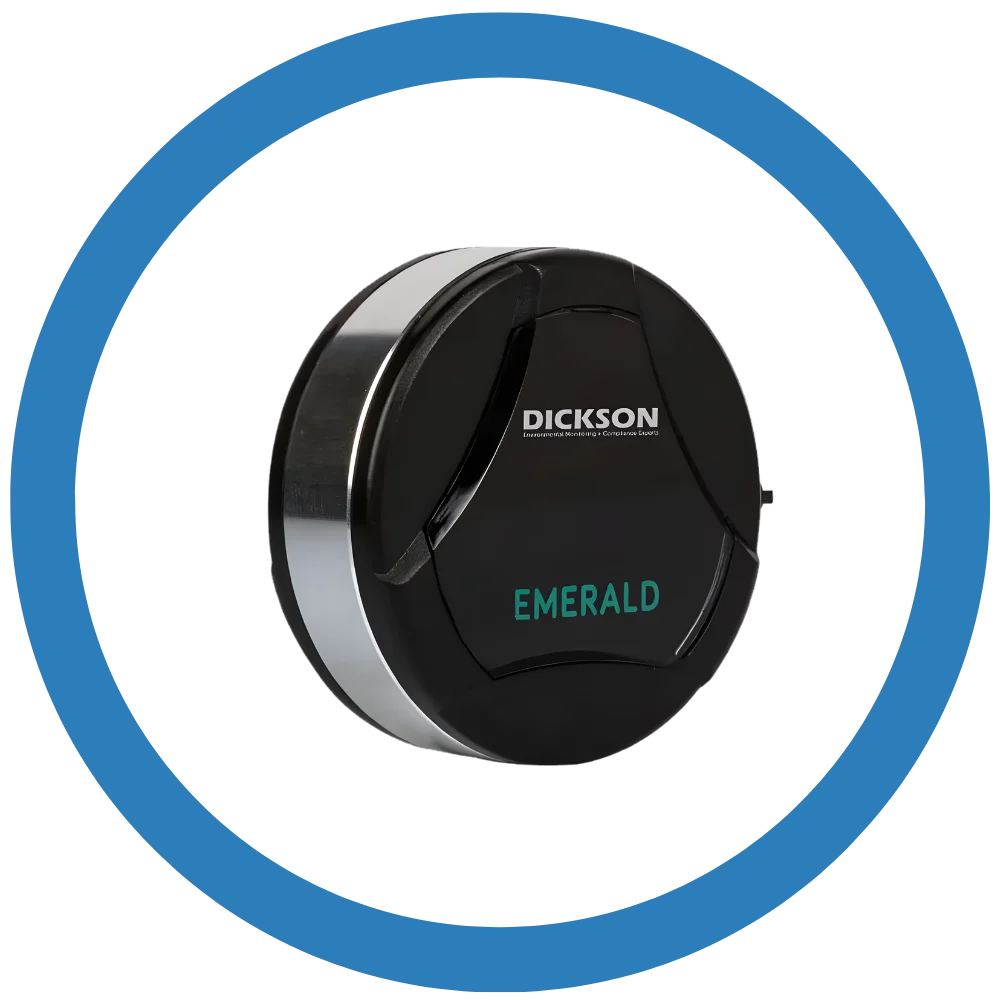
Manufacturer: Dickson
Monitors: Temperature
Emerald is a small Bluetooth logger that fits inside almost any box, fridge or compartment. You can set it up in minutes with the free OCEAView mobile app. Readings sync to the OCEAView platform whenever a connected phone is in range. This means you can check data without opening the package. Choose the internal sensor for ‑40°C to +85°C, or an external Pt100 probe for temperatures down to ‑200°C. Emerald can also work as a cable free wireless sensor for the Cobalt X system.
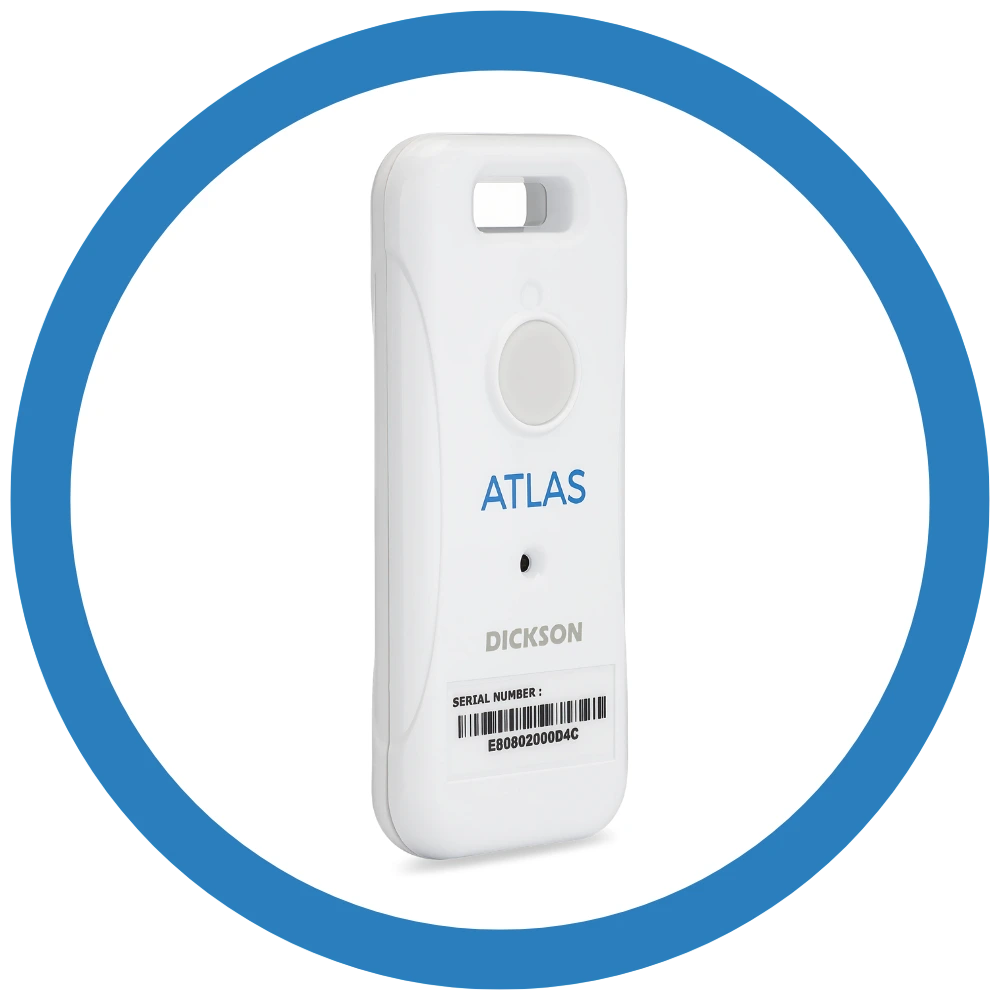
Manufacturer: Dickson
Monitors: Temperature and humidity
Atlas is a temperature data logger designed to sit right next to your product inside the packaging. It also monitors humidity and light exposure and shares readings over Bluetooth, so no one needs to unpack the shipment to check them. Data moves to the cloud through the mobile app or a Bluetooth gateway at any point along the route. It stores up to 16,000 readings and supports 3 high and 3 low alarm limits. One Atlas can be reused for at least a year. It also pairs with Cobalt X as a wireless sensor.
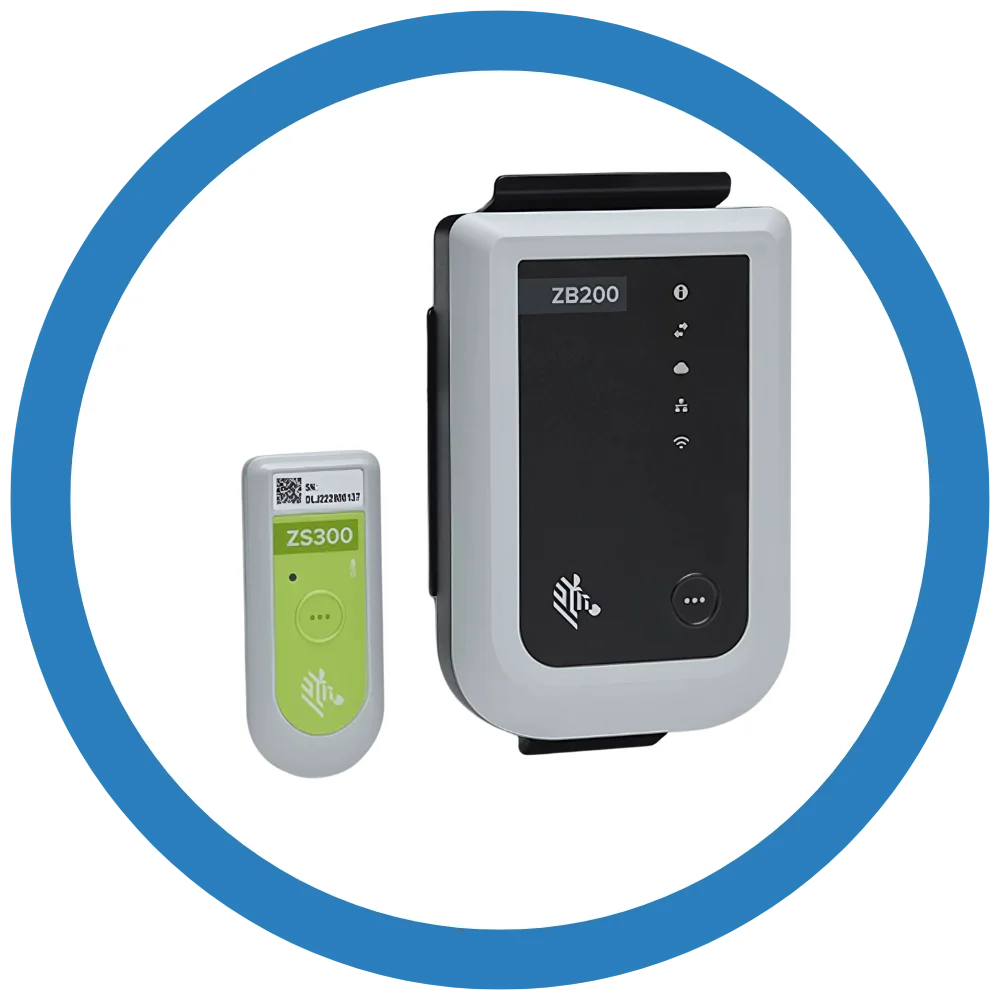
Manufacturer: Zebra
Monitors: Temperature
Zebra ZS300 is a rugged Bluetooth temperature logger with IP67 protection. It uses Bluetooth Low Energy 5.2 to send stored data quickly to a ZB200 Bridge or an Android device. From there, the data goes to the cloud. The same model can be configured for products with different temperature needs. It measures from ‑40°C to +85°C with ±0.3°C accuracy. A tri colour LED shows alarm status on the device. When the built in battery runs out after about a year, Zebra’s free recycling programme takes the unit back.
Manufacturer: Dickson
Monitors: Temperature, humidity, CO2 and differential pressure, plus light, current and dry contact inputs
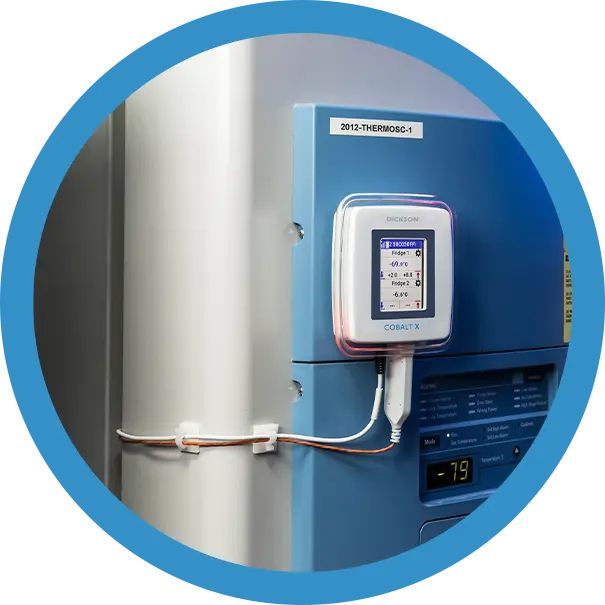
Cobalt X is a fixed monitoring unit for facilities that need to watch many points at once. It connects up to 4 sensors, wired or wireless, including Emerald and Atlas. Readings reach the OCEAView cloud through a LoRaWAN gateway. The range is up to 15 km in open line of sight. Alarms appear on the glove friendly touchscreen and can be acknowledged with a PIN. Your team also gets email, SMS or phone call alerts. It runs on battery or AC power.
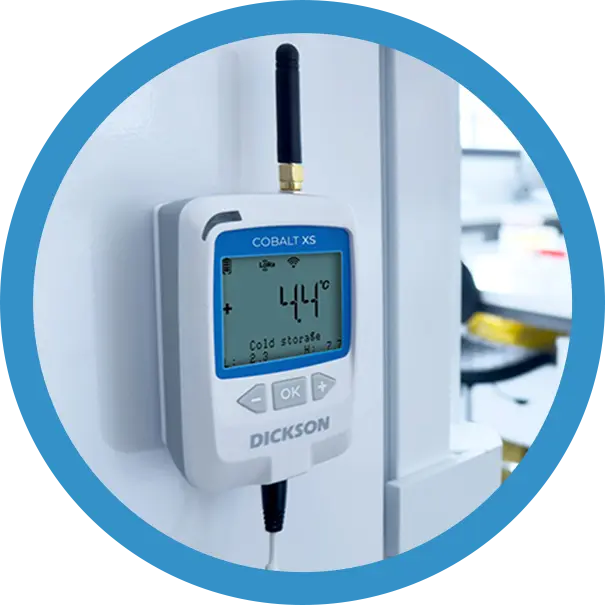
Manufacturer: Dickson Monitors: Temperature, or temperature and humidity, depending on the probe
Cobalt XS is the compact and budget friendly storage monitoring temperature data logger. It takes one external probe. You can choose a digital temperature sensor, a Smart Sensor Pt100 for high accuracy, or a dual temperature and humidity sensor. The Smart Sensor stores its own calibration data, so probes can be swapped on the spot for recalibration. It sends data over LoRaWAN and shows readings on a 2.4 inch LCD. It runs for at least a year on a replaceable battery. When used with OCEAView, it is ready for 21 CFR Part 11 requirements.
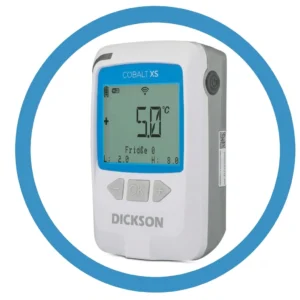
Manufacturer: Dickson
Monitors: Temperature and humidity
Cobalt XS WiFi is made for storage areas that already have a WiFi network. It connects directly to your site WiFi, so no separate gateway is needed. Readings go to OCEAView or DicksonOne, where you can see live data and get SMS or email alerts. If the WiFi drops, it keeps recording and uploads the data once the network is back. The LCD screen shows status at a glance. It runs for about a year on replaceable batteries.
A temperature data logger is built to watch your product when no one else is watching. Each feature has one job: to catch temperature changes and keep a record you can trust. Here are the main features of a temperature data logger and how each one works.
A temperature data logger checks the temperature again and again for the whole monitoring period at regular intervals which are set during programming. Every reading is saved with the exact date and time. This timestamped record builds a complete temperature history of the product from start to finish.
When it comes to our temperature data logger devices, you decide how often the logger takes a reading. It can be every few seconds or once every few hours. Tempmate M1, for example, can log anywhere from every 10 seconds to once every 24 hours. Shorter intervals capture more detail. Longer intervals help the battery last through long shipments.
Every reading is stored inside the device itself. Depending on the model, a temperature data logger can hold thousands of readings. Tempmate M2 stores up to 60,000 readings and Cobalt XS WiFi stores up to 32,000 per sensor. The data stays safe on the logger.
Most temperature data loggers come with a built in sensor that read the environment around the product. Many also support external probes. A probe can be placed right inside a freezer, a vaccine box or a product load. With the right probe, models like Emerald and Tempmate GS2 can measure temperatures as low as ‑200°C.
Every product has a safe temperature range. A temperature data logger lets you set high and low limits to match it. When a reading goes beyond a limit, the logger marks it as an alarm. Some models also let you add a delay, so a short, harmless change does not trigger a false alarm.
Connected temperature data loggers send readings to a cloud platform at set intervals. They use 4G, WiFi, LoRaWAN or Bluetooth. You can see live data on a phone or computer from anywhere. When a limit is crossed, your team gets an SMS, email, app or phone call alert. This lets them act before the product is lost.
Most temperature data logger devices we offer have an LCD screen. It shows the current temperature, alarm status, battery level and recording status. Anyone handling the product can check its condition in a few seconds. No software or login is needed.
A temperature data logger turns its stored readings into a ready report. USB models like Degrite S and Tempmate S2 create a PDF and CSV file as soon as they are plugged into a computer. Cloud connected models let you download reports straight from the dashboard. Each report shows readings, graphs and every alarm event.
If the network drops, connected loggers keep saving readings in memory. They upload the data once the signal returns. Tempmate GM2 also has a flight mode that keeps recording during air cargo. Degrite S has a backlog feature that recovers readings after a power loss.
Some temperature data logger devices track more than temperature. Depending on the model, they can also record humidity, light, shock, tilt and location. Tempmate GS2 and GM2 track all of these during transit. Cobalt X goes further with CO2 and differential pressure sensors for labs and cold rooms.
A temperature data logger runs on its own power for the full monitoring period. Degrite S records for up to 110 days. Cobalt XS runs for at least a year. Tempmate GM2 has a rechargeable battery and can also run on external power. Most of our temperature data logger models warn you when the battery is low..
Temperature data logger devices travel through cold rooms, trucks, airports and loading docks. Their casing is built to handle moisture, dust and rough handling. Degrite S and Zebra ZS300 carry an IP67 rating. Tempmate M2 is IP65 rated.
From vaccines to biologics and from cold rooms to cargo boxes, a temperature data logger keeps a full record of every temperature your product went through. Get alerts when it matters and clear reports when you need them.
A data logger turns temperature readings into information your team can act on — helping protect products, simplify compliance and reduce avoidable losses.
Temperature excursions don’t happen all at once. They start small. A cold room door is left open, a truck waits too long at the loading dock, a cold box is left unsealed or the power goes off at night. Without a temperature data logger, these breaches go unnoticed until the product is already damaged. With our devices, you get real-time alerts that inform your team the moment the temperature crosses the safe limit. Your team can move the stock, fix the cooling or reroute the shipment before the product is lost. This saves you from heavy losses and keeps entire batches of vaccines, biologics and medicines from going to waste.
Some excursions keep repeating. The power may go off at the same time every day. A certain shipment route may pass through very hot regions. A temperature data logger records every reading with the date and time, so your team can see exactly when and where each excursion happened. Models like Tempmate GS2 and GM2 also record the location of the shipment. This helps you find the common gaps in your cold chain that cause repeated excursions and fix them for good.
Our temperature data logger devices store every reading with the date and time. This creates a clear, tamper proof audit trail that you can present as proof of good cold chain practices. Reports can be downloaded in PDF and CSV format whenever an auditor asks for them. Using a temperature data logger at your facility also supports compliance with GDP and GMP guidelines, the EN 12830 standard and FDA 21 CFR Part 11 requirements. For food and agri products, it also supports HACCP.
A temperature data logger records temperature readings on its own at set intervals. No staff member needs to note each reading by hand. This removes common human errors like missed entries, wrong readings or skipped checks during busy hours. It also removes guesswork. You get accurate readings with the date and time that you can fully trust.
Our temperature data logger devices give you more than one way to get your data. USB models like Degrite S and Tempmate S2 create a PDF and CSV report as soon as you plug them into a computer. No software or internet is needed. Cloud connected models like Tempmate GS2, Cobalt X and Cobalt XS WiFi let you view live data and download reports from the dashboard, from anywhere. Bluetooth models like Emerald and Atlas let you check readings on your phone without opening the package. Models with a display show the current status right on the screen. Some devices, like Tempmate GM2, offer both cloud access and USB download. So even if one option is not available, your data is still within reach.
Without proper data, one suspected breach can lead to an entire shipment being thrown away. This happens even when the product is still safe. A temperature data logger shows exactly how high the temperature went and how long it stayed there. Your quality team can compare this with the product’s stability data and make a clear decision. Stock that is still within its safe limits can be used instead of being discarded. This cuts down wastage and saves you from losses caused only by doubt.
The temperature data logger is placed with the product. It goes inside the shipment box, the vaccine carrier or the cold room. Some models are mounted on the wall of a cold room or a freezer. You then start it with a single button press or a scheduled start time. From this moment, the logger begins working on its own.
The sensor inside the logger measures the temperature of the air around the product. Some models use an external probe placed closer to the product or inside the load. The temperature data logger repeats this measurement at the interval you set. It can be once every minute or once every few hours, depending on how you configured it.
Every reading is saved along with the exact date and time it was taken. This is what turns a set of numbers into a usable record. You can later see not just what the temperature was, but when it changed and how long it stayed that way.
What happens next depends on the temperature data logger model. USB loggers hold every reading in their internal memory until the monitoring is over. Connected loggers send readings to a cloud platform through 4G, WiFi, LoRaWAN or Bluetooth, so you can view live data from anywhere. If the network is unavailable, these devices continue saving readings in memory and upload them once the connection returns. No data is lost either way.
With every reading, the logger checks whether the temperature is still inside the safe range you set. If a reading crosses a limit, the temperature data logger marks it as an alarm. LED lights or on screen icons show this on the device itself. Connected models also send an SMS, email or app alert to your team, so action can be taken while the product can still be saved.
Once monitoring is complete, you collect the data. USB models generate a PDF and CSV report as soon as they are plugged into a computer. No software or internet is needed. Cloud connected models let you download the same reports from the dashboard. Bluetooth models send their readings to your phone. Each report shows every reading, the graph, the highest and lowest temperature and every alarm that was recorded.
A temperature data logger is used wherever a temperature sensitive product is stored or moved. It has two jobs. The first is to keep watch over a place, like a cold room or a truck. The second is to keep a record for a product, so you can prove it stayed safe. Below are the main uses, followed by the products that need this monitoring.
Tell us what you are monitoring, where it is stored and how it moves. Our team will recommend the right model for your cold chain.
Cold rooms hold large volumes of stock in one place, so a single failure can affect thousands of units. A fixed temperature data logger is mounted inside the cold room and monitors it around the clock. Cold rooms also have hot spots near doors, vents and top shelves, so more than one monitoring point is usually needed. Models like Cobalt X and Cobalt XS support external probes and send readings to the OCEAView platform, so your team can watch every point from one dashboard.
Hospital pharmacies, labs and vaccine centres store stock in refrigerators and deep freezers. These units are opened many times a day and are often left unattended at night and on holidays. A temperature data logger fitted to each unit records the temperature continuously and raises an alert the moment it drifts. For ULT freezers running at -70°C and below, an external probe is used because normal internal sensors cannot read that low.
Transit is where most excursions happen. A shipment passes through loading docks, warehouses, customs and several vehicles before it reaches its destination. A temperature data logger travels inside the box and records the whole journey. USB models like Degrite S give you the full record at the destination. Real time models like Tempmate GS2 and GM2 send readings over the 4G network during transit, so problems can be caught before delivery.
International shipments are long, cross many time zones and involve several handling parties. A temperature data logger gives you a single unbroken record across the whole route. Models with 4G global connectivity keep reporting from most parts of the world, and flight mode keeps recording during air cargo. Location tracking also shows where the shipment was when the temperature changed.
The last stretch to a clinic, a pharmacy or a patient is often the weakest part of the cold chain. Vehicles may not be refrigerated and cold boxes are opened repeatedly at each stop. A compact temperature data logger placed inside the cold box records what really happened during the round. Bluetooth models like Emerald and Atlas let field staff check readings on a phone without opening the box.
Blood components have narrow ranges and short windows outside controlled storage. A temperature data logger monitors blood bank refrigerators, platelet incubators and plasma freezers, and travels with blood boxes during transport. The record confirms whether a unit is still fit for transfusion when it reaches the hospital.
Labs store reagents, media, enzymes and samples that lose their reliability after even a short excursion. A temperature data logger keeps a record for each storage unit, so a failed test can be traced back to a storage problem rather than a testing error. Cobalt X also monitors CO2 and differential pressure for incubators and cleanrooms.
Before a cold room, warehouse or shipping box goes into use, it has to be mapped. Several temperature data logger units are placed at different points to find the hot spots and cold spots. The readings are then used to decide where products can safely be stored and where the permanent monitoring sensors should go. Lisaline Asia carries out thermal mapping and validation using ISO 17025 certified sensors.
Every product has its own safe range. Here is where each one sits and what it takes to monitor it properly.
Temperature zones
🟦 Main storage range
⬜ Also applies
Frozen
-30 to -20°C
Chilled
2 to 8°C
Most vaccines are stored between 2°C and 8°C. Some, like oral polio vaccine, are kept frozen at the upper levels of the cold chain.
Vaccines are the most sensitive products in the cold chain. Many lose potency from heat, and some are damaged by freezing as well, which makes both limits important.
A temperature data logger is used for the storage unit and the transport box rather than the individual vial. It confirms that the batch inside stayed within range through the whole journey. For national immunisation programmes, the logger record supports the WHO and NACO documentation your team has to maintain.
Ultra low
-70°C or below
Frozen
-20°C or lower
Chilled
2 to 8°C
Most biologics are stored between 2°C and 8°C. Some components need frozen storage at -20°C or lower, and certain advanced therapies go to -70°C or below.
These are high value products, so a single damaged consignment carries a heavy cost. Their degradation is also gradual, which means a complete temperature record matters more than a simple pass or fail check.
A temperature data logger with an external probe is used for frozen and ultra low storage. For shipments, a real time model gives your team the chance to act before the product is lost.
Chilled
2 to 8°C
Room
Below 25°C
The common cold chain band for pharmaceuticals is 2°C to 8°C. Many drugs are stored at controlled room temperature instead, usually below 25°C.
Insulin, certain antibiotics and hormonal drugs all lose strength when they get warm. Room temperature products are not safe either, because Indian summers push storage areas well past their limit.
A temperature data logger is placed in the storage area and inside the shipment box. The reports it generates support your GDP documentation at every stage of distribution.
Frozen plasma
-30°C or below
Chilled
2 to 6°C
Platelets
20 to 24°C
Whole blood and red cells are stored between 2°C and 6°C. Platelets are kept at 20°C to 24°C with agitation, and plasma is frozen at -30°C or below.
Each component has its own range, so one facility may need several monitoring setups. The windows are also short, which makes transport monitoring critical.
A temperature data logger is used for the storage unit and the transport box rather than the individual vial. It confirms that the batch inside stayed within range through the whole journey. For national immunisation programmes, the logger record supports the WHO and NACO documentation your team has to maintain.
Chilled
2 to 8°C
Room
Room temp
Most reagents and IVD kits are stored between 2°C and 8°C, with some kits held at room temperature.
Heat stressed reagents look completely normal but return unreliable results. A wrong test result affects a patient diagnosis, and the retest cost is carried by the lab.
A temperature data logger monitors the reagent refrigerator and travels with kits during delivery. It lets the lab confirm the kit is sound before a sample is run.
Ultra Low
-70°C / LN2
Frozen
-20°C
Chilled
2 to 8°C
Ranges vary by protocol. Many samples are held between 2°C and 8°C, while others need -20°C, -70°C or liquid nitrogen storage.
These samples cannot be replaced. They also pass through several custody changes between the collection site, the central lab and the CRO, so every stage needs its own record.
A temperature data logger travels inside the shipment and records the full journey. The report becomes part of the trial documentation and supports protocol compliance.
Share your product and its safe temperature range with our team. We will recommend the right temperature data logger and probe for it.
Both track temperature, but they answer different questions.
A time temperature indicator sits on each individual unit and shows the total heat that product has received over time. It gives you one clear answer at the point of delivery. Is this product safe or not?
A temperature data logger covers many units at once and goes a step further. It shows exactly where the breach happened, when it started and how far past the limit it went. With real time alerts, it also gives your team the chance to stop the breach before the product is lost.
Most cold chain operations use both. The logger watches the environment, and the indicator confirms each unit.
Answer as many questions as you like. The list below updates with the temperature data logger models that match what you need.
The most cost effective choice for one way shipments where you only need temperature and a report at the end.
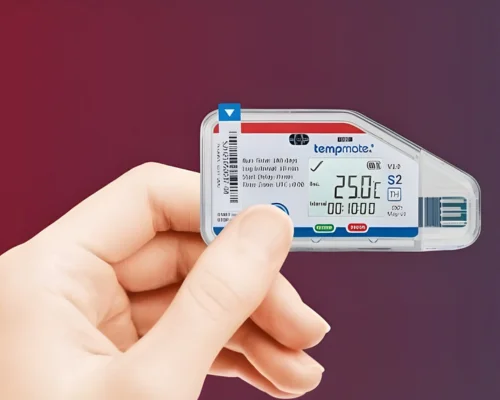
A single use logger with a screen, so the receiver can check the shipment status before accepting it.
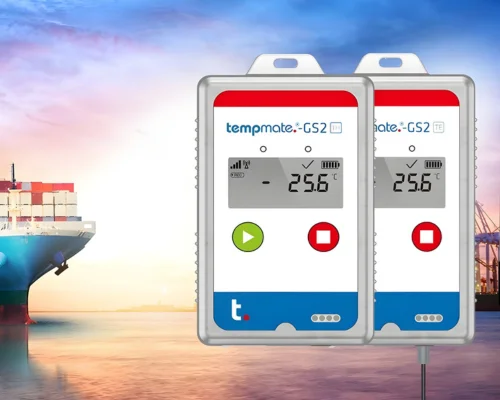
For high value one way shipments where you need live alerts during transit, not just a report at the end.
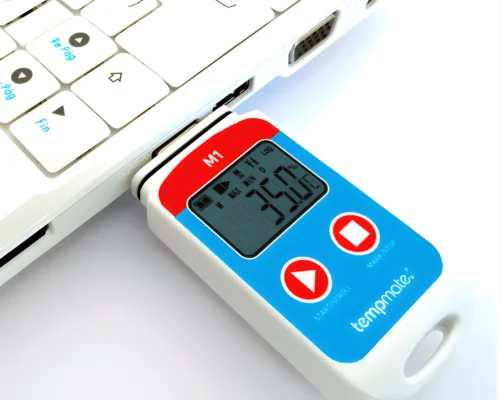
A simple reusable logger for regular shipments inside your own network, where the device comes back each time.
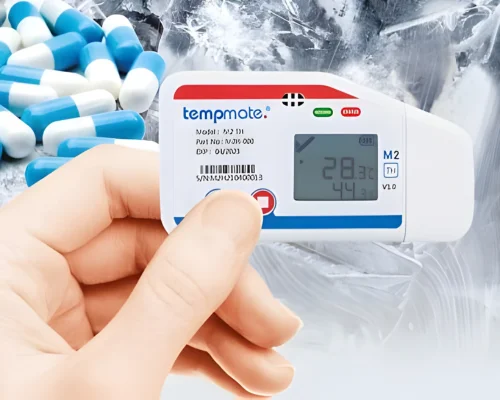
The reusable choice when you need humidity, several probes and ultra low coverage without a cloud subscription.
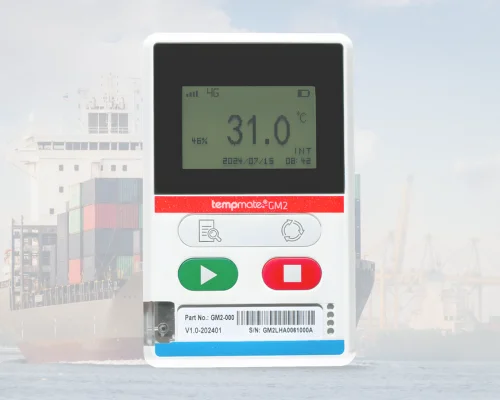
Real time tracking on a reusable device, with a rechargeable battery and flight mode for air cargo.
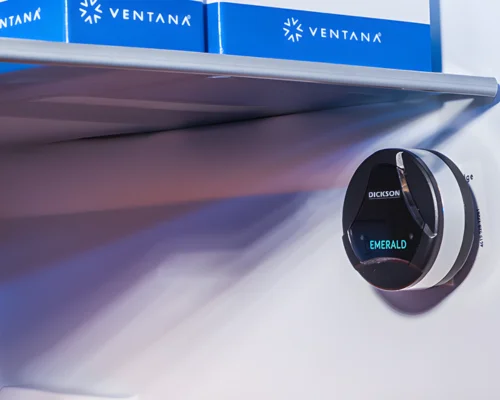
Small enough to sit inside the packaging, so readings can be checked on a phone without opening the box.
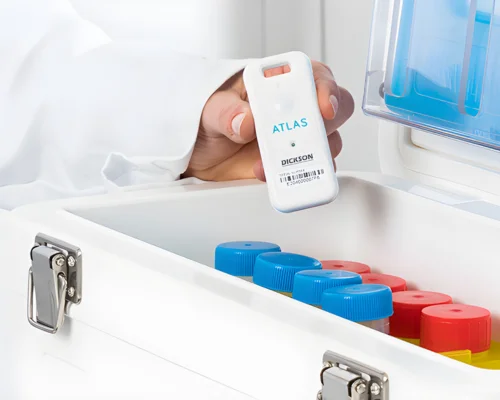
Choose this over Emerald when you need humidity alongside temperature in the same compact Bluetooth device.
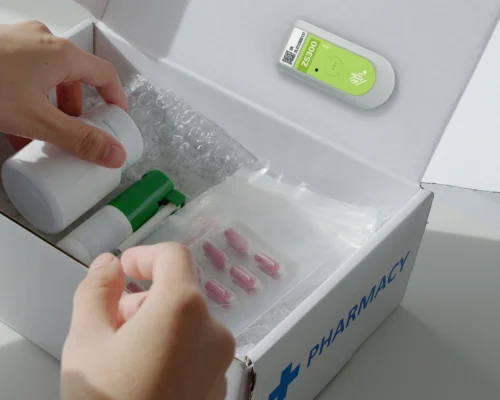
A rugged IP67 Bluetooth logger for demanding sites, with fast data transfer and a free sensor recycling programme.
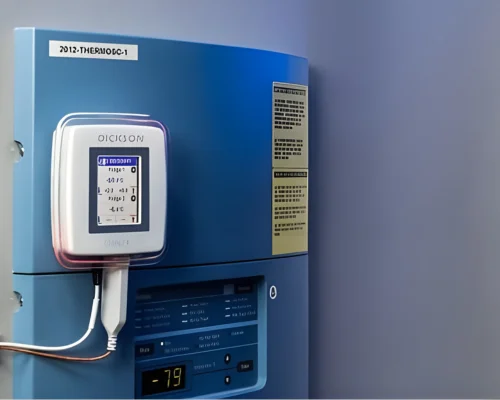
For facilities that need several monitoring points from one unit, including CO2 and differential pressure.
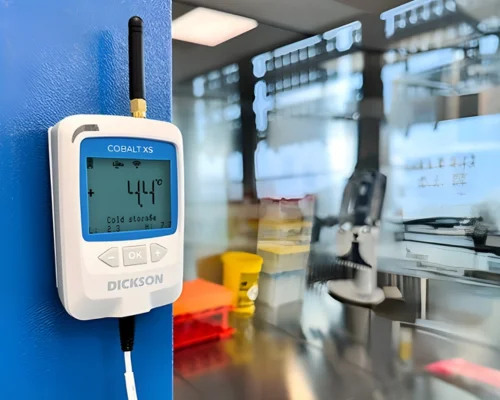
The cost effective way to cover a large site over long range, when one monitoring point per unit is enough.
Best when your site already has WiFi, because it connects directly and needs no gateway or extra IT setup.
Some requirements need a combination of devices, or a specific probe. Tell our team what you are monitoring and we will put together the right setup.
Talk to Our ExpertsBuying a temperature data logger is not only about the device. It is about who stands behind it once it is in your cold room or inside your shipment.
Supplying cold chain monitoring in India since
Temperature data logger models across every connectivity type
Satisfied clients across India, South Asia and the Middle East
Online support for real time datalogging systems
Secure your cold chain with a temperature data logger you can rely on.
Most suppliers carry one or two models and try to fit every customer into them. We supply the full range. That includes both single use and multi use models, along with rechargeable battery options. It covers plain USB loggers and USB loggers with a display, Bluetooth loggers for short range monitoring, and complete wireless systems for multi room cold chain monitoring. It also covers cloud based models for real time monitoring and alerts, as well as offline models where you check the status on the display and pull the data out through USB. Each of these suits a different cold chain requirement.
That range is the reason our team can recommend the temperature data logger your product actually needs, not the one we happen to stock. If a USB logger is enough for your route, we will tell you that instead of selling you a cloud subscription.
We are the authorised supplier of temperature data logger devices from Zebra, Dickson and Tempmate. Every device arrives with genuine packaging, proper labelling, manufacturer warranty and official documentation. This matters because look alike devices are easy to find and hard to spot. An uncalibrated logger that reports the wrong temperature is worse than no logger at all, because it gives you false confidence and a record that will not hold up in an audit.
Alongside the global brands, we manufacture the Degrite S, a USB temperature data logger designed in Germany and produced here in India. It brings international engineering standards together with local manufacturing, local stock and local support. That combination is the reason it has become the practical choice for Indian pharmaceutical and logistics teams who need volume without long lead times.
Most temperature data logger models we supply arrive pre calibrated with a validation certificate in the box. There is no setup step before your first shipment. When recalibration is due, we handle it through our own NABL accredited, ISO/IEC 17025 certified laboratory, either in our lab or at your site. Traceable calibration is what turns your readings into evidence, so we keep that in house rather than sending your devices abroad and leaving you without them for weeks.
A temperature data logger has to keep working for years, not months. We provide installation and commissioning with IQ and OQ validation, thermal mapping for cold rooms and warehouses, WHO PQS testing, genuine spare parts, and preventive maintenance contracts. Our 24×7 online support team is available for real time datalogging systems, so a problem at midnight does not wait until morning.
We are not a general instruments dealer who added data loggers to a catalogue. Cold chain monitoring is our only business, and it has been since 1998. In that time we introduced the world’s first miniaturised Vaccine Vial Monitor technology to India during the polio eradication programme. Today our devices run in pharmaceutical, hospital, laboratory, food and logistics facilities across India, South Asia and the Middle East.
The best spot depends on how temperature behaves inside your space. Every cold room has warm and cold spots. These are often near doors, cooling units, walls and high shelves. A temperature mapping study shows you exactly where these spots are. Place your temperature logger at the warmest and coldest points, at the same height as your stored products. Avoid spots in direct airflow from the cooling unit or right next to the door. Those spots can give readings that don’t match what your products are exposed to.
Data retrieval and acquiring the readings depends on the type of temperature data logger you use. For USB loggers, plug the logger into your computer. Many models create a PDF report on their own, so you can open it right away. You can also use the logger’s software for a detailed view of the data. Models with a display also show the current reading and alarm status on the screen. For WiFi, LoRaWAN, Bluetooth and 4G loggers, readings sync to a cloud platform. Log in from your phone or computer to see live readings, graphs and alerts. You can also download reports without touching the logger. Each report shows time stamped readings, minimum and maximum temperatures and any excursions outside your set range. This makes it easy to spot a problem and share records during audits.
The shelf life of a temperature data logger depends on the type you choose. Single use loggers usually have a shelf life of around 1 to 2 years before you start them. Once started, they record for a fixed period, like one shipment. After that, you replace them. Reusable loggers can last for several years with proper care. Battery life varies by model and how often it records(monitoring interval). The less the monitoring interval the more battery it consumes. Many temperature data logger models have replaceable or rechargeable batteries, so you can keep using the same logger. For reusable loggers, recalibration also matters. Most businesses recalibrate once a year to keep readings accurate and audit ready. Check the datasheet for the exact shelf life and battery life of each model.
A time temperature indicator remains active throughout the product’s shelf life. It tracks temperature and heat exposure throughout the supply chain from the point the product is manufactured to the point it is finally consumed by the patient. This gives complete protection to the patient and also shows the cumulative heat the product was exposed to for how long.
A time temperature indicator should be stored frozen before use. The storage temperature should be below -24 degrees Celsius until the label is ready to be applied.
A time temperature indicator that has been exposed to improper storage conditions such as heat or humidity before use may give inaccurate readings. Such a label should not be applied to the product.
Storing a time temperature indicator under the recommended conditions is essential. This preserves the accuracy and reliability of the label once it is applied.
A time temperature indicator carries a heat sensitive chemical system inside its indicator square. The label is pre-calibrated to respond to one specific temperature, called the specification temperature, set to match the safe storage limit of the product it protects.
The colour change happens through a chemical process. A coloured compound diffuses through a porous layer at a rate that depends on temperature. Or a colourless compound undergoes a slow reaction such as polymerisation or oxidation that produces colour as it progresses. HEATmarker uses its own patented colour change chemistry built on this same principle.
Reaction rate depends on temperature. The higher the temperature, the faster the reaction runs. Above the specification temperature, the colour darkens more quickly. Below it, the reaction barely progresses and the label stays close to its original shade.
The chemical reaction is irreversible. Once the compound reacts, it does not reverse when the product cools down. Every new heat exposure adds to the reaction that has already taken place. This is why the colour change is cumulative and never resets.
The reaction continues until the developing colour matches or exceeds the reference colour printed on the outer ring. At that point, a time temperature indicator has reached its endpoint and the product has been damaged completely.
For detailed information regarding the science behind the colour change, read our blog now. How does a Time Temperature Indicator Label Actually Change Colour?
A time temperature indicator carries a heat sensitive chemical system inside its indicator square. The label is pre-calibrated to respond to one specific temperature, called the specification temperature, set to match the safe storage limit of the product it protects.
The colour change happens through a chemical process. A coloured compound diffuses through a porous layer at a rate that depends on temperature. Or a colourless compound undergoes a slow reaction such as polymerisation or oxidation that produces colour as it progresses. HEATmarker uses its own patented colour change chemistry built on this same principle.
Reaction rate depends on temperature. The higher the temperature, the faster the reaction runs. Above the specification temperature, the colour darkens more quickly. Below it, the reaction barely progresses and the label stays close to its original shade.
The chemical reaction is irreversible. Once the compound reacts, it does not reverse when the product cools down. Every new heat exposure adds to the reaction that has already taken place. This is why the colour change is cumulative and never resets.
The reaction continues until the developing colour matches or exceeds the reference colour printed on the outer ring. At that point, a time temperature indicator has reached its endpoint and the product has been damaged completely.
For detailed information regarding the science behind the colour change, read our blog now. How does a Time Temperature Indicator Label Actually Change Colour?
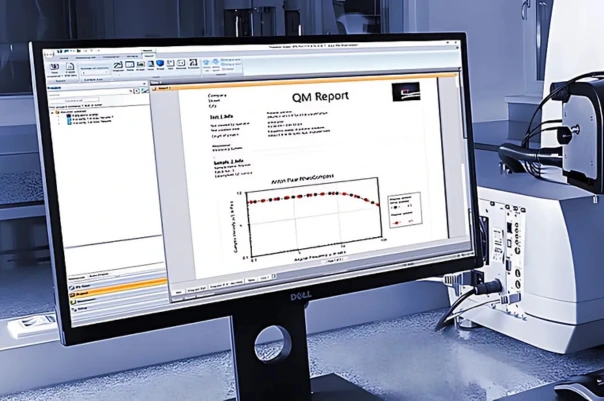
One Stop Solution for technical support and value added services
For more details on range of value added services CLICK HERE or Mails us : service.support@lisalineasia.com

We’re here to help! Contact us
with any inquiries or support needs,
and we’ll respond promptly.
@2026 All rights reserved. Developed by Sigmaflux